LAST UPDATED: February 27, 2026 at 12:17 PM
GUEST POST from Art Inteligencia
I. Introduction: The Human Side of Distance
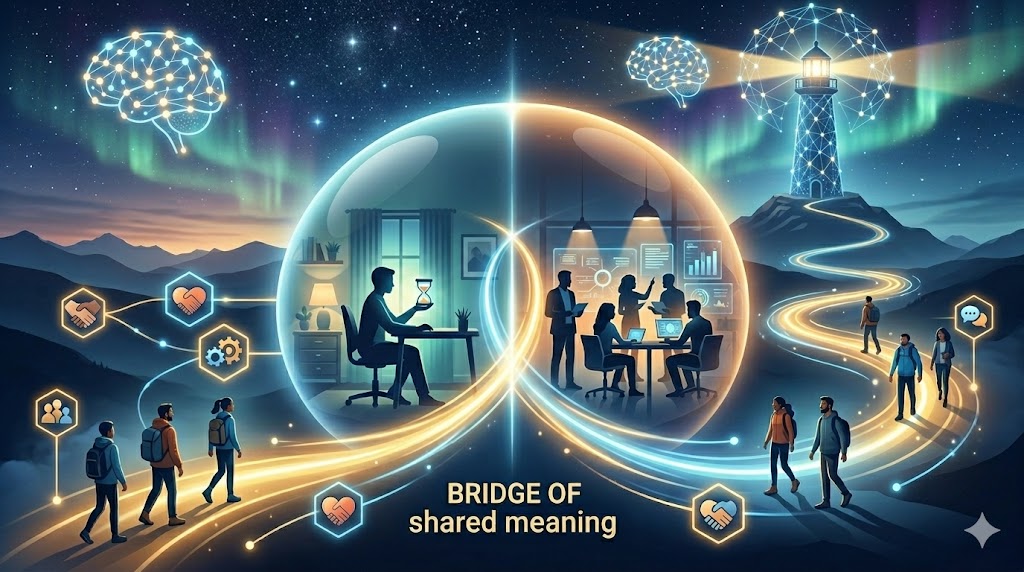
In our rush to optimize for “anywhere work,” we have mastered the logistics of communication but neglected the architecture of belonging. We often mistake a green status icon on Slack for a true human connection. This is the Proximity Paradox: we are more digitally tethered than ever, yet many individuals feel like “satellites” orbiting a core they cannot feel.
Belonging is the psychological certainty that you are part of something meaningful. It serves as the Fixed Anchor in a flexible world. Without it, innovation stalls because people lack the safety to take risks. With it, a team transforms from a collection of distant individuals into a reconfigurable, high-trust enterprise capable of sustained momentum.
“Innovation moves at the speed of trust, and trust is built in the spaces between the tasks. Rituals are the rhythmic anchors that bridge those spaces.” — Braden Kelley
To sustain culture across thousands of miles, we must move from presence-by-proximity to presence-by-ritual. This article explores how to architect these rituals not as “extra work,” but as the essential script that makes the performance of collective innovation possible.
II. The Anatomy of a Transformative Ritual
To architect belonging, we must distinguish between a routine and a ritual. A routine is about efficiency; a ritual is about meaning. When we design for distance, we must be intentional about creating a “Sensory Bridge” that replaces the physical cues of the traditional office.
1. The Intentional Trigger
Rituals need a clear entry point. Whether it’s a specific musical cue at the start of a call or a shared digital “check-in” prompt, the trigger signals that the team is shifting from doing mode to belonging mode.
2. The Shared Action
This is the “rhythmic participation” where the group acts in unison. In a distributed setting, this might involve collaborative storytelling or a shared recognition loop that reinforces the team’s identity.
Roles in the Ritual
For a ritual to be transformative, it must allow individuals to show up in their Intrinsic Genius. In Braden Kelley’s work on the Nine Innovation Roles, he highlights that a ritual should create space for the Connector to bridge silos and the Storyteller to frame the team’s momentum.
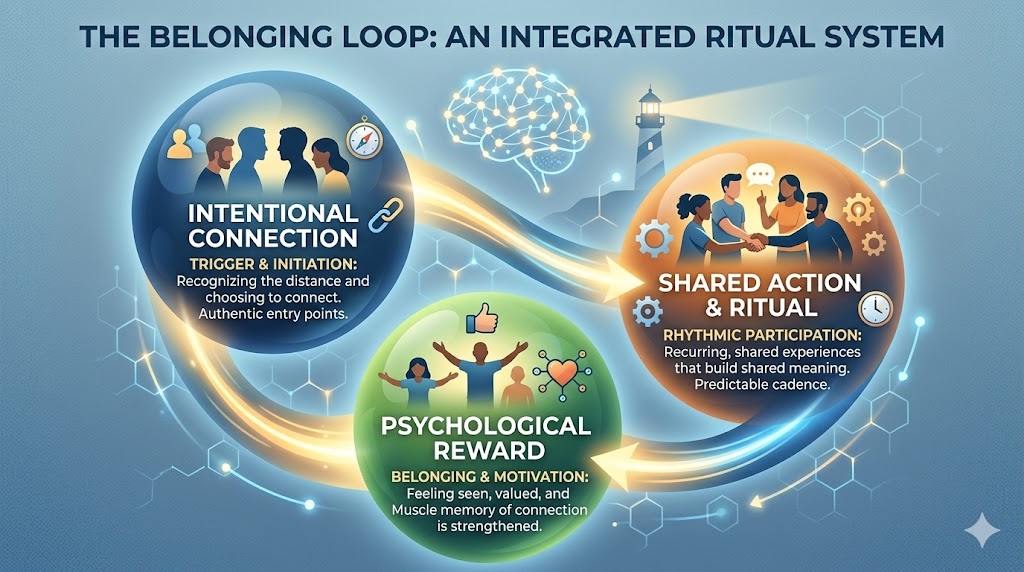
The Psychological Reward:
The loop closes when the individual feels seen and valued. This reinforcement builds the “muscle memory” of connection, ensuring that even when we are thousands of miles apart, our shared intent remains perfectly aligned.
“If your rituals don’t leave people feeling more capable of tackling the next challenge together, you haven’t built a ritual — you’ve just added another meeting to the calendar.” — Braden Kelley
III. Rituals for the Daily Pulse
To prevent team members from becoming “satellites,” we must establish rhythmic anchors that ground the daily experience. These are not status updates; they are moments of synchronization that prioritize psychological safety and shared intent.
1. The “Emotional Weather” Check-in
Distributed teams often lose the ability to “read the room.” A daily ritual of sharing one’s “weather” — sunny, overcast, or stormy — allows colleagues to understand the emotional context behind a teammate’s performance without requiring a deep dive into personal details. This builds Cognitive Empathy across the distance.
2. Micro-Synchronies (The 10-Minute Huddle)
Long meetings create a “Cognitive Tax.” In contrast, a Micro-Synchrony is a short, high-energy ritual focused on removing blockers and aligning the “Muscle of Foresight.” By keeping it rhythmic and brief, you provide a predictable point of connection that doesn’t disrupt the “Flow State.”
Strategic Outcome:
When daily rituals are designed well, they create a sense of Co-Presence. Even though the team is physically separate, the constant, low-stakes pulse of connection ensures that the foundation of absolute integrity remains intact.
“Frequency beats intensity. A ten-minute daily ritual of genuine connection is more valuable for belonging than a six-hour quarterly offsite.” — Braden Kelley
IV. Rituals for Collective Momentum
While daily rituals ground us, Momentum Rituals are designed to lift the team’s gaze. In a remote environment, “Invisible Friction” — the small, unrecorded struggles of the week — can erode morale. These rituals ensure that effort is seen, lessons are shared, and the team’s “Muscle of Foresight” is collectively strengthened.
The Friday Victory Round
Rather than a dry status report, the Friday Victory Round focuses on Impact and Insight. Team members share one “win” and one “learning from friction.” This ritual normalizes the reality that innovation is messy. By publicizing the struggle as much as the success, you build a culture of Absolute Integrity where people aren’t afraid to be real.
The “Kudos” Narrative
Peer-to-peer recognition shouldn’t be a transaction; it should be a story. A weekly ritual of “passing the torch” of gratitude allows the team to highlight the Invisible Contributions — the person who stayed late to fix a bug or the one who provided moral support during a tough deadline.
The Power of Symbolic Storytelling
I advocate for the use of symbols in these rituals. Whether it’s a digital “badge of honor” or a recurring mention in a team “Hall of Fame,” these markers create a shared history. They turn a series of calendar invites into a legacy of shared achievement.
“Belonging is sustained when we stop counting tasks and start celebrating the trajectory of our collective genius.” — Braden Kelley
V. Strategic Implementation: Guarding the “Creepy Threshold”
The greatest risk to any cultural initiative is inauthenticity. When rituals are handed down as mandates from the boardroom without team input, they often cross what I call the “Creepy Threshold” — that uncomfortable space where “forced fun” feels like surveillance or performative compliance.
To build a Foundation of Absolute Integrity, leaders must transition from being “Commanders of Culture” to “Architects of Agency.” Rituals must be co-created with the people who will actually perform them.
Three Rules for Ethical Rituals:
- Authenticity Over Mandate: If the team doesn’t find value in the ritual, retire it. Rituals are living tools, not permanent monuments.
- Respecting the “Internal Clock”: Be mindful of “Zoom fatigue” and time zone equity. A ritual that creates belonging for London but exhaustion for Los Angeles is a failure of design.
- Radical Transparency: Never use a ritual as a “Trojan Horse” for tracking productivity metrics. The primary ROI of a ritual is trust, not throughput.
The Role of the Trust-Architect
I counsel leaders to listen for the “cultural hum” of the organization. If a ritual feels awkward or forced, it’s a signal that your strategy is out of sync with the human reality. The goal is to create a script where the actors want to take the stage.
“You cannot mandate belonging; you can only design the conditions where it is the natural outcome of shared intent.” — Braden Kelley
VI. Conclusion: Architecting the Future of Presence
The challenge of the distributed era is not one of bandwidth or software, but of meaning. As we have explored, the distance between us is not measured in miles, but in the gaps between our shared experiences. Rituals serve as the structural scaffold that bridges these gaps, transforming a “flexible” workforce into a “fixed” community of intent.
When you master the art of the ritual, you stop being a task-manager and start being a Meaning-Maker. You move beyond the “Silicon-First” obsession with tools and return to the “Human-First” necessity of connection. This is how we build the Muscle of Foresight: by ensuring our teams are so well-aligned and so deeply connected that they can anticipate challenges and pivot in unison, regardless of where they sit.
“Belonging is a perishable asset. It requires the constant, rhythmic nourishment of shared ritual to stay alive. In the future of work, the most successful leaders won’t be those with the best dashboards, but those who create the most meaningful stages for their people to perform upon.”
— Braden Kelley
As you look to the next quarter, audit your connection points. Are they merely routines designed for efficiency, or are they Rituals designed for Belonging? The choice you make will determine whether your organization remains a collection of individuals or becomes a legacy of shared genius.
Are you ready to design the script for your team’s next great performance?
Distributed Belonging: Frequently Asked Questions
What is the difference between a routine and a ritual in a remote team?
A routine is focused on efficiency — getting the task done. A ritual is focused on meaning. In a distributed environment, rituals act as “Sensory Bridges” that replace physical proximity, turning a standard meeting into a rhythmic anchor that reinforces shared identity and trust.
How can leaders avoid the “Creepy Threshold” when building culture?
The “Creepy Threshold” is crossed when connection feels like surveillance. To avoid this, move from being a “Commander of Culture” to a Trust-Architect. Ensure rituals are co-created with the team, respect their “internal clocks,” and are never used as a Trojan Horse for tracking productivity metrics.
What is the “Muscle of Foresight” in the context of team belonging?
It is the team’s collective ability to sense shifts and adapt before they become crises. When a team has a strong foundation of belonging, they share “Invisible Friction” more openly. This transparency builds the Muscle of Foresight, allowing the organization to remain proactive rather than reactive.
For more insights on human-centered innovation and change, organizations often look to an innovation speaker like Braden Kelley to bridge the gap between technology and human trust.
Image credit: Google Gemini
 Sign up here to get Human-Centered Change & Innovation Weekly delivered to your inbox every week.