Building the Inclusive Future
LAST UPDATED: April 29, 2026 at 9:39 AM
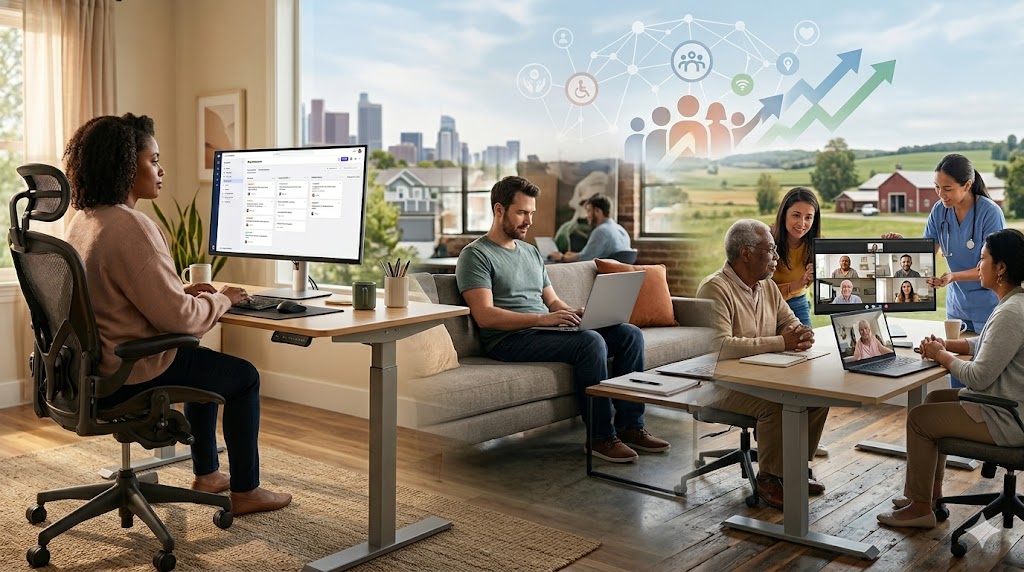
GUEST POST from Art Inteligencia
Defining the Human-Centered Remote Experience
The shift to remote work is more than a change in location; it is a fundamental redesign of how humans interact with their labor. To innovate effectively, organizations must stop viewing “working from home” as a temporary adjustment and start viewing “working from anywhere” as an intentional experience design.
The Innovation Paradox
While remote work has the power to dismantle physical barriers—such as geographic limitations or inaccessible office architecture—it can simultaneously create new, invisible barriers. We must address the “digital divide” where differences in home infrastructure, bandwidth, and domestic stability can inadvertently create a tiered system of contribution.
The Ultimate Goal: Sustainable Equity
A human-centered future of work requires us to move beyond measuring mere productivity. Our focus must shift toward equity by design, ensuring that the systems we build today are robust enough to support everyone, regardless of their physical ability, location, or socioeconomic status.
Designing for Cognitive and Physical Diversity
In a human-centered framework, we recognize that “standard” is a myth. Remote work environments must be built to accommodate the full spectrum of human neuro-types and physical abilities. By applying Universal Design principles to our digital workspaces, we ensure that collaboration tools are inherently compatible with screen readers and assistive technologies, rather than treating accessibility as an afterthought or a “plugin.”
The Asynchronous Advantage
One of the most powerful tools for equity is the move toward asynchronous communication. By reducing the reliance on “meeting-first” cultures, we create an environment where caregivers, neurodivergent employees, and those across disparate time zones can contribute at their highest level. This shift allows for deeper focus, reduces the exhaustion of constant “on-camera” performance, and democratizes the ability to process and respond to information.
Sensory Management and Empowerment
The traditional open-office plan was a sensory nightmare for many. Remote work offers a unique opportunity for employees to curate their own sensory environment. From lighting and acoustics to ergonomic setups tailored to individual physical needs, empowering the workforce to control their immediate surroundings is a direct investment in reducing burnout and fostering long-term psychological safety.
The Hardware and Software Gap
In the remote era, the digital divide is no longer just a societal issue; it is a critical workplace equity challenge. Organizations must move beyond the “Bring Your Own Device” (BYOD) model, which inherently favors those with the personal wealth to afford high-end hardware. To ensure a level playing field, innovation leaders must provide standardized, company-supported infrastructure—including high-speed internet stipends and ergonomic equipment—that guarantees every employee has the “tools of the trade” regardless of their personal circumstances.
Digital Literacy as an Equity Foundation
Access to tools is meaningless without the proficiency to use them. We must treat digital literacy as a fundamental right within the organization. This involves creating a culture of continuous learning and psychological safety, where employees feel empowered to master evolving tech stacks without fear of being left behind. By investing in comprehensive training, we bridge the gap between technical potential and actualized performance.
The Urban-Rural Connection: A Catalyst for Growth
From a futurology perspective, remote work is a powerful tool for geographic equity. By decoupling high-value roles from expensive urban hubs, we can drive economic revitalization in rural and underserved regions. This “location-agnostic” approach allows us to tap into a broader talent pool, bringing diverse perspectives and economic opportunities to communities that were previously excluded from the tech and innovation centers of the world.
Combating Proximity Bias
In a hybrid or remote-first world, we must guard against the subconscious tendency to favor those we see physically. To maintain equity, leadership must proactively ensure that “out of sight” never translates to “out of mind” regarding career progression. By focusing on objective contribution rather than physical presence, we ensure that promotions and high-value projects are awarded based on merit rather than proximity to the executive suite.
Designing Inclusive Virtual Presence
The digital meeting room is a designed experience that requires intentional facilitation to remain equitable. We can democratize participation by utilizing multi-modal engagement—such as chat functions for those who prefer writing over speaking, hand-raising protocols to prevent interruptions, and rotating facilitators to shift power dynamics. These small design choices ensure that every voice, regardless of communication style, has a clear path to be heard.
The “Watercooler” Innovation
Social capital is often built in the “in-between” moments of a physical office, which can inadvertently exclude those with outside responsibilities or different social comfort levels. To bridge this, we must design intentional digital spaces for networking and serendipitous connection. By creating inclusive, non-exclusionary social opportunities that don’t rely on after-hours physical gatherings, we ensure that every team member has the opportunity to build the relationships necessary for professional growth.
Beyond the Clock: Shifting to Outcome-Based Performance
To foster a truly equitable remote culture, we must dismantle the outdated “industrial age” mindset of monitoring hours logged. Innovation thrives when we measure impact and outcomes rather than digital presenteeism. By defining clear, transparent goals, we provide employees with the autonomy to manage their own schedules, which is particularly vital for those balancing caregiving duties or varying energy cycles.
The Equity Audit
We cannot improve what we do not measure. Organizations should implement regular experience audits specifically designed to view remote work through the lens of marginalized or underrepresented groups. This data-driven approach allows us to identify friction points—whether they are technological, social, or systemic—and ensures that our inclusion efforts are based on actual employee feedback rather than leadership assumptions.
Iterative Evolution: The Design-Thinking Approach
The future of work is not a static destination but a continuous journey of prototyping and refinement. We must treat our remote work policies as “beta” versions, constantly gathering insights and iterating on our processes. By adopting a design-thinking mindset, we remain agile enough to pivot when a system isn’t serving the collective, ensuring our organizational design remains as innovative as the products we build.
The Future is Accessible
The remote revolution has presented us with a unique opportunity to hard-code equity into the DNA of our organizations. We must recognize that inclusion is not a “feel-good” initiative; it is the ultimate engine of innovation. When we remove physical and cognitive friction from the work experience, we unlock the full creative potential of a diverse, global workforce.
The Call to Action
Every leader and experience designer has a responsibility to proactively audit their digital ecosystems. We aren’t just changing where we work; we are fundamentally redefining who gets to participate in the future of the global economy. By choosing to design for the margins, we create better systems that benefit everyone.
A Human-Centered Legacy
As we look toward the horizon of futurology and digital transformation, our success will not be measured by the sophistication of our software, but by the dignity and accessibility we afford the humans using it. Let us build a future where the “workplace” is no longer a destination, but a space of belonging and equal opportunity.
Frequently Asked Questions
How does human-centered design improve remote work equity?
Human-centered design shifts the focus from technology to the person, identifying and removing friction points that disproportionately affect marginalized groups. By designing for the “edges”—such as accessibility for neurodivergent individuals or those with limited bandwidth—we create a more robust and inclusive system for everyone.
What is proximity bias and how can organizations mitigate it?
Proximity bias is the tendency for leaders to favor employees who are physically present in the office. It can be mitigated by adopting outcome-based performance metrics, ensuring all meetings are “digital-first,” and proactively auditing promotion cycles to ensure remote workers have equal visibility.
Why is asynchronous communication considered an accessibility tool?
Asynchronous communication allows individuals to process information and respond at their own pace. This supports neurodivergent employees who may need more processing time, caregivers who require schedule flexibility, and global team members in different time zones, effectively democratizing participation.
Image credit: Google Gemini
 Sign up here to get Human-Centered Change & Innovation Weekly delivered to your inbox every week.