Leading a Multi-Age, Multi-Mindset Workforce
LAST UPDATED: February 3, 2026 at 6:34PM
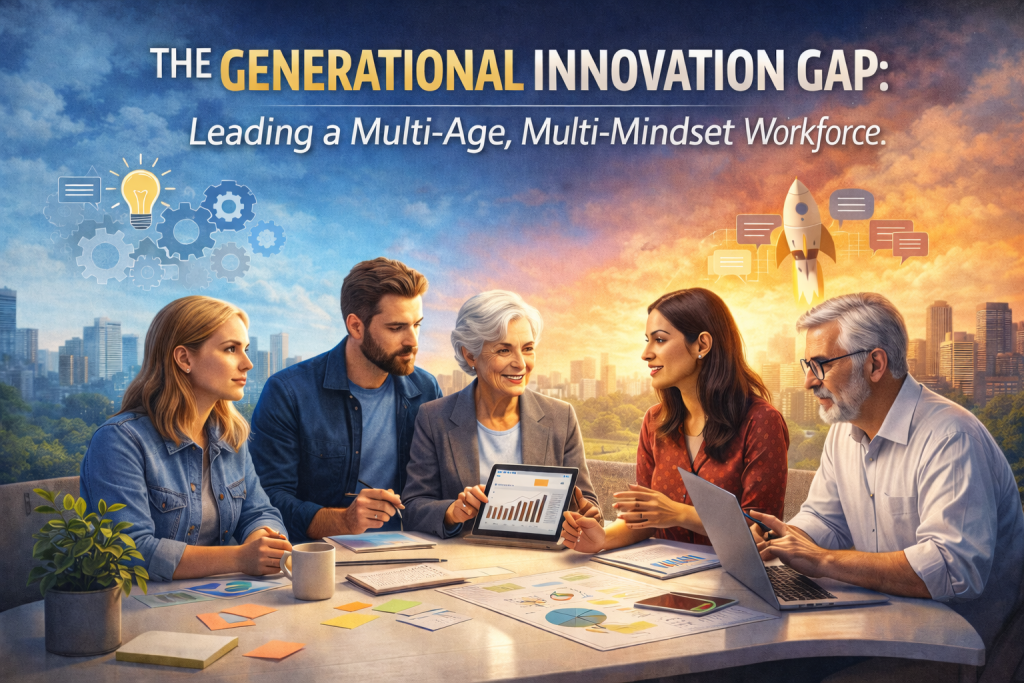
GUEST POST from Chateau G Pato
This gap isn’t just about age; it is about identity and mental models. As I’ve explored in my work on Human-Centered Change, our professional identities are often tethered to the models we mastered early in our careers. When a new generation enters with a different set of tools—be it Agentic AI or decentralized collaboration—the older guard often feels their identity is being challenged, while the younger guard feels their potential is being stifled by “the way we’ve always done it.”
To lead effectively in 2019, we must stop managing age groups and start designing for career stages. We need to move from generational stereotypes to a focus on shared purpose and cognitive diversity.
From Hierarchy to Wirearchy
Traditional bureaucracy was built on the Boomer-era social contract: “Pay your dues, climb the ladder.” But Generation Z and Alpha don’t want to pay dues; they want to find purpose. They view the organization not as a pyramid to be climbed, but as a wirearchy—a dynamic network of connections and flow.
Leading this multi-mindset workforce requires a Human-Centered approach that emphasizes psychological safety. If a junior employee feels that challenging a legacy process will be seen as “insubordination,” they will withhold the very insights that could prevent your organization’s disruption. Conversely, if a senior leader feels that their decades of experience are being dismissed as “obsolete,” they will resist change with every fiber of their being.
The goal is to create “ageless teams” where the wisdom of experience meets the audacity of fresh perspectives. This requires cognitive slack—giving people the time and emotional safety to experiment without the immediate fear of failure.
Case Studies in Cross-Generational Synergy
Case Study A: The “Reverse Mentorship” Revolution at a Global Tech Firm
A legacy hardware manufacturer noticed a stagnation in their software-as-a-service (SaaS) transition. The senior leadership (primarily Gen X and Boomers) understood the physics of the hardware but struggled with the “as-a-service” mindset. They paired senior VPs with Gen Z “Digital Natives” in a formal Reverse Mentorship program. The younger employees taught the seniors about the creator economy and subjective time agency, while the seniors provided the juniors with context on systemic complexity and stakeholder navigation. Result: A 30% increase in internal innovation proposals that successfully bridged the gap between hardware reliability and software agility.
Case Study B: The Manufacturing Giant’s “Career Stage” Design
Faced with a massive wave of retirements, a Fortune 500 manufacturer stopped using generational labels and started designing for career stages. They created “Phased Wisdom” roles for late-career professionals, allowing them to focus on coaching and high-level strategic audits rather than daily operations. For early-career talent, they implemented “Rotation Cycles” that emphasized skills over job descriptions. By aligning the workplace to what people value at different points in their lives—professional development for the young, social connection and legacy for the veteran—they reduced turnover by 22% across all age cohorts.
“Innovation is the byproduct of an ecosystem where experience is respected but not worshipped, and where freshness is welcomed but not unchecked. The strongest organizations are those that treat age diversity as a competitive advantage in the war against stagnation.”
— Braden Kelley
Why Generational Diversity Complicates Innovation
Each generation arrives with a unique mental model of progress. Some equate innovation with efficiency and reliability. Others associate it with experimentation and reinvention. These models influence how people approach risk, authority, collaboration, and time.
When innovation frameworks implicitly reward one mindset, disengagement follows. Younger employees may feel constrained by bureaucracy, while experienced professionals may feel dismissed in environments that value speed over wisdom.
Human-centered leaders recognize that innovation does not require uniform behavior. It requires complementary behavior.
Case Study C: Manufacturing Innovation Through Reciprocal Learning
A multinational manufacturing organization faced declining innovation outcomes despite heavy investment in digital tools. The root cause was cultural: younger engineers dismissed legacy processes as outdated, while veteran employees distrusted unproven technologies.
Leadership introduced reciprocal learning teams where experience and experimentation were intentionally paired. Innovation challenges required both historical insight and future-facing thinking to advance.
The result was not only improved collaboration but measurable outcomes, including reduced downtime, faster problem resolution, and a renewed sense of shared ownership over innovation.
Designing Innovation for Multiple Tempos
One of the most powerful shifts leaders can make is recognizing that innovation has multiple speeds. Some ideas benefit from rapid iteration. Others require deliberate reflection and validation.
By designing parallel innovation pathways, organizations allow contributors to engage in ways aligned with their strengths while still moving toward shared goals. Speed becomes situational, not ideological.
When leaders stop equating speed with competence, innovation becomes more sustainable and inclusive.
Case Study D: Financial Services Rebuilds Trust Across Generations
A financial services firm found that innovation sessions were dominated by early-career employees fluent in emerging technologies. Senior professionals attended but rarely contributed.
Through interviews, leaders learned that experienced employees feared being seen as irrelevant if they asked foundational questions. In response, innovation workshops were redesigned to emphasize inquiry, reflection, and cross-generational storytelling.
As psychological safety increased, so did participation. Several breakthrough concepts emerged by combining digital experimentation with long-established customer trust principles.
Leadership Moves That Close the Gap
Bridging the generational innovation gap requires leaders to act as architects rather than referees.
- Create multiple modes of contribution so innovation is not limited to vocal or fast-moving participants.
- Rotate authority intentionally to prevent dominance by any single generational group.
- Build shared understanding through common language, expectations, and learning experiences.
When systems are designed for inclusion, generational diversity becomes a catalyst rather than a constraint.
Bridging the Gap: 2019 Leadership Checklist
- Standardize the Tools, Not the People: Use collaborative frameworks like the Change Planning Canvas to get everyone “on the same page” regardless of their age.
- Audit the Friction: Conduct an Employee Experience Audit to see where generational “micro-moments” of friction are killing productivity.
- Build Portfolio Careers: Recognize that many workers now want “portfolio careers”—project-based engagements rather than lifetime tenure.
- Deploy AI as a Bridge: Use AI to handle the “drudge work” of all generations, freeing up cognitive bandwidth for human connection and creative problem-solving.
Conclusion: Designing the Future Together
The organizations that thrive will not be those that choose between tradition and transformation. They will be the ones that learn to compose innovation from many perspectives, tempos, and lived experiences.
Leading a multi-age, multi-mindset workforce is not about harmony at all costs. It is about intentional design that turns difference into durable advantage.
Frequently Asked Questions
What is the biggest barrier to innovation in a multi-generational workforce?
The biggest barrier is Identity-Based Resistance. Leaders often tie their professional identity to legacy models. When new generations suggest changes, it feels like an attack on that identity rather than a process improvement.
How can an innovation speaker like Braden Kelley help bridge this gap?
An innovation speaker like Braden Kelley uses human-centered change methodologies and visual tools to move the conversation from “who is right” to “what is the best way forward,” aligning all generations toward a shared future.
Why is “designing for career stage” better than generational labels?
Generational labels rely on stereotypes. Career-stage design focuses on what an individual actually needs at their current point in life—such as mentorship, flexibility, or the opportunity to build a legacy—leading to higher engagement.
Image credits: ChatGPT
 Sign up here to get Human-Centered Change & Innovation Weekly delivered to your inbox every week.