LAST UPDATED: February 13, 2026 at 3:15PM
GUEST POST from Chateau G Pato
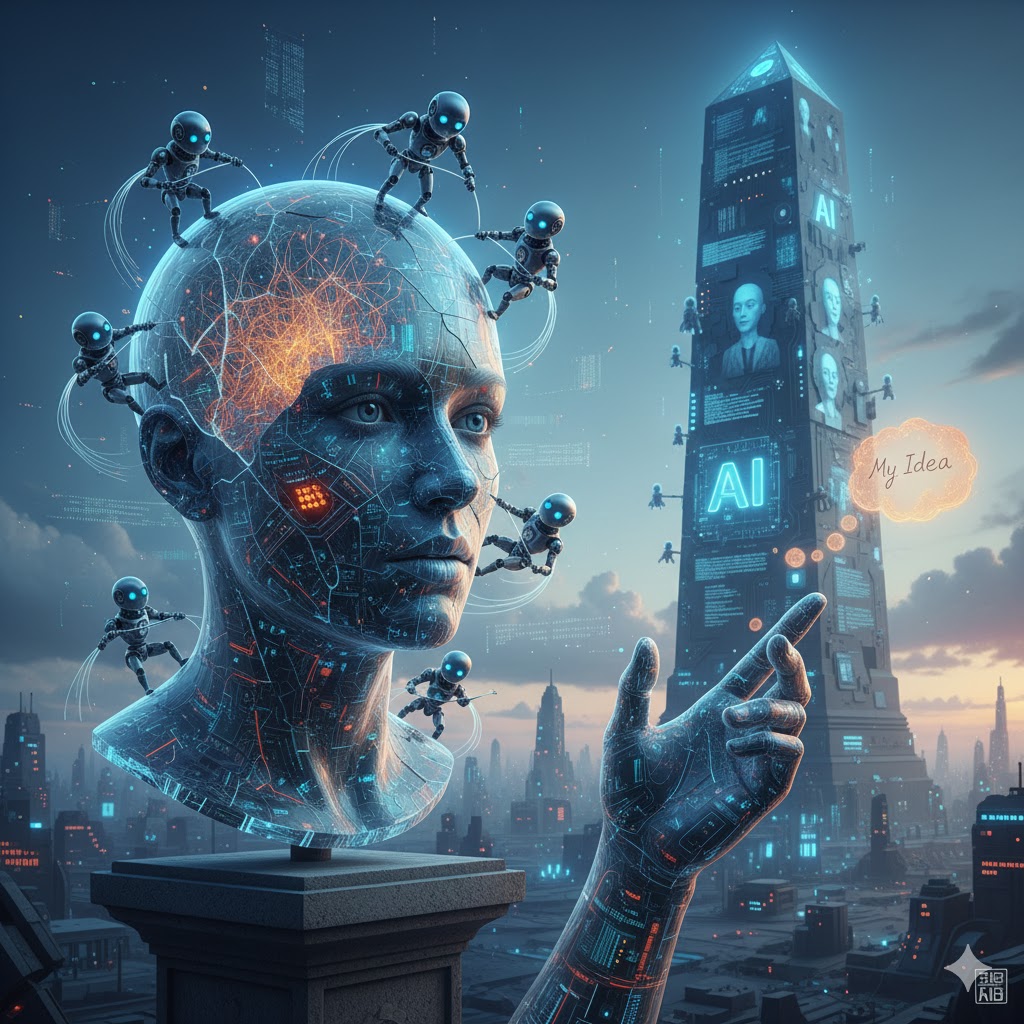
Real innovation happens when technology removes the bureaucratic corrosion that clogs our creative wiring. AI should not be the decision-maker; it should be the accelerant that allows humans to spend more time in the high-value realms of empathy, strategic foresight, and ethical judgment. We must design for Augmented Ingenuity.
“AI may provide the seeds of innovation, but humans must provide the soil, water, and fence. Ownership belongs to the gardener, not the seed-producer.”
— Braden Kelley
Preserving the “Gardener” Role
An autonomy-first strategy recognizes that ownership belongs to the human. When we offload the “soul” of our work to an algorithm, we lose the accountability required for long-term growth. To prevent this, we must ensure that our FutureHacking™ efforts keep the human at the center of the loop, using AI to synthesize data while humans interpret meaning.
Case Study: Intuit’s Human-Centric AI Integration
Intuit has long been a leader in using AI to simplify financial lives. However, their strategy doesn’t rely on “black box” decisions. Instead, they use AI to surface proactive insights that the user can act upon. By providing the “why” behind a tax recommendation or a business forecast, they empower the customer to remain the autonomous director of their financial future. The AI provides the seeds, but the user remains the gardener.
Case Study: Haier’s Rendanheyi Model and AI
At Haier, the focus is on “zero distance” to the customer. They use AI to empower their decentralized micro-enterprises. Rather than using AI to control employees from the top down, they use it to provide real-time market signals directly to frontline teams. This respects the autonomy of the individual units, allowing them to innovate faster based on data that supports, rather than dictates, their local decision-making.
“The goal of AI is not to remove humans from the system. It is to remove friction from human potential.”
— Braden Kelley
The Foundation: Augment, Illuminate, Safeguard
Augment: Design AI to extend human capability. Keep meaningful decisions anchored in human review.
Illuminate: Make AI processes visible and explainable. Hidden influence erodes trust.
Safeguard: Establish governance structures that preserve accountability and ethical oversight.
When these foundations align, AI strengthens agency rather than diminishing it.
From Efficiency to Legitimacy
AI strategy is not just about productivity. It is about legitimacy. Stakeholders increasingly evaluate whether institutions deploy AI responsibly. Employees want clarity. Customers want fairness. Regulators want accountability.
Organizations that treat autonomy as a design constraint, rather than an obstacle, build durable trust. They keep humans in the loop for consequential decisions. They provide explainability tools. They align incentives with long-term impact rather than short-term automation wins.
Autonomy is not inefficiency. It is engagement. And engagement is a competitive advantage.
Leadership as Stewardship
Ultimately, AI governance reflects leadership intent. Culture shapes implementation. Incentives shape behavior. Leaders who explicitly prioritize dignity and accountability create environments where AI enhances rather than erodes human agency.
The future will not be defined by how intelligent our systems become. It will be defined by how wisely we integrate them. AI strategy that respects human autonomy is not just ethical—it is strategic. It builds trust, strengthens culture, and sustains innovation over time.
Conclusion: The Human-AI Partnership
The future of work is not a zero-sum game between humans and machines. It is a partnership where empathy and ethics are the primary differentiators. By implementing an AI strategy that respects autonomy, we ensure that our organizations remain resilient, creative, and profoundly human. If you are looking for an innovation speaker to help your team navigate these complexities, the focus must always remain on the person, not just the processor.
Strategic FAQ
How do you define human autonomy in the context of AI?
Human autonomy refers to the ability of employees and stakeholders to make informed decisions based on their own judgment, values, and ethics, supported—but not coerced—by AI-generated insights.
Why is “Human-in-the-Loop” design essential?
Keeping a human in the loop ensures that there is a layer of ethical oversight and qualitative context that algorithms lack. This prevents “hallucinations” from becoming business realities and maintains institutional trust.
Can an AI strategy succeed without a focus on change management?
No. Without Human-Centered Innovation™, AI implementation often leads to fear and resistance. Success requires clear communication, training, and a culture that views AI as a tool for empowerment rather than displacement.
Image credits: Google Gemini
 Sign up here to get Human-Centered Change & Innovation Weekly delivered to your inbox every week.