LAST UPDATED: December 29, 2025 at 12:49 PM
GUEST POST from Art Inteligencia
In the world of corporate strategy, we love to manufacture myths of inevitable visionary genius. We look at the behemoths of today and assume their current dominance was etched in stone a decade ago by a leader who could see through the fog of time. But as someone who has spent a career studying Human-Centered Innovation and the mechanics of innovation, I can tell you that the reality is often much messier. And this is no different when it comes to artificial intelligence (AI), so much so that it could be said that AI stands for Accidental Innovation.
Take, for instance, the meteoric rise of Nvidia. Today, they are the undisputed architects of the intelligence age, a company whose hardware powers the Large Language Models (LLMs) reshaping our world. Yet, if we pull back the curtain, we find a story of survival, near-acquisitions, and a heavy dose of serendipity. Nvidia didn’t build their current empire because they predicted the exact nuances of the generative AI explosion; they built it because they were lucky enough to have developed technology for a completely different purpose that happened to be the perfect fuel for the AI fire.
— Braden Kelley
The Parallel Universe: The Meta/Oculus Near-Miss
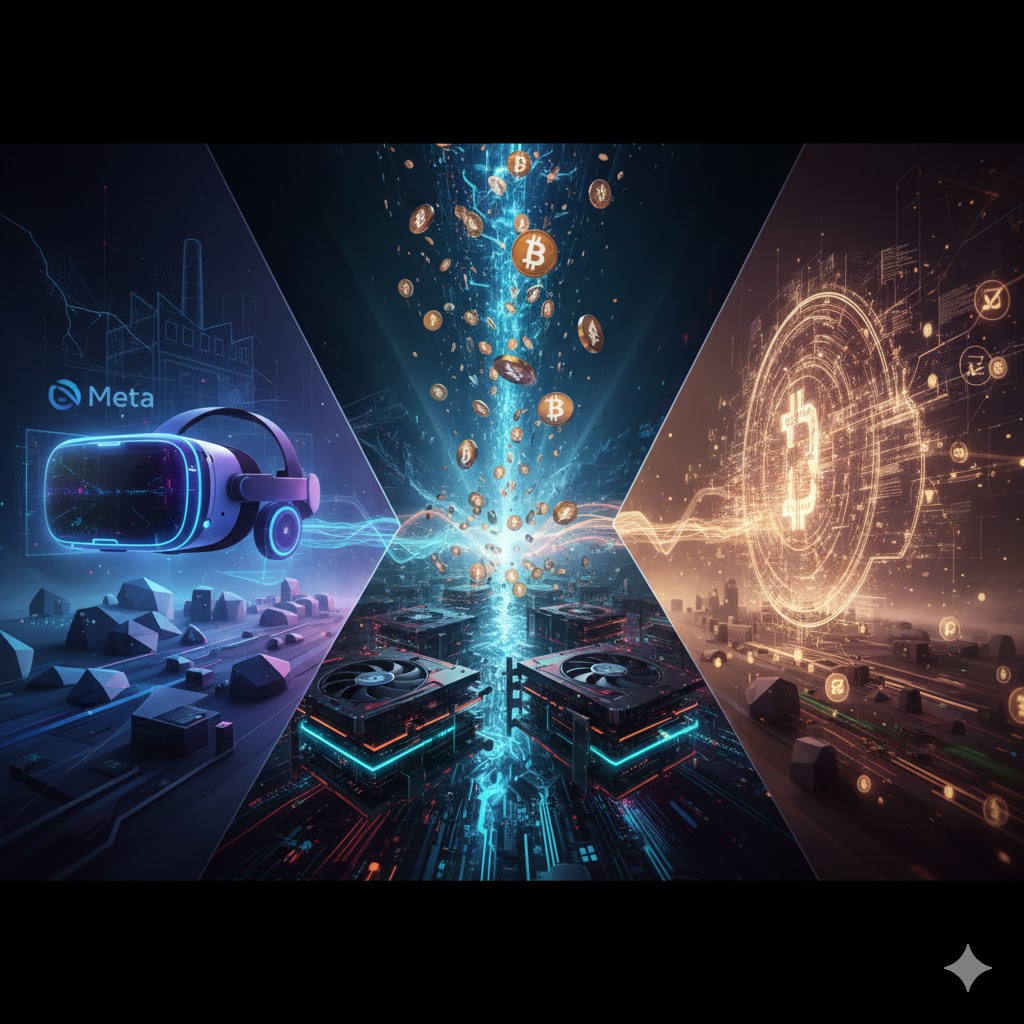
It is difficult to imagine now, but there was a point in the Future Present where Nvidia was seen as a vulnerable hardware player. In the mid-2010s, as the Virtual Reality (VR) hype began to peak, Nvidia’s focus was heavily tethered to the gaming market. Internal histories and industry whispers suggest that the Oculus division of Meta (then Facebook) explored the idea of acquiring or deeply merging with Nvidia’s core graphics capabilities to secure their own hardware vertical.
At the time, Nvidia’s valuation was a fraction of what it is today. Had that acquisition occurred, the “Corporate Antibodies” of a social media giant would likely have stifled the very modularity that makes Nvidia great today. Instead of becoming the generic compute engine for the world, Nvidia might have been optimized—and narrowed—into a specialized silicon shop for VR headsets. It was a sliding doors moment for the entire tech industry. By not being acquired, Nvidia maintained the autonomy to follow the scent of demand wherever it led next.
Case Study 1: The Meta/Oculus Intersection
Before the “Magnificent Seven” era, Nvidia was struggling to find its next big act beyond PC gaming. When Meta acquired Oculus, there was a desperate need for low-latency, high-performance GPUs to make VR viable. The relationship between the two companies was so symbiotic that some analysts argued a vertical integration was the only logical step. Had Mark Zuckerberg moved more aggressively to bring Nvidia under the Meta umbrella, the GPU might have become a proprietary tool for the Metaverse. Because this deal failed to materialize, Nvidia remained an open ecosystem, allowing researchers at Google and OpenAI to eventually use that same hardware for a little thing called a Transformer model.
The Crypto Catalyst: A Fortuitous Detour
The second major “accident” in Nvidia’s journey was the Cryptocurrency boom. For years, Nvidia’s stock and production cycles were whipped around by the price of Ethereum. To the outside world, this looked like a distraction—a volatile market that Nvidia was chasing to satisfy shareholders. However, the crypto miners demanded exactly what AI would later require: massive, parallel processing power and specialized chips (ASICs and high-end GPUs) that could perform simple calculations millions of times per second.
Nvidia leaned into this demand, refining their CUDA platform and their manufacturing scale. They weren’t building for LLMs yet; they were building for miners. But in doing so, they solved the scalability problem of parallel computing. When the “AI Winter” ended and the industry realized that Deep Learning was the path forward, Nvidia didn’t have to invent a new chip. They just had to rebrand the one they had already perfected for the blockchain. Preparation met opportunity, but the opportunity wasn’t the one they had initially invited to the dance.
Case Study 2: From Hashes to Tokens
In 2021, Nvidia’s primary concern was “Lite Hash Rate” (LHR) cards to deter crypto miners so gamers could finally buy GPUs. This era of forced scaling forced Nvidia to master the art of data-center-grade reliability. When ChatGPT arrived, the transition was seamless. The “Accidental Innovation” here was that the mathematical operations required to verify a block on a chain are fundamentally similar to the vector mathematics required to predict the next word in a sentence. Nvidia had built the world’s best token-prediction machine while thinking they were building the world’s best ledger-validation machine.
Leading Companies and Startups to Watch
While Nvidia currently sits on the throne of Accidental Innovation, the next wave of change-makers is already emerging by attempting to turn that accident into a deliberate architecture. Cerebras Systems is building “wafer-scale” engines that dwarf traditional GPUs, aiming to eliminate the networking bottlenecks that Nvidia’s “accidental” legacy still carries. Groq (not to be confused with the AI model) is focusing on LPU (Language Processing Units) that prioritize the inference speed necessary for real-time human interaction. In the software layer, Modular is working to decouple the AI software stack from specific hardware, potentially neutralizing Nvidia’s CUDA moat. Finally, keep an eye on CoreWeave, which has pivoted from crypto mining to become a specialized “AI cloud,” proving that Nvidia’s accidental path is a blueprint others can follow by design.
The Human-Centered Conclusion
We must stop teaching innovation as a series of deliberate masterstrokes. When we do that, we discourage leaders from experimenting. If you believe you must see the entire future before you act, you will stay paralyzed. Nvidia’s success is a testament to Agile Resilience. They built a powerful, flexible tool, stayed independent during a crucial acquisition window, and were humble enough to let the market show them what their technology was actually good for.
As we move into this next phase of the Future Present, the lesson is clear: don’t just build for the world you see today. Build for the accidents of tomorrow. Because in the end, the most impactful innovations are rarely the ones we planned; they are the ones we were ready for.
Frequently Asked Questions
Why is Nvidia’s success considered “accidental”?
Did Meta almost buy Nvidia?
What is the “CUDA moat”?
Image credits: Google Gemini
 Sign up here to get Human-Centered Change & Innovation Weekly delivered to your inbox every week.