Author Archives: Nicolas Bry

About Nicolas Bry

Nicolas Bry is an International Innovation Executive, expert in corporate innovation programs, and innovation labs, designing place where good innovation thrives! He currently helps the 20 innovation managers of Orange Africa to develop their projects locally. Previously he created several open innovation programs: innovation with employees (Orange Intrapreneurs Studio), innovation with consumers (Imagine with Orange), innovation with entrepreneurs (Orange African Toolbox). Consolidating this experience with the ones of 40 corporations, he wrote in 2019 The Intrapreneurs' Factory, a practical guide to leverage intrapreneurship for your company. Passionate speaker (TEDx), Masterclasses lecturer @Google Academy and Tech/Business Schools, ISPIM Prize laureate for innovation management in 2016, Nicolas is writer of the innovation blog RapidInnovation.fr. Follow him at @nicobry.

What is an Innovation Business Developer?

GUEST POST from Nicolas Bry — originally published on Innovation Excellence.

When we think of innovation, the ideation part often comes first in mind. Then, the iphone story, and design thinking approach have led us to realize that an intense collective and iterative execution is required to turn an attractive idea, and translate a new concept into an elegant experience.

Still, concurrently, the engagement part where you confront your probe or MVP with users, and look up for business units that will distribute your service, is as much as important. No sales people, no business, and whatever the best product in the world!

For this time phase, innovation business development skills are a must-have. What is then an Innovation Business Developer? Let’s describe their role:

  • The Innovation Business Developer is tighly linked to the core product team, so that he can share the vision on the product, and be aware of the latest product roadmap: he’s the soul mate of the product owner;
  • The Innovation Business Developer works on testing, and enriching the Value Proposition with target users, and shape a Unique Selling Proposition that fix user problems;
  • The Innovation Business Developer builds a network of contacts that will agregate resources for the project: resources can come from Business Units or Partners that will help commercialize the product, as well as co-build it; he attracts supports because he finds out how the innovative product can be an opportunity for them.

In a nutshell, an Innovation Business Developer acts the same way a startup does: he develops new markets that its new product will sustain, reaches out to contacts that are open to innovative products, like Development Managers or Chief Innovation Officers, and unleasches a channel for innovation, not in a ‘Push’ way, but rather in a ‘Pull’ movement.

Source: Business Developer in Innovation Competences, www.systematic -paris-region.org

Well you might say I’m a dreamer, and that this role doesn’t exist in real life? Take a look at the story of I2M, which I discovered at Barcelona Vonlanthen Innovation Summit, last May.

I2M stands for Innovation to Market. I2M is a corporate venturing start-up responsible for the commercialization of innovations developed by Mann + Hummel research teams. Mann+Hummel is one of the world leaders in the filtration industry. I2M mission consists in investigating new territories, and capturing business opportunities. Their focus areas are Clean Air, Clean Water, Life Science and Energy.

I2M is dedicated to the business acceleration stage of the innovation funnel, moving from incubation phase to sales:

Simple, fast, and effective are key values at I2M, who wants to behave like a start-up, and aims to be a ‘0 fix cost‘ company.

Even more, ‘Makers state of mind’ is encouraged as you can make your own desk!

And as they say: small teams hit the nail at I2M!

I2M is a fantastic initiative embodying innovation business development: watch them grow!

Charles Vaillant is EVP Technology at Mann+Hummel, and President & General Manager at I2M.

He kindly accepted to add a few words about the I2M learnings, and explain the Innovation Business Developer tasks:

Charles Vaillant: “I see the Innovation Business Developer as someone who behaves like a founder, and have the same focus and determination.  Someone who is able to focus, to decide, and act swiftly.  Someone who can generate progress, and getting things done in an ever-changing environment, where the rules of yesterday are obsolete, and the learnings of today create a new set of rules for tomorrow.

At I2M we challenge ourselves to keep things simple and get things done.  We focus on the very short term and we purposely measure everything in days and week, and not in months or years.  Large corporations are complicated and slow so creating an organization that leverage the unfair advantage of a startup in terms of simplicity and drive for success with the resources (brain and muscles) of a global leader is for me the perfect setup to try to beat the odds.  Success is not guaranteed but this setup guarantees the best chance of success. Let’s make it happen!”


Subscribe to Human-Centered Change & Innovation WeeklySign up here to get Human-Centered Change & Innovation Weekly delivered to your inbox every week.

A Dummies Guide for Innovation

GUEST POST from Nicolas Bry — originally published on Innovation Excellence.

Pierre d’Huy and Jérôme Lafon, both innovation teachers and consultants, share all the secrets of Innovation Management in their encyclopedic and brilliant book, Innovation for Dummies. All aspects of innovation are described in a simple and thrilling way, from innovation history, to innovation process, open innovation, user centric innovation, and a practical step-by-step approach to complete innovation from unfolding the idea down to implementation.

The chapter dedicated to the philosophy of innovation struck me particularly. They kindly accepted to answer a few questions.

Nicolas Bry: Has Innovation Management changed at the era of Internet? What methods has the Internet enabled?

Pierre d’Huy and Jérôme Lafon: Yes, of course, internet has drastically changed Innovation management. In a nutshell, our three main changes are:

  1. Super fast access to information. The 40 + remember when they had to go to specialized libraries to do a simple benchmark…
  2. Connecting people. Quick access to useful plateforms, creation of remote dream teams connected by Skype…
  3. The power of the crowd. Crowd sourcing, to know more during the early stages. Crowd funding, a useful research where prospects show their desires, not with their declarations but with their money.  Kickstarter, since 2009, 13 million people have backed a project, $3.2 billion has been pledged, and 128,950 projects have been successfully funded.

Do you observe further evolution in Innovation Management linked to the rise of the Internet of Things, and Artificial Intelligence?

Not yet. Just the beginning.  Ideo has coined the term “Hybrid insights” coming from deep human centered empathy and “smart data”. IoT will deliver a flow of new problems to solve, of weird correlations, of strange results… new real good stuff for inspiration.

The best is yet to come. AI ? a good example is Autodesk Hack Rod project, the power of AI linked to the power of new 3D printers. It’s based on billions of data points plugged into generative-design software. It’s totally changing the innovation management equation. IoT and AI work first.

If we pick-up Design Thinking, Lean Startup, and Agile/Scrum approaches for innovation, they all share ‘a rapid prototyping approach, combined with learnings coming from the user interaction, in order to iterate quickly’: is this innovation in short cycles very different from the way we used to innovate? Is it the core of modern innovation?

Yes in a way, even if “try and error” approaches exist for a long time. New key factors to come : neuro-science knowledge, IoT data and AI learning machines. The iteration loop you’re mentioning, will be faster than before, and the level of complexity higher. We think that, above all, the quality of choice of the “root question” to solve will be better.

Among all the tools that you share in your book, what would be the key message that you would like to share to build a sustainable corporate innovation lab or initiative? In addition, what would like to say to  corporate innovators, and entrepreneurs?

We don’t believe in the startup propaganda. Startup may change the world one day if they succeed, but large corporation can change the world quicker if they unleash today their collective intelligence. So dear corporate innovators, you’re in charge. And, yes, it’s possible to be a super innovator in a large company.

Innovation is the creation of a new tradition, but before it comes to that end, it crosses a lot of resistance; how do you suggest to balance these correlative endeavors, and to tweak this ‘ambidexterity’: looking for differentiation, and even disruption in your innovation project AND engaging the corporate, and aggregating resources to support your project? How do you develop the path to the unknown while leveraging the assets of the legacy business?

By explicitly, even when it’s done by the same team, splitting the two approaches. As explained by James March Stanford Professor, exploitation exploration are two different cognitive modes. Our experience is that your AND  is possible as long as it’s not done simultaneously. To simplify, in order to avoid confusion, it’s a good idea not to do it on same project at the same time. In a castle, you can get rid of the old kitchen, keeping intact the beautiful ancient ball room. Ambidexterity is about that type of arbitration. So please, train your teams to be ready to switch from one mode (exploration, disruption, change) to another mode (exploitation, regularity, repetition).


Subscribe to Human-Centered Change & Innovation WeeklySign up here to get Human-Centered Change & Innovation Weekly delivered to your inbox every week.

Thinking Outside The Box with Crowdsourcing

GUEST POST from Nicolas Bry — originally published on Innovation Excellence.

Unfair Advantage

Sihem Jouini is Associate Professor and Director of the Innovation & Entrepreneurship major at HEC ExMBA, and a researcher in organizational design for innovation and creativity.

She kindly took part to our Industry and Research conference about crowdinnovation in last February (see image below). Sharing views with her about innovation and idea generation crowdsourcing, she subtly directed me to define the unfair advantage of Imagine with Orange, a platform dedicated to crowdsource innovative ideas.

Sihem jouini speaking at Imagine Crowd Conference

In a nutshell, Imagine’s unfair advantage is to fight the fixation effect that we face on our recurrent business, and let us think out of the box, thanks to a community of 25,000 internet users, coming from 86 countries, and leveraging digital capabilities to share +2,500 ideas,… and still counting.

Let’s go into more details about Imagine, where it comes from, how it fits within Orange open innovation ecosystem, and how it differentiates from other platforms on the necessary steps to build a crowdsourcing platforms:

  1. presenting the topic of the challenge, and articulating tangible rewards engaging the community;
  2. marketing the message, and attracting the participants;
  3. facilitating the challenge in order to improve the answers quality, and the connections across ideas;
  4. screening and evaluating, identifying and selecting ideas to reward;
  5. transforming ideas into innovation projects.

The Origin of Imagine with Orange

Imagine is a corporate crowdsourcing platform launched in October 2014: it was presented by Orange’s CEO Stéphane Richard at the Orange Hello Show, an annual keynote which highlights the recent innovative products developed by Orange. Imagine with the Orange is an intrapreneurial initiative based on an idea from Nicolas Bry, and developed by a team working in the innovation division at Orange.

Worldwide Imagine Community

The idea behind Imagine is to capture ideas from elsewhere, that is to say beyond the prism of Silicon Valley, establishing direct connections with users in the field in every continent, getting close to their way of life and their digital uses, and especially in Africa and Europe, where Orange is operating.

Every month, Imagine suggests a topic: connected family, connected objects, smart city, mobile money, connected sport, digital for environment, digital for women…

Imagine campaigns

Internet users present their ideas in a few words on the platform. Then, they comment, and vote on each other ideas. The ideas with the highest number of votes are invited by Orange to Paris to take part in an innovation coaching, with Orange experts, to dig in into the potential of their idea, and help them transform it into an innovation project. ‘Share your ideas, Orange is helping you to give them life’ is therefore the signature of Imagine with Orange.

Innovation coaching in Paris

Occasionally, a jury composed by Orange awards additional winners, and invites them to Paris as well. Quite often (50%), hackathons follow an Imagine with Orange contest, and are open beyond Imagines participants. It lets Imagine users mix, and confront fruitfully their ideas in real life.

Challenges are open to Orange partners: connected sport was a challenge set-up with Salomon, and data for water protection and biodiversity was a contest organized with the Ministry of environment.

Imagine campaigns in partnership

The benefits for Orange and partners are multiple: Imagine is a tool to listen and dialogue with consumers and build a community of passionate users; it’s a way of collecting fresh ideas, trends & insights; it’s a channel to build brand awareness toward digital thematic, and a step toward cocreation with users and startups.

All in all, it’s a straightforward way to let the voice of the customers enter the innovation process very upstream, inspire the innovation teams, and guide them in the right direction, close to users’ expectations and pains. Let’s fall in love with the user’s problem, rather than with our solution!

Initially the Imagine team was proposing the topics for the monthly challenges. For the past 1,5 years, the innovation teams and the Orange countries have fully adopted the tool, and  initiated on their own the challenges’ topics.

Imagine with Orange Poland

Imagine has been recognized as well externally: Imagine was awarded by the ISPIM (International Society for Professional Innovation Management) as best innovation management tool of 2016, in competition with Huawei and SAP.

Imagine rewarded by ISPIM

The specificity of Imagine’s community is to be very international and digital oriented. It is open to any user, from start-up to innovation fans, students, Orange employees, Orange customers and non-Orange customers. Imagine users focus on the ideation / creativity stage of innovation: the front-end of innovation. Imagine with Orange has now a community gathering over 22,000 Imaginers, coming from 84 countries, and having shared +2,500 ideas.

20 challenges have been completed on the platform. The growth of the community has been supported by Orange countries promoting the challenges at a national level through their web site, PR, social media accounts, master-classes and events.

Imagine with Orange Romania

Concurrently, leveraging Orange strong brand recognition internationally, the Imagine team has targeted digital influencers on social media: influencers help us spread the news about challenges’ openings on Imagine. Imagine with Orange has over 16,000 followers on Twitter, and its Facebook page was liked by +141,000 Internet users.

Imagine with Orange: Orange Open Innovation Ecosystem

Orange has a long story of cocreation activities with its customers, Orange fixe and mobile subscribers.

In France it is established mainly through Lab Orange: this web platform focuses on developing and testing new concepts for Orange, and conducting experimentations with mass-market customers. Dream Orange is a complementary platform which handles online conversations on digital usages with Orange French customers.

Internationally, Orange has launched several open innovation initiatives, especially to foster entrepreneurship, and collaboration with start-ups:

  • Orange Fab is an acceleration program for start-ups, helping them to extend their business with Orange at fast pace;
  • Orange Partner facilitates cooperation with partners and developers by mean of APIs exposing Orange resources: a well-thought use of APIs can boost start-ups product development;
  • Orange for Development partners with incubators in emerging countries;
  • Imagine with Orange is for innovation crowdsourcing and a launchpad for entrepreneurs, helping them to design their innovation, and to test their ideas with the Orange community, on a specific corner;
  • Orange Digital Ventures is to fund early-stage start-ups in the digital industry.

The case below shows how Imagine fits within this ecosystem and how the initiatives can be combined.

Hostabee is a startup which designs, and commercializes connected hive: connected hive improves significantly the job of the bee keeper by sharing with him accurate data on the way life is going on in the hive, and help him find the right position for the hive at the right time (hives have to be turned on a regular basis).

Hostabee was one of the winners at the Imagine with Orange contest related to IoT. They came to Paris, and participated to the Hackathon, which followed the online contest, attracting Imagine with Orange participants on their project, and enriched their offering and product during the Orange Hackathon. Though the startup did not win an award at the end of the hackathon , they were connected with the Orange Fab France accelerator. The acceleration led to establishing a business partnership with an Orange France business unit, including Hostabee offering in the Smart Agriculture portfolio of the firm.

Thinking Outside The Box

The analysis of Imagine compared to other crowdsourcing platforms reveals various characteristics that provide to Imagine its specific identity: a simple articulation of the challenge (“how digital could change…?”), an international footprint with strong presence in Europe, Africa, and India (see image below), an online community that regularly meet offline at hackathons, an exciting reward in the form of an innovation coaching in Paris by Orange experts, and an efficient transformation of the ideas into business projects.

Imagine at Orange India ‘s offices

But what clearly makes the magic is the outcome that provides each campaign: the defixation effect, or think-out-of-the-box trigger. For each campaign, we extract trends that are composed of:

  1. highlights that regroup striking ideas,
  2. hot spots (multiple similar ideas on a particular topic);
  3. and users pains that can be guessed beyon the ideas expressed (multiple different ideas trying to solve the same user problem).

Each time, some trends reassure the team that have initiated the campaign; but each time also, some trends open untackled opportunities for the innovation teams working on the topic:

  • for instance, the IoT campaign unfolded the user need to locate daily objects for a moderate price, and therefore the relevance of a low cost IoT network, while we were more focused on the capabilities of our 4 network (fixation effect #1);
  • the connected sport campaign told us how sport users where looking for other people to practice, a trend which we called social sport, and which had not been expressed so directly to our partner, a sport manufacturer, as their customers don’t hold him for a social network (fixation effect #2);
  • or the mobile banking campaign revealed that customers were looking for a digital collaborative banking service, facilitating transactions with families, common pot to make a gift or helping to settle account after a week-end with friends: they called it a Whatsapp for banking, a quite different experience from the sophisticated mobile app for singles that we were designing (fixation effect #3);
  • at last, the data for environment campaign showed how users were also responsible citizen willing to control their carbon impact, a trend that our partner the Environment Ministry had not noticed as they more focused on the general data they could provide, than on individual data (fixation effect #4).

After 20 campaigns completed and 2,500 ideas shared, Orange has built an innovation capital on extended aspects of the world we’re living in.

All in all, the Imagine’s trends coming out of each campaign are unrivaled because they clearly reflect the composition of the community: fans of innovation, digital oriented, and very international. This unique diverse community is what makes the defixation effect Imagine an unfair advantage: please come, try a challenge for your company, and meet with the Imagine’s community!



Subscribe to Human-Centered Change & Innovation WeeklySign up here to get Human-Centered Change & Innovation Weekly delivered to your inbox every week.

Agile Intrapreneurship at LabCovéa [Interview]

GUEST POST from Nicolas Bry — originally published on Innovation Excellence.

Philippe Lebeaupin is Innovation Coach at Lab Covéa (insurance company), and one of the founders this incubator for entrepreneurs. In the interview below, he explains in details the origin of the Lab, and the way he coaches intrapreneurs’ projects, sharing some exciting business pivots along the way!

Q: Hi Philippe, would you explain us your position and role at LabCovéa? What are the purpose and activities of Covea Lab?

Philippe Lebeaupin: I’m an idea coach at Covea Lab. Covea lab is a tool for accelerating innovation on behalf of the MAAF / MMA / GMF Insurance Group. Customer-oriented, it provides a framework, tools and methods to validate the relevance and business model of innovative ideas.

For my part, I am one of the coaches responsible for accompanying employees in the selection process, which takes the form of a pitch in front of the internal investment committee, and then for the lucky ones to support them in the implementation of their project.

Q:  Tell us about one innovation project you mentioned, the ratings site about cars: how did the project start, was it an intrapreneur idea or an innovation idea from the Lab? What was the initial intent, and how did you pivot to the car ratings idea?

Philippe: This pilot project began with an idea put forward by Yann, an intrapreneur employee. The initial idea was to make a mobile insurance quotation in one picture.

The head of MAAF digital marketing, Emmanuel, sponsored this idea, and he helped us to prioritize our early adopters. Start with people who are already insured, and who happen to change vehicles. Actually it was a case made:

  • simple because we already knew the bonus, the traffic area … and it only remains to complete the identification of the new vehicle to finalize an estimate and;
  • with high stakes because the change of vehicle is an important moment to retain a customer.

So we conducted “problem” interviews with people who changed cars … and it turned out that when someone changes cars, insurance is only a micro-problem! We could have moved to other customers, for example, interviewing customers who changed their insurance… but since this life event was at high stakes, we kept the focus on customers who change cars, and we pivoted on the problem, and therefore on the solution !

Through these customer interviews, we identified other problems, including the need to feel confident on your next vehicle: a moment of reassurance! We were able to brainstorm, and propose a catalog of 24 solutions, which we submitted to customers who change cars.

This is how AVIS-AUTO.fr was born, a web site where you can consult the opinions and average rating of your next vehicle, being assured that the evauation comes from a true owner of the vehicle (on who is insured with our company).

Q: We often highlight the advantages of startups compared to large companies. In the previous project, what was made possible through the assets of the corporation (like accessing a large customer database)? Reversely, what did you have to adapt to come near to the startup operating mode (like turning IT work into more agile sprints)?

Philippe: My conviction is that the challenge for large companies is to take the best of both worlds: the striking force of the group, and the agility of the startup!

A large company has means, data, striking forces that do not have startups. If we know how to use them in an agil waye, we become an outstanding competitor:

  • certified ratingss for example are possible because our group has a database of several million insured vehicle owners;
  • recruiting and interviewing customers who cchange their car was achieved in 2 weeks thanks to the tools, and help of the marketing research department;
  • we also have easy access to coders who are already employees of the group.

The condition is then the cooperation between the different entities of the large company, to enrich the current services portfolio.

The LAB is a part of the Marketing and Strategic Transformation Department, and is co-chaired by the IT Director.

The first project was to associate the IT department to create and develop a website in a week: we agreed on how to “staff” a developer in less than 1 month. We enabled him with standard development kit, and a cloud platform access, letting him work independently to deploy his web site. The constraint here was to free yourelf from the legacy Insurance Information System, so as to to avoid integration / and security procedures with the current system.

Then we partnered with marketing, purchasing, legal, so that their procedures align with the agility of these Lab projects. The counterpart is that we put a framework: if the project were to be industrialized, the scenario should have to be reworked with the different entities.

Q: Could you describe in more details the intrapreneurs program you’ve set up? What kind of framework did you develop to support intrapreneurs (green box, business canvas, call for project, call for intrepreneurs, speed dating)? What are the results you’ve reached (number of projects completed, new business created, and impact on the rest of the company)?

Philippe: The lab makes it possible to assess employees’ innovation ideas throughout the year, but to stimulate the process we have put in place a call for innovation on connected objects: unfortunately, having one single idea owner coming with his idea lead to a lot of waste.

Since then, we test calls for volunteers: we build, after accurate speed dating, teams of 2 to 3 people with complementary profiles. They do not have specific innovation ideas, but we provide them with  a brief, and they will have to identify together customer problems, and corresponding tailored solutions.

We have thus created a methodology kit called “The greenbox” which is given to the intrapreneurs to help them challenge the problems of the customers, design the solutions as well as fulfill the Lean Canevas. We also worked on how to make the intrapreneurs very handy at pitching their project.

Today after 18 months of operation, we have more than 250 employees who have liaised with the lab. We have about 20 projects that have been presented to the investment committee, and 11 who have win a GO:

  • 2 have been stopped
  • 1 quick win is being generalized, and 1 service will be soon industrialized on the service platform
  • 7 innovations are in progress

The lab is increasingly well-known, and highly appreciated by collaborators throughout the company.

Still, our difficulties are:

  • The conditions  of the half-time of the employee who leaves for 8 months intrapreneurship  generrates problems of implementation with the operational managers: no replacement is easy …
  • Innovations are mainly incremental: we have too few innovation breakthrough projects with this intrapreneurship system.


Subscribe to Human-Centered Change & Innovation WeeklySign up here to get Human-Centered Change & Innovation Weekly delivered to your inbox every week.

Romancing the New Business Model

GUEST POST from Nicolas Bry — originally published on Innovation Excellence.

As mentioned in the 2017 open-innovation center, innovation units with a new business model focus are catching interest. Here are a few examples:

Innovation units with a business model focus

Kamet is a startup studio initiated by AXA in 2015, and funded with 100 m€ for 5 years (AXA is a minor stakeholder). It aims at creating the new disruptors of the insurance industry, and incubating these InsutTech ventures, that will eventually join AXA group.

Stéphane Guinet, Kamet’s founder, presents Kamet as a startup that builds startups. 100 people already work at Kamet (Paris, London, and Tel Aviv): 85 of them, mostly externals, are entrepreneurs in residence.

Why so many entrepreneurs? Kamet has actually a specific process to develop new business models: every 6 months, it unearths 40 ideas for new businesses; ideas come from AXA group, market watch, or venture capitalists; it selects 8 of them, then staffs corresponding projects with entrepreneurs, and starts building prototypes, and design business models. 4 of them are shut down following this milestone, and 4 continue for the next 6 to 8 months. It takes one year to give birth to a startup. Just like a startups studio, akin eFounders

With Kamet, AXA takes disruption seriously, and tries to give Kamet an unfair advantage competitive with Kamet-AXA bundle, leveraging AXA skills and database.

Axes of investigation are about revisiting risk analysis or healthcare back-office. First Kamet seeds are:

  • Giving access to best French medical doctors to expats, and linking foreign travelers with their regular doctors through videoconferencing (Qare);
  • Offering drivers to replace their tires, collecting their vehicle at the office (Fixter, the UBER of car maintenance, is funded by AXA with m€ 6);
  • Reinventing occupational health-care with data (Padoa is funded by AXA with m€ 5).

AXA benefits from a 30-day right of first refusal at the first capital round.

Accorhotels has hired in April 2016 a Chief Disruption & Growth Officer, Thibault Viort, to develop growth opportunities.

But what is the role of a Chief Disruption Officer? Thibault describes 5 missions:

  • Developing a culture of agile innovation through 6 levers: awareness of emergence, understanding of value chains, mix of cultures, crossing ideas, pragmatic answers, and acting on the ground;
  • Scouting new business lines resulting of new usages / coming generations / know-hows & professions, enticing an internal dynamic, and embarking best players;
  • Facilitating a startups ecosystem, reinforcing interactions with startups that re-invent the sector, and fostering initiatives from Accor’s units to liaise with startups; Thibault’s team uses StartupFlow.io tool;
  • Accelerating new business initiatives, and intrapreneurship: task-forces helping business units in the opportunity assessment, rationalizing new initiatives across units, linking with relevant startups, and supporting business units teams; Accorhotels employees are invited to apply for the new business activities;
  • Overseeing investments or acquisitions in emerging activities.

Examples of new service: using a chatbot set-up by a startup, to book a room at Accorhotels.

Examples of investments: OneFineStay, an high-end Airbnb competitor, and John Paul, the digitally-enhanced concierge service.

RWE innovation hub wants to unfold the UBER of energy. Inken Braunschmidt, leader of this 80 people unit created in 2014, is here to think non-utility ideas. “Our task is to find and develop new business models”, she claims in Energypost.eu. “It does not mean we stop R&D. It’s not about technology or software either. It’s about business models that put the customer in focus, that use insights based on data”.

What is the process? “We follow a lean start-up approach. So we talk about 1, 3, 6, 9 months to get to a minimum viable product, a prototype. We work on proof-of-concept in little start-up teams. To define our areas of investigation, we looked at the telecoms industry, the electronics industry (Philips, Samsung etc) and of course at start-ups, we looked at Google and Nest.” The result is a focus on 4 domains, called the lighthouses:

  1. Big data;
  2. Disruptive digital business models like Uber and Airbnb;
  3. Smart in and around the house (including the Internet of Things);
  4. Urban concepts, solving problems for mega-cities, from electricity and communications to mobility and logistics.

For each domain, RWE assessses whether it has already specific assets: for instance, when it comes to mobility, RWE already has the technology and know-how on charging infrastructure. To evaluate whether it can make a difference with a startup, RWE takes into account 3 assets: its 23 million customers base in Europe, IP, technologies and platforms up and running, and support in areas where a start-up does not typically have resources for, such as regulatory and legal experts. These assets also make RWE an interesting partner for start-ups.

We could also remind us of BIG, Breakthrough Innovation Group at Pernod Ricard, whose founder, Alain Dufossé, we interviewed some time ago. Its way to nurture innovation projects with platform of opportunities was really impressive.

An approach to unfold new business model

Combining the previous experiences, we suggest a 6 steps iterative approach to carve new business streams for your company:

  1. Top management support: getting management involvement in the long run, being present at key milestones: 6 months, one year, and so on;
  2. Scouting: observing usage of customers, non-customers, of coming generations, detecting emerging profession and skills, benchmarking startups, and industries,  crossing with company’s assets (customer base, technologies, expertise), and defining lighthouses, or platform of opportunities
  3. Ideation: generating 40 to 50 ideas, and extracting 8 of them; ideas can come from market watch, from VCs, or from the core corporation, on a regular basis, or during a dedicated creative workshop involving business units; ideas can then be connected with business units initiatives, and needs;
  4. Staffing: building little start-up teams with external entrepreneurs or intrapreneurs, potentially mixing employees with startups; or providing a task force accelerating business units initiatives; partnering with startups, or investing in startups. Once the team is on tracks, inviting intrapreneurs to apply to new businesses, extending the resources;
  5. Executing: pursuing a portfolio of 8 innovations with lean startup, building MVP to prove the concept, completing business model loop; after 3 months, reducing the portfolio to 4 innovations that you will bring to market;
  6. Show me the money: achieving first sales, revenues, and customers, scaling-up, and iterating with management support at key milestones.


Subscribe to Human-Centered Change & Innovation WeeklySign up here to get Human-Centered Change & Innovation Weekly delivered to your inbox every week.
Starting Intrapreneurs Studio at Orange

GUEST POST from Nicolas Bry — originally published on Innovation Excellence.

Editor’s note: Orange is one of the largest operators of mobile and internet services in Europe and Africa and a global leader in corporate telecommunication services.

Context

The idea of starting a programme for intrapreneurs popped up one year ago, in Spring 2016, during a workshop about the future of our entity, Orange Vallée. We had experienced over time the launch of out-of-the-tracks innovative projects, leading us to forge methodologies for fast product development, and to develop efficient networking to attract resources boosting our projects, and get buy-in from stakeholders: wouldn’t it be an insightful idea to share this know-how with Orange employees willing to turn their outside-the-box  idea into an innovative project?

Tweaking our Value Proposition

The value proposition of the Intrapreneurs Studio lies then in Orange Valley roots: we would address employees who have a powerful creative idea, and incubate them to transform their idea into an offering, enriching Orange’s portfolio. This would be our definition of an intrapreneur, someone willing to make a dream become reality, a resilient doer, a positive rebel, acting at the benefit of his company.

We would not target the innovation front-end. Other programs at Orange actually focus on supporting employees in the ideation process. We would attract employees who have an idea related to business (in a broad sense: product, service, distribution, marketing or business model), and who want to bring it to market.

These employees are keen on achieving their product with passion and undefectible will, but are sometimes missing 3 levers:

  1. legitimacy: they are not in the appropriate department to develop the idea;
  2. methodologies: business model canvas and lean startup are still fuzzy for them;
  3. and networking: they don’t have connections all over the company, and sometimes they don’t feel alllowed to develop them.

Networking

The Intrapreneurs Studio is an intrapreneur project initself: it started from the bottom. In this context, you often need to complement your value proposition with a network of allies. In a timely manner, Orange HR was initiating a comprehensive program fostering employees’ innovation. We liaised with Orange HR, and the Intrapreneurs Studio became one of the streams of the HR program: this official joint would facilitate a lot to further adapt HR processes to the intrapreneur journey.

Aligning Autonomy & Coordination

Becoming part of a larger program is a necessary strength but this coordination should not slow you down. We had to preserve our speed, based on liberty of action.

We were soon going to assess the sometimes paradoxal correlation between coordination, and autonomy. In November, we were ready to open the doors of the Studio, and welcome the first intrapreneurs, but the overall program was not: should we wait for all the streams to be ready, or would we be entitled to test something in phase-advance? We did not want to force the decision, and we wanted to keep a trustful relationship, so we had an open discussion about it. Ans we managed to deal the freedom to test the program in pilot phase in January!

Defining the Intrapreneur Program

We were convinced that the successful intrapreneur is a couple composed of an attractive idea, and of a committed character. Therefore, we wanted to have the time to know better the intrapreneurs applying to the program, before they got finally selected. We split the program into 2 stages:

  • Qualification: this 3 weeks stage should be dedicated to learning innovation practices, and moreover to put them to work on the intrapreneurs’ projects. It should be also a time to step back, and take a moment to define what role it is to be an intrapreneur at Orange, what engagement it requires, what it means to lead an innovation team: all these would question the motivation and intent of the intrapreneur, and help him make up his mind for the next stage; at the end of the Qualification phase, intrapreneurs would pitch their project in front of a cross-functional jury (innovation department, business units, open innovation teams working with startups, external representatives from startups ecosystem); the jury would then allocate 3 tickets for the next incubation phase; last but not least, each intrapreneur should have earned the sponsorship of a business unit for his project;
  • Incubation: the intrapreneur would be fully allocated to his project at this time, he would receive resources (part-time CTO, coder, graphical designer, marketing expert), and coaching from the Orange Valley team; he would be hosted in the Innovation Center at Orange Gardens; he would then develop a series of MVPs to test the assumptions of his Business Model, and learn how to improve his Value Proposition, keeping in line with the Business Unit sponsorship; this period could last 6 to 18 months, and the intrapreneur would suggest his own milestones depending on the project specifics.

Testing our MVP

We conducted a series of benchmark meetings with other intrapreneur program managers to test, and enrich our this preliminary agenda. Concurrently, we identified the experts that would help us facilitate the Qualification phase: external experts in Alex Osterwalder, David Ries and Ash Maurya writings, internal practitioners of design thinking and agile, as well as Orange colleagues who had a testimonial about intrapreneurship to share.

But as Ash Maurya claims: entrepreneur should not fall in love with their solution, but with the user’s problem. Consequently we organized in September a barcamp about intrapreneurship to test our MVP, that is to say the principles of our program and draft agenda. The barcamp gathered 100 Orange employees, working in small groups to shape an ideal intrapreneurship program, and summarizing their expectations. These feedbacks were meaningful, and delivered powerful energy for us to continue on our track. Here are some quotes on what was shared:

  • Intrapreneurship is the individual right to innovate for any employee;
  • Intrapreneurship is an ecosystem that supplies the intrapreneur with energy;
  • Intrapreneurs Studio is a tunnel of goodness which protects the intrapreneur.

The high number of participants was a clear validation of employees’ interest for an intrapreneurship program.

Go Live with David Bowie Class

And so we started our first season, the Intrapreneurs Studio pilot, in January, opening the program to all employees working in France: Orange France, Orange Business Serices, Orange Innovation, Orange Headquarters. Applications could be completed online, answering simple questions to describe your innovation, the market targeted, the synergies with Orange, the business unit sponsoring you, why you would be the best candidate to accomplish this mission, and what you were expecting from the program.

We received 50 files, out of which we selected 11 intrapreneurs, who followed the 3 weeks Qualification stage, and end up pitching their project on February 1st. The Jury’s event was amazing:

  • The jury was really representative with 11 members, it was sharp and constructive toward the intrapreneurs;
  • A large audience of 100 people was supporting warmly the intrapreneurs;
  • The intrapreneurs pitchs were dizzying: they looked like Ted speeches, far away from traditional power points presentations.

Every employee could see his colleague on stage, and measure the transformation, and the opportunity: ‘I could also go there if I want to implement my idea’.

Three intrapreneurs were selected to develop their idea in the Incubation phase: a next-gen video communication service, a 4G connected sensor to locate daily objects, and a new distribution channel between Orange salesforce and small-business IT suppliers. Since March, they have started to staff their team, and work on their next MVPs.

A great satisfaction was to have created a team-spirit across this first range of 11 intrapreneurs during the Qualification phase: as we told them, every one who follows the Qualification phase has won. David Bowie is the name of this first class of intrapreneurs. They summarized what is an intraprenur at Orange: an intrapeneur is someone who sometimes hacks the rules, but in the spirit of the rules.

Lessons Learned and Next steps

While the program is still in ongoing deployment, 3 lessons appear clearly already:

  • Intrapreneurship is both about innovation techniques, and a human development program: it requires the involvement of human resources to tweak the processes, and a time for the intrapreneurs to consider their commitment, balance the advantages with the risks;
  • Intrapreneurship has a very specific transformative impact on employees: it’s not someone from outside who’s pitching his venture on stage, it’s my colleague that I take coffee with everyday; intrapreneurship unfolds opportunities for every employee, that he can realize within his department, or by applying to the Intrapreneurs Studio;
  • Hands-on sessions, where intrapreneurs directly apply the concepts of Business Model Canvas and Lean Startup on their projects, had the most profitable impact during the Qualification phase: we will focus on them for the next Qualification season in November; we will also give the intrapreneurs some time to build their MVPs during the 3 weeks timeline (assuming a MVP is not necessarily a prototype, but can be much simpler, i.e a homepage with a call to action).

The next season of the Intrapreneurs Studio in Autum is setting the bar high as the program will go international with 2 pilot countries from Europe and Africa:

  • We will welcome intrapreneurs in Paris for the Qualification phase; it will be shortened to 2 weeks to limit the time way from their country;
  • For the Incubation phase, the countries will have the choice between sending their intrapreneur to Paris Orange Garden, or coaching their intrapreneur locally, with a dedicated structure (intrapreneur coach + innovation space), that will be set-up with the help of Orange Vallée.

No doubt that these next steps will bring additional fruitful and surprising learnings!


Nicolas Bry is a senior VP at Orange Innovation Group and Chief Innovation Officer for Orange Valley. Serial innovator, he set-up creative BU with an international challenge, and a focus on new TV experiences. Forward thinker, he completed a thesis on “Rapid Innovation”, implemented successfully at Orange, further developed in his writings. He tweets @nicobry


Subscribe to Human-Centered Change & Innovation WeeklySign up here to get Human-Centered Change & Innovation Weekly delivered to your inbox every week.

Don’t Blame Technology for Your Failure

GUEST POST from Nicolas Bry — originally published on Innovation Excellence.

Cédric Mao and Erwann Rozier founded Fly The Nest, to help startups grow, scale, and leave the nest, while keeping a consistent and cohesive team functioning. They tell us more about this organization discipline, which can also rule for innovation teams in established companies.

1) Nicolas Bry: What problem is addressing Fly the Nest? You’re speaking of ‘building powerful team’s: is this your value proposition?

Erwann: We founded Fly The Nest after seeing too many projects and startups fail because of their teams. We often blame the technology for our failure, but usually, problems stand within the team. Lack of motivation, coordination, commitment… It’s hard to make people work together, and that’s what we want to do with Fly The Nest.

We work mostly with startups founders. For them, our value proposition is very simple : make every employee you got as committed as yourself. If you are able to do that, and to maintain this level of commitment, thus the performance of your company will strongly increase, as the well-being and happiness of your employees…

Fly The Nest is one of the best way to build the best team you can.

2) NB: What are the difficulties in scaling up a young organization, typically a fast growing start-up? What symptoms can you observe to detect the disease?

Erwann: Particularly in France, there are a lot of startup founders who just got graduated. Their only experience in team-working is at school, within the students associations. Therefore, some of them think you just need to buy sweatshirts and a table soccer to motivate their teams. Founding a company doesn’t make you a great manager, or a great leader. When a startup grows fast, the job of their founders changes very fast. They need to be able to drive their team and maintain cohesion. The only way they can find is often to hire a high-profile General Manager. Very risky for your corporate culture…

Hypergrowth is often unprepared. If you want to double your workforce in six months, you need to set the basics of a scalable organization. If you don’t have strong and evolutive process – as much business as HR – things will get crazy, and you will lose every bit of control of your company you still had.

There is a lot of symptoms to know that something is wrong about your organization.

  • Turnover is the most important indicator. No one is supposed to leave before 3 years (except for the one with family reasons);
  • Commitment is hard to measure, but you can see it by the level of solidarity between co-workers. If some work very hard, and other don’t, something odd is going on…
  • Whispers and gossip are usually the beginning of the end. If you see a lot of 2-people meetings, with no one taking notes or working on a white board, you may worry. In an healthy workplace, they would be working productively. If not, they may be complaining, or playing some nasty politics.

Losing your startup spirit is not inevitable. Work your organization as a process, all day long, everyday. Make it everyone’s problem.

3) NB: Is there some specific size thresholds to monitor : 10 people , 100, 1000 ?

Erwann: When you are less than 12 (15 max) in your team, you are still a group. Everyone can easily have a real relationship with everyone else. The communication is quite easy. You can all fit in the same room (NB: or be fed with 2 pizzas, as Jeff Bezos 2 pizza rule says: ‘Never have a meeting where two pizzas couldn’t feed the entire group’). But when you exceed this number, everything becomes more complicated. Building consensus is hard. The boss has less time to share his vision. In all ways, you’re not a team anymore. Your company became a team of teams, with all the conflicts it can lead to.

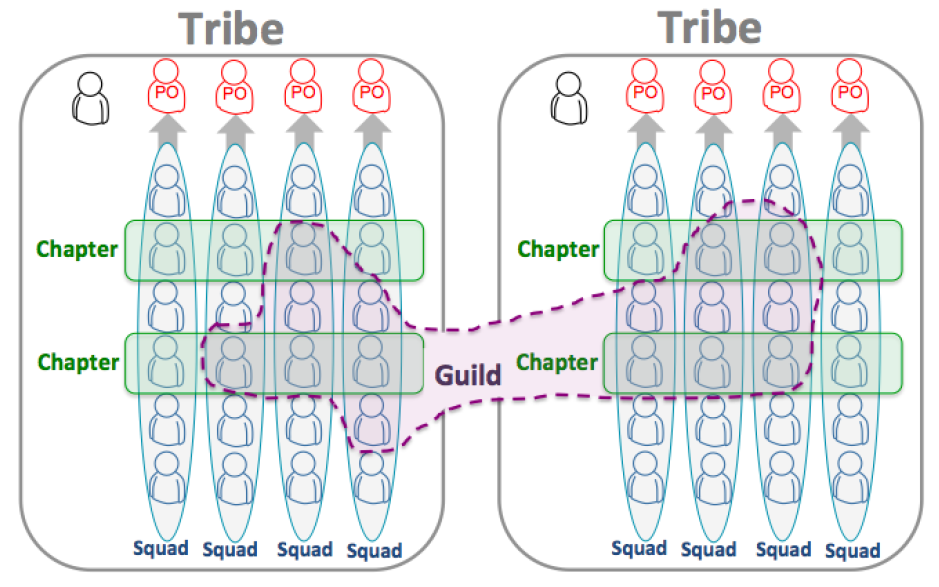
Between 15 to 150, we usually say you are a tribe. If you want to perform, your tribe needs to rely on a strong culture. Values, rites and common language (NB: have a look at Spotify’s powerful engineering culture). A way to recognize each other, and to share the same purpose. When two co-workers of the same tribe run into each other on the street, they both are happy to stop by, and chat for a few minutes. You don’t really know everybody, but you kinda like them 🙂

Beyond 150 people, your company is something more like a crowd. Now, it is easy for anyone to become a stowaway. You can hide within the organization. You can shout on the bosses you almost never see anymore. As you have numerous tribes in your company, beware of territory warfare. Some people will try to gain power by taking it to their coworkers. In a crowd, no-one really cares about their neighbours…

4) NB: What are the concrete tools you suggest to maintain cohesion, and consistency of the organization along its growth? Tell us about your Take-off workshop + Fly coaching.

Erwann: First of all, we like to say that working with teams is like breathing. You need time to inhale, take a step back, and get prepared. And then you have phases of exhalation, when you go on field, to make your projects real, and learn. In our lingo, we call it TAKE-OFF and FLY.

  • During TAKE-OFF, all the team needs to align on their purpose, their noble cause, the reason why they work. Then, the vision. What do we aim for ? When we close our eyes and think about our future and numerous success, what do we see ? The collective building is the main motivation of mankind, so it is important that everyone shares it, in a precise way. The vision is described in short and long term, and on all the important subjects of your company.
  • Then you have to work on who you are, as a team. What is your corporate culture ? You need to bring your corporate values to life. The TAKE-OFF is the time when you work on understanding it, all together.
  • Finally, you can list all the results your company will need in the next months. What is essential to reach your goals ? When you have a complete list, just ask who wants to commit to obtain the results. At the end, everyone will know what he needs to do for the team.

  • Now, it is time to FLY. Preparation is over, we are going into the battle. Leaders role is simple. They are here to repeat the purpose and the vision, all day long. Day-to-day operations is incredibly powerful to make us forget why we do thing. To stay focus and consistent, we will need some reminders.
  • To improve your cohesion, values need to be embodied. You can work on all your relational processes (HR as recruitment, on-boarding, evaluation… and Customer relationship, as much as supplier, partner…). Use your values to invent new ways of doing it, ways that only works for you. Your team is unique, use its singularity!
  • Finally, you need to adapt your project constantly. All the results you define need to evolve. You will obtain some, give-up on others, think of new ones, and freeze on the difficult ones. So on a weekly basis, you need to share informations with the team. Priorization is a group activity. (NB: time-boxed organization sprints!)

To sum-up, it is fundamental that all of your coworkers knew at each time why they are working for, where the project is headed, who is their team, how does it works, and what they’re supposed to do for the team…

5) NB: Would you say that you are working on the basis of ‘organization sprints’ just like we apply development sprint in the Scrum / Agile methodology? With different short-term, mid-term, long-term results?

Erwann: Absolutely. Even if our methodologies are not inspired by the Agile methodologies, we have a lot in common. The length of our sprints depends on the projects we work with. Sometimes by the week, sometimes by the month. We also have a “FLY Master“, a facilitator who help the team to respect the rules.

There is some differences though. The activities of a company are less consistent than the user stories of a agile development. Partnership or Lawsuits may take forever, when you often monitor your sales process on a weekly basis. Therefore, we need to widen the perspective. We don’t work on a define project, but on never-ending growing companies. All our work on the long-term vision is mandatory…

5) NB: One last question! Elmar Mock, one of the Swatch’s inventor and head of the innovation agency Creaholic, claims that ‘to keep your employees committed to innovation, the most important thing is to avoid the feeling of unfairness’ What is your opinion about that? What keeps employees committed?

Erwann: I agree with Elmar. Innovation is a sensitive matter. In order to express your ideas and feeling about the project, you need to be in a safe environment, a place where you will be treated fairly. If no one listens to you, or worst, if some (boss or colleague) take credit for your work, you will stop expressing yourself. Soon, you will do the job, nothing more.

Innovation need an incredible amount of individual commitment. Co-creation is the most difficult art. Without fairness, there is no trust, and without trust, everyone works in a corner, doing the minimal job, spying on each other… Sharing a noble cause and some values unites a team, making it possible for everyone to be commited, and creative.

Credits: Fly the Nest,  Steve Jurvetson via Flickr, Spotify, Think interactive, Hdwallpapers.in


Subscribe to Human-Centered Change & Innovation WeeklySign up here to get Human-Centered Change & Innovation Weekly delivered to your inbox every week.

2017 Open-Innovation Centers: Multi-faceted with New Business Model Focus

GUEST POST from Nicolas Bry — originally published on Innovation Excellence.

While 2016 saw innovation centers, intrapreneurship programs, corporate startups accelerators, and corporate FabLabs blossom, I expect 2017 to see the rise of a new kind of open-innovation centers: they will be multifaceted and oriented toward the shape of new business models.

1. Multifaceted innovation centers

Innovation centers, intrapreneurship programs, corporate startups accelerators, and corporate FabLabs have one thing in common, they all tend to accelerate innovation projects:

  • Innovation centers host dedicated autonomous teams to move faster, and deliver out-of-the tracks innovations;
  • Intrapreneurship programs and corporate FabLabs welcome employees, and train them to shape innovative projects;
  • Corporate startups accelerators help startups to find businesses with the corporation for their innovations.

As they share the same goal, it’s time for all these innovation teams to share the same space, as well as training, mentoring, and supporting resources.

  • The methodological approach to building a value proposition, fulfill a business model canvas, design a meaningful product and service in short cycles including user feedback, based on Agile / Scrum guidelines, and market innovation, is mostly similar across these teams;
  • The lessons to compose, lead, and grow an innovation unit, and the network to engage the corporation on the creative product (like demo days, and connections with the business units looking for innovation), can be fruitfully mutualized across intrapreneurs, startups, and corporate innovation teams.

Airbus BizLabs “hybrid” concept and BNPParibas Wai (We Are Innovation) are initiating this trend, by mixing startups with intrapreneurs in their premises. Oracle will soon open a creativity space open to startups, customers, and employees.

Furthermore:

  • The selection criteria and committees for these different acceleration programs, though they are not identical, can largely be aligned; the needs of the operational business units, and the problems that they want to be solved, can establish a solid common ground to nurture the various programs; the corporate mentors or sponsors used to coach startups or intrapreneurs can be shared;
  • Additional teams such as extrapreneurs (employees starting a start-up out from the corporation) or inter-entrerprises innovation teams (partnering companies collaborating on innovations, for example, like on the Internet of Things) can join this new type of open innovation center, that we might also call CrossLab;
  • Users selected through crowd-innovation platforms are welcomed in this next-gen open-innovation center;
  • In case the corporation handles a Corporate Venture program (Capital Investment), their startups in portfolio can attend the acceleration sessions and workshops, and work in the centre on a regular basis;
  • At last, these open innovation centers must be 7/7 living places, hosting innovation events, that bring ideas from the outside: this space should look like a busy beehive.

Besides the share of resources and methodology, the main benefit will be the percolation of external startups culture with the inside culture of the employees (intrapreneurs, extrapreneurs, corporate innovation teams). Startups will grow their network and connections in the corporation, understand better the needs and organization of a large company, and employees will learn on an equal footing how startups form and grow. Employees will develop their entrepreneurial spirit.

2. Business model oriented innovation centers

Why the hassles of building innovations, if it doesn’t come with a powerful business model? It remains an invention, that others will unearth later on, it might well be years after, and bring it to success without you receiving any benefit. The first electrical car to go over 100 km/h was invented in 1899 by Camille Jenatzy, and did make any profit from the success of Tesla Motors 116 years later!

What is the point of innovation, if it’s not to build great new products and services, with profitable business models?

The work on innovation design goes hand in hand with business model innovation, and holistic innovators will think carefully of all the necessary enablers for their innovation (ecosystem oriented, product as a platform), and of the fair and creative way to share the value among their contributive partners, including their users. Business design must be a proportionate endeavour to product and service, in order to combine right value propositions and business models as Alexander Osterwalder underlines.

Rather than an Opportunity Discovery Department that Philippe Silberzahn accurately describes, Open-Innovation Centers must go for business, and invent new business models: it’s the purpose of innovation, and it’s the right way to connect, and gain respect from the business units. Cooperate and not push or sell. Actually, you don’t sell innovation: you create desire for change, turning your innovation from a problem stressing the absorptive capacity of the company, to a solution to a business problem.

As Tendayi Viki clearly encourages, number of validated business models, and number of validated business models taken to scale, must be part of the metrics of open-innovation centers to demonstrate their impact.

There was a saying in ancient Rome: “It is not far from the Capitoline Hill (where consuls took their vows) to the Tarpeian Rock (from which criminals were thrown to their death). This works also for innovation centers that forget about the business, and which might well be shut down, shortly after they’ve been set-up.


Subscribe to Human-Centered Change & Innovation WeeklySign up here to get Human-Centered Change & Innovation Weekly delivered to your inbox every week.

Visiting Media Lab Bayern [interview]

GUEST POST from Nicolas Bry — originally published on Innovation Excellence.

Stefan Sutor is Head of Strategy and Innovation at Media Lab Bayern. What’s the purpose of Media Lab Bayen? Stefan kindly takes for a tour in this tremendous entity.

Nicolas Bry: Could tell us about your experience, and how you’ve joined the Media Lab Bayern?

Stefan Sutor: As Head of Digital Strategy at the Bavarian Regulatory Authority for Commercial Broadcasting, innovation is my major focus. We came up with the idea of a Media Lab because we realized that the legacy media houses were struggling with digitalization, and media startups were almost non-existent. So while the market was in drastic need of innovation, there was no room for experiments.

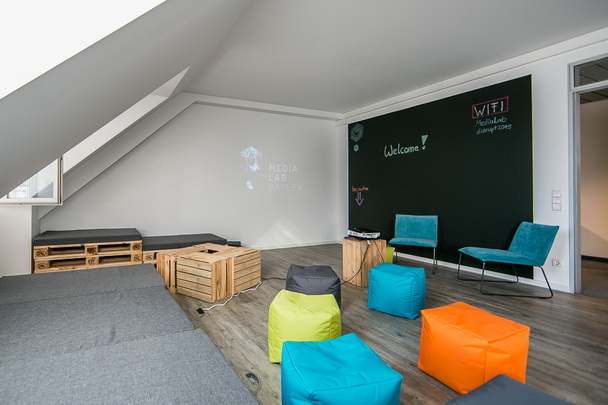
Media Lab Bayern opened its doors in July 2015, it is an incubator for new ideas in digital journalism –  a safe space in which interdisciplinary teams can get together, come up with ideas and build apps and prototypes. We serve as a laboratory, a room in which ideas can be turned into a prototype. We are a project by the BLM and financed by the Ministry of Economic Affairs and Media, Energy and Technology. As a branch of two major institutions, we are completely non-profit, and we take zero equity.

We offer a free co-working space in which journalists, developers or web designers can work on innovative media projects. Our second branch of support is the fellowship.

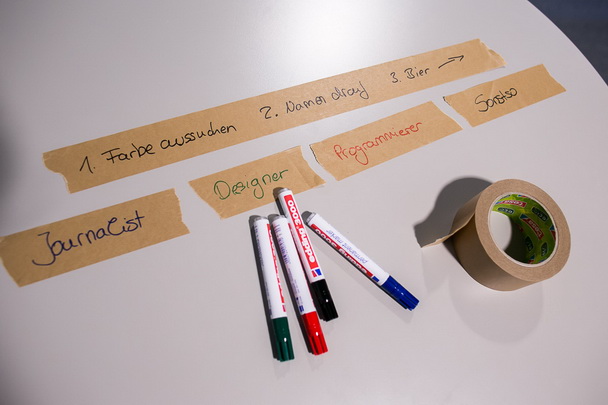
  1. Phase one of our fellowship is the Media Entrepreneurship Program – a two months class in design thinking and team-building. It is a part-time program so anyone with a first idea can apply. During the program, participants have the opportunity to validate their ideas and meet team members.
  2. Phase two is our Media Startup Fellowship, a full-time program for teams who have a validated idea, and who are looking to turn their idea into a prototype. They get a prototyping budget, and many coaching- and mentoring sessions in order to turn their ideas into a fully-fledged startup.
What is the media Lab purpose? What are the current innovation challenges you’re concentrating on? What examples of digital media innovative projects can you share with us?

It is our purpose to provide room and support for innovative ideas in digital journalism. With mobile internet usage exploding and platforms and social networks rising, journalists have lost control over the distribution of news which simultaneously creates a need for new business models. The teams at the Media Lab find very diverse answers to the challenges that emerge from the current trends.

In the second batch, we had Bohème for instance – a startup which employs beacon technology in order to offer location based reading. With the Bohème App users can access paid digital versions of magazines and newspapers for free while they are in a certain location. It started out in bars and restaurants and is now even available on some trains in Bavaria. The team has found a creative answer to the trend of personalization that users are consuming media on the small screen, and contextual, while they are on a coffee break or on the train.

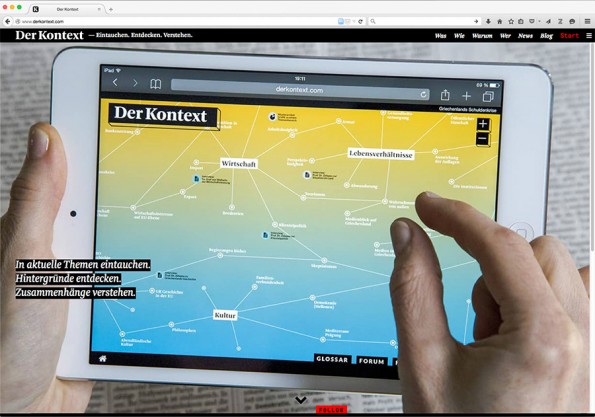
Another team from our first batch is DerKontext a new form of digital magazine which allows users to explore topics within a context map. Users can get a first overview as well as detailed in-depth information by zooming in and out. The startup has come up with a completely new way of digital storytelling and offers a solution to the lack of insight many users feel they have into complex current affairs, such as the climate change, the war in Syria or the refugee crisis.

What specific methodologies has developed the Media Lab Bayern to complete innovative projects in digital journalism? How do you incubate innovation teams?

We found that it is the most common problem that journalists don’t have any network to developers and designers. So at the Media Lab, we insist on working with interdisciplinary teams, and it is our goal to connect journalists with professionals from the tech field. We employ the lean startup approach and also rapid prototyping and design thinking. These theories, while well established in the field of technology and inside the startup scene, are completely new to the media sector. We try to get the journalists to build media the users actually want, and we encourage them to ask users about their needs. Only this way they build products people want to pay for. For many journalists, this approach is absolutely contrary to what they have learned in the various journalism schools, and publishing houses.

What resources and skills do you rely on?

One of our major goals within the last year was building a strong network of partners and many fantastic local media- or tech- companies such as Microsoft, Google, Mediaplus, ProSiebenSat1, Vodafone, Sky and many others have joined us in order to bring forward digitalization in media. We have also acquired many coaches and mentors who have taken on the challenge to apply their knowledge about startups and entrepreneurship to the field of digital journalism and create programs that specifically meet the need of media startups. Regarding the skills people need to apply for our programs, we encourage people to have an in-depth knowledge about their special branch – journalism, design or development. We found that teams that consist of specialists move forward faster than others.

How do you practice open innovation with players in the journalism industry, like corporations or startups?

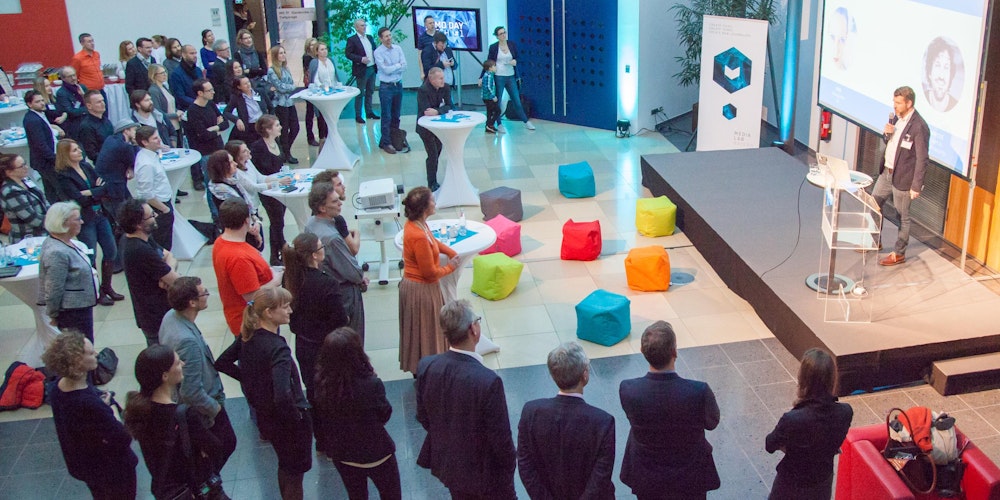
There are many events such as the Digital Journalism Hackathon or the Digital Media Camp, a barcamp, where the public can join us. We also have a Think Tank in which local journalists can meet in order to discuss current issues in digital journalism. We offer coding classes and design thinking workshops for journalists, and there are monthly expert- talks and meet-ups at the Media Lab. All these events serve our goal to bring forward innovation in the digital media in the whole industry and not just startups.

Media Lab Bayern name resonates with famous MIT Media Lab: how does MIT Media Lab inspire you? What communalities do you share?

The esteemed MIT Media Lab is definitely an inspiration to us, as well as the New York City Media Lab. There are many fine institutions which also foster innovation in this specific industry. However, when we created Media Lab and in our day-to-day work, we always try to stick as closely to our market as possible in order to really support local journalists, and help them find ways to react to the specific situation the media houses are dealing with here in Germany and Bavaria.


Subscribe to Human-Centered Change & Innovation WeeklySign up here to get Human-Centered Change & Innovation Weekly delivered to your inbox every week.

The Social Media Lab from Belgium

GUEST POST from Nicolas Bry — originally published on Innovation Excellence.

François Lambotte, PhD in Management Science, professor, and deputy dean of ESPO (University in economical, scoial, political, and communication sciences)  is heading the UCL Social Media Lab.

UCL means Catholic University of Louvain, a great city near Brussels in Belgium. But what does Social Media Lab encompass? François tells us more about it.

Nicolas Bry: What is the reason why you created the social media lab?

François: In 2013, I was part of a strategic group in charge of the positioning of our campus (situated in Mons) as regards new challenges related to entrepreneurship and digital economy. We realized that a number of similar labs in universities existed around the world. They were all focused on social media use by individuals (consumers and citizens). We decided to differentiate ourselves by looking to social media use in professional context (www.socialmedialab.be).

NB: What are the social media lab main domains of investigation? social graph analysis, data viz, linguistic and semantic analysis…

François: We currently work on two major research projects.

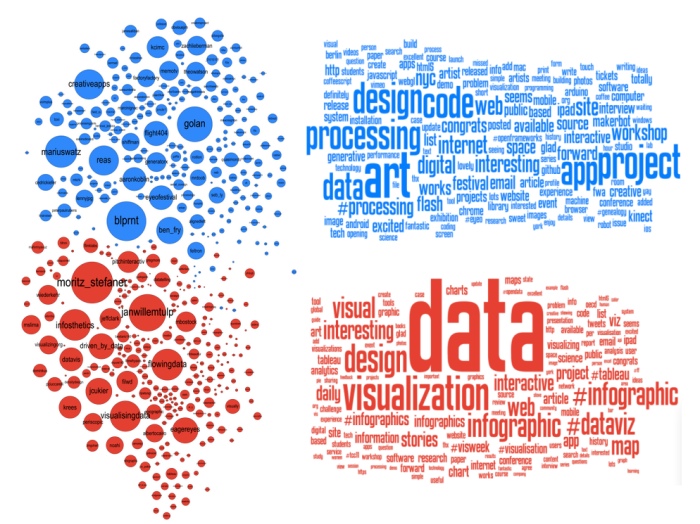
First, we particularly work on the intelligibility of social media activity for ourselves and others. Based on current research development in different fields (social graph, linguistics), we identify relevant measures of activities that can help us to make sense of the activity (i.e., online information sharing and collaboration). Then we prototype dashboards with those analytics. From there, we develop a number of research questions :

  1. What are the most suitable visualizations for each metric based on the literature on data visualisations?
  2. How do users make sense of these metrics?
  3. What role emotional design plays in the understanding of data visualization?
  4. How does this ‘sense making’ influence their online behavior?
  5. How does the context of usage influence this ‘sense making’?

Second, we just started a new project investigating collaborative behaviors on platforms corresponding to different steps of the entrepreneurial process: ideation, crowdfunding, crowdsourcing. Our aim is to identify collaborative tools and practices that would help foster collaboration among entrepreneurs active in Brussels.

NB: Can you describe the multidisciplinary team you have built? What skills are the most difficult to find? How do you foster cross-collaboration?

François: The rise of social media and its influence on our Society cannot be addressed through a single theoretical lens. The UCL Social Media Lab is a multidisciplinary team that gathers researchers from communication sciences, applied mathematics, linguistics, and consumer behavior. The multidisciplinary approach is key if we want to innovate.

Developers who are keen to work in social sciences teams are not easy to find. We have been very lucky to find Philippe our talented developer who is extremely receptive to our problematics and able to address our human and communication challenges.

In ordre to attract, people from different discipline, I make sure that we can as Social Media Lab give them something that they cannot find elsewhere namely data sets and high level equipments (e.g. we will have a fully equipped usability lab beginning of 2017).

NB: Have you developed specific methodologies to perform your projects?

François: We are still exploring innovation methods that would help us get more efficient on the long run. Yet, because of the small size of the team, we can still be very flexible in terms of coordination methods. I look particularly to methods such as design thinking (Tim Brown 2009) and boundary objects (GC Bowker, 2015). As regards the latest, I am particularly sensitive to the role of objects such as prototypes as objects situated at the boundaries of different worlds that are interdisciplinary teams but also between the world of research lab and the one of organizations.

NB: How do you collaborate with external companies? Are you focused on large companies, or do you also work with startups?

François: The strategy of interestment is key. We develop collaborations based on the concret issues that our partner are facing using social media in professional context. It is our starting point.

We develop collaboration with SMEs, like Whatever or SoPrism, situated mainly in Wallonie as our project is supported by FEDER and FSE. Both funding are targeted to help regional economy to grow. Yet, we also develop international collaboration such as the recent agreements with Orange innovation and with elCurator.

NB: Do you plan to have a place for coworking, open innovation, and cocreation at Louvain university?

François: Yes, our Social Media Lab is situated on the same floor as the « student start lab » of UCL. Our aim is of course to foster collaboration between our lab and the incubator.

Enregistrer


Subscribe to Human-Centered Change & Innovation WeeklySign up here to get Human-Centered Change & Innovation Weekly delivered to your inbox every week.