Breaking Corporate Silos
GUEST POST from Art Inteligencia
The True Cost of Corporate Silos (The Human Element)
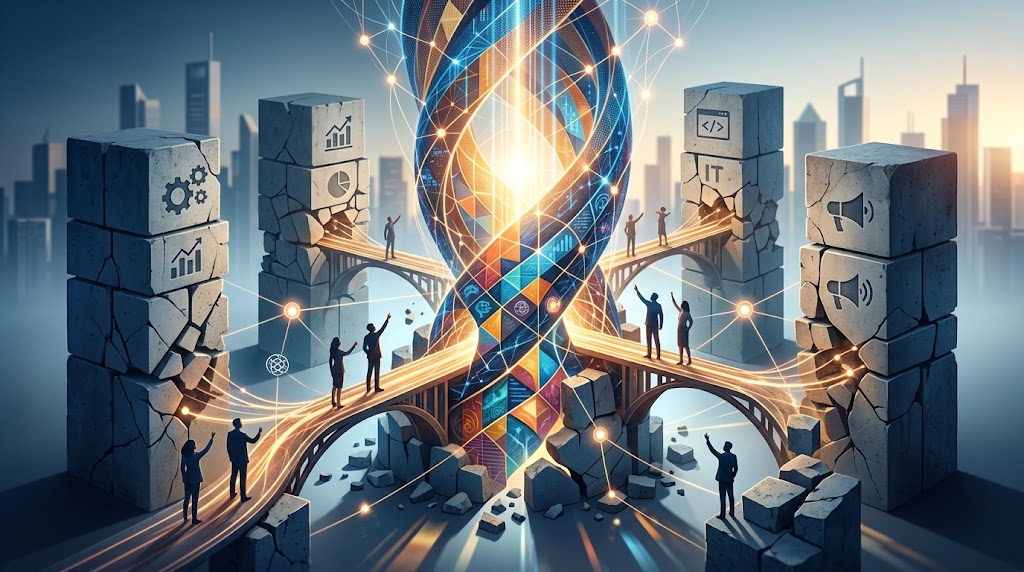
Silos are rarely created by org charts; they are built by human nature under pressure. When organizations attempt to solve cross-functional friction by simply redrawing reporting lines, restructuring departments, or deploying new collaboration software, they miss the root cause entirely. Silos aren’t structural boundaries—they are behavioral, psychological, and cultural fortresses.
Beyond Organizational Charts
Traditional change initiatives treat organizational design like software development or mechanical engineering: move a box here, rename a title there, and expect the machinery to run faster. But an org chart is merely a representation of dynamic authority, not dynamic human collaboration.
Restructuring without shifting how people interact only creates newly reshuffled silos. Until we address the fundamental human need for connection, clarity, and shared purpose across operational boundaries, departmental walls will immediately rebuild themselves around new titles.
The Psychology of Protectionism
Why do smart, well-meaning professionals isolate themselves? Because the system rewards it. When performance metrics are tied exclusively to departmental KPIs rather than end-to-end organizational outcomes, self-preservation becomes the rational choice.
- Misaligned Incentives: Marketing is incentivized on lead volume, Sales on immediate revenue, Product on release velocity, and Customer Support on call duration. Each team optimizes locally, often to the detriment of the global experience.
- Operational Anxiety: In environments lacking psychological safety, sharing raw ideas or operational challenges across department lines feels like exposing vulnerability. Teams hide work-in-progress behind departmental veils until it is too late to adapt.
- Information Hoarding: Knowledge becomes currency. When teams feel competed against rather than aligned with, withholding context and expertise becomes an unspoken leverage tactic.
The Hidden Tax on Innovation
The ultimate victim of corporate friction isn’t just internal morale—it is the customer experience (CX) and the employee experience (EX). Every seam, handoff, and disagreement inside an organization eventually manifests as a friction point for the end user.
“Your customer will always feel the shape of your internal organization. If your teams are fragmented, your customer journey will be fragmented.”
When handoffs fail, innovation stalls. Breakthrough value creation requires the collision of diverse perspectives—the cross-pollination of technical capability, market insight, operational reality, and strategic vision. When silos isolate these capabilities, the organization pays a compounding tax: slow speed-to-market, duplicated effort, burnout, and solutions designed for internal convenience rather than human impact.
From Mandates to Participation: The Power of Human-Centered Design
Top-down mandates may command compliance, but they can never inspire commitment. When leadership attempts to force cross-functional alignment through decree, it triggers natural human resistance. Breaking down organizational walls requires shifting from an push-based model of governance to a pull-based environment of active participation and co-creation.
Co-Creation over Top-Down Directives
The fundamental flaw of traditional change management is that it treats people as objects to be managed rather than active participants in shaping their own operational reality. Sustainable organizational alignment cannot be dictated from an executive retreat; it must be designed collaboratively at the intersections where daily work actually happens.
When you engage teams in co-creating solutions to cross-functional friction, ownership shifts. People naturally support what they help build. By replacing top-down directives with participatory frameworks, change transforms from an externally imposed burden into a shared journey of innovation.
Democratizing Innovation
For too long, organizations have treated “innovation” as a designated department, an elite R&D group, or a specialized task force. This structural isolation inherently signals to the rest of the company that creative problem-solving is someone else’s job.
- Innovation as a Collective Capability: True resilience comes from empowering every employee—regardless of title or function—to identify friction, question legacy assumptions, and contribute to value creation.
- Unlocking Frontline Insights: Frontline customer service, sales, and operations teams often possess the clearest understanding of operational friction points, yet their voices are rarely integrated into strategic design loops.
- Breaking Departmental Elitism: Democratizing innovation strips away functional arrogance and creates a culture where the best idea wins, no matter where in the org chart it originates.
Building Psychological Safety
Participatory frameworks cannot function without psychological safety. If individuals fear judgment, political blowback, or administrative penalty for pointing out cross-functional breakdowns, they will naturally default to the safe haven of their silo.
“Cross-functional harmony thrives only when visual, neutral tools replace hierarchical power dynamics—allowing teams to critique the system, not each other.”
Human-centered experience design introduces visual canvases, structured exercises, and objective boundary objects that depersonalize conflict. By externalizing problems onto a shared visual space, cross-functional teams stop arguing across the conference table and start working side-by-side to solve shared challenges.
Actionable Frameworks for Alignment
Intent without structure is merely wishful thinking. To move beyond broad declarations of “collaboration,” organizations need concrete, repeatable visual toolkits that allow disparate teams to externalize complex ideas, build shared understanding, and co-create solutions in real time.
Visual Problem-Solving Canvas
Language divides us more often than we realize. Marketing, Engineering, Finance, and Operations each possess their own jargon, priorities, and implicit assumptions. When these groups meet in text-heavy documents or slide decks, key nuances are routinely lost in translation.
A visual canvas serves as a neutral boundary object. By mapping challenges, dependencies, user needs, and capability constraints onto a single visual plane, you create a common language. It levels the playing field—allowing the quietest subject matter expert and the most senior director to contribute with equal clarity and impact.
Mapping the Value Stream Holistically
Most departments map their own processes in isolation, optimizing for local efficiency while remaining completely blind to the handoff friction created upstream or downstream. Holistic experience design requires viewing the entire organizational engine through a unified lens.
- End-to-End Journey Blueprinting: Map the total customer journey directly alongside the internal employee activities, systems, and departmental handoffs required to deliver each moment.
- Exposing the Seams: Explicitly highlight handoff zones—the critical operational handoffs where information, responsibility, or customer context is most vulnerable to dropping.
- Shared Ground Truth: When teams visually trace how a delay in Product impacts Customer Support, or how a shortcut in Marketing creates operational churn, natural empathy replaces finger-pointing.
The Architecture of Change
Large-scale organizational change initiatives often fail because they attempt monolithic, all-at-once transformations that trigger corporate defense mechanisms. A human-centered approach relies on agile experimentation applied directly to organizational behavior.
“Don’t reorg the entire company to solve a cross-functional breakdown—prototype small collaborative micro-habits, test them in low-risk environments, and scale what actually works.”
By establishing rapid prototyping loops for workflows, decision-making rights, and communication protocols, cross-functional teams can safely test new ways of working together. These micro-habits de-risk transformation, build muscle memory, and demonstrate immediate value before scaling across the broader enterprise.
Designing the Cross-Functional Experience
Eliminating operational silos is not a one-time project—it is an ongoing operational discipline. To sustain cross-functional harmony, leadership must deliberately design the organizational mechanics, rituals, and forward-looking capabilities that govern how teams interact day in and day out.
Shared Metrics & Outcome Ownership
If you want to change human behavior, you must first change how value is measured. When performance management focuses exclusively on departmental outputs—number of tickets closed, features shipped, or campaigns launched—it reinforces territorial instincts and encourages local optimization.
- From Output to Value: Transition from volume-based departmental KPIs to cross-functional performance indicators tied directly to systemic customer and business outcomes.
- Joint Accountability: Establish shared accountability models where Product, Marketing, Sales, and Support succeed or fail together based on collective adoption, satisfaction, and lifetime value metrics.
- Aligning Inverted Incentives: Continuously audit internal scorecards to identify and eliminate conflicting targets that pit teams against one another in zero-sum battles for resources.
Cross-Pollination Rituals
Empathy cannot be mandated through policy; it must be cultivated through experience. Purposeful, repeating collaboration touchpoints build social infrastructure and shared context across functional boundaries.
By establishing regular cross-disciplinary discovery sessions, joint customer research reviews, and collaborative problem-framing workshops, organizations create space for organic relationship-building. When professionals understand the operational realities, constraints, and pressures of their peer departments, friction gives way to active partnership.
The Futurology Lens
Organizational silos often re-emerge during periods of rapid growth, technological disruption, or market shifts. Applying strategic foresight allows change leaders to anticipate structural and cultural strain before it impacts execution.
” do not wait for digital transformation to expose your organizational seams. Use scenario planning to identify future operational friction points and design your cross-functional capabilities ahead of the curve.”
By stress-testing collaborative models against emerging trends—such as AI integration, distributed workforce shifts, or evolving customer expectation frameworks—organizations can proactively build the adaptive muscle required to navigate future complexity without fracturing into defensive silos.
Conclusion: Sustaining Cross-Functional Harmony
Silos are not a permanent state of organizational reality—they are a symptom of unexamined systems and unguided human dynamics. Dismantling them requires moving beyond top-down mandates and structural reorganizations to embrace participatory, human-centered ways of working together.
Culture Follows Experience
Too many change initiatives attempt to shift corporate culture in the abstract through values statements, slogans, or executive speeches. But organizational culture is simply the shadow cast by the daily employee experience. You cannot talk your way into a collaborative culture; you must design the experiences that make collaboration natural, rewarding, and inevitable.
When you equip cross-functional teams with visual canvases, shared metrics, and psychological safety, you change their day-to-day experience. As those daily interactions shift from friction-heavy handoffs to co-creative problem-solving, the overarching culture naturally evolves toward sustained harmony.
A Call to Action for Change Leaders
Real transformation starts with those willing to lead without relying solely on positional authority. Change leaders, innovation practitioners, and experience designers must act as catalysts across the enterprise—creating neutral spaces where functional boundaries dissolve and shared value creation becomes the primary focus.
“Do not wait for an organizational restructure to fix cross-functional friction. Introduce participatory frameworks into your next meeting, map the value stream collaboratively, and turn departmental friction into innovation momentum.”
By embedding participatory frameworks into the regular rhythm of business, organizations replace territorial defensiveness with collective intelligence—building an adaptive, unified organization capable of out-innovating the market and delivering exceptional experiences for customers and employees alike.
Frequently Asked Questions
Why do traditional organizational restructures fail to eliminate corporate silos?
Traditional restructures focus on moving boxes on an organizational chart rather than addressing underlying human behaviors, conflicting departmental KPIs, and operational anxiety. Restructuring changes reporting lines, but without participatory frameworks and visual tools, teams quickly rebuild siloed habits around their new titles.
What are participatory frameworks, and how do they improve cross-functional collaboration?
Participatory frameworks are visual, human-centered toolkits and structured co-creation processes that bring diverse functional perspectives together on equal footing. They depersonalize conflict by externalizing challenges onto shared visual spaces, establishing a common language, and fostering joint ownership over solutions.
How can organizations transition from siloed departmental KPIs to shared outcome metrics?
Transitioning requires shifting from volume-driven departmental outputs (such as tickets closed or features shipped) to cross-functional value metrics (such as end-to-end user adoption or customer lifetime value). Creating joint accountability scorecards ensures departments share success rather than competing for local optimization.
Bring This Thinking to Your Next Event
Braden Kelley is a LinkedIn Top Voice, bestselling author, and innovation keynote speaker who helps organizations get to the future first and build sustainable innovation cultures.
Image credit: Gemini
 Sign up here to get Human-Centered Change & Innovation Weekly delivered to your inbox every week.