LAST UPDATED: March 5, 2026 at 4:07 PM
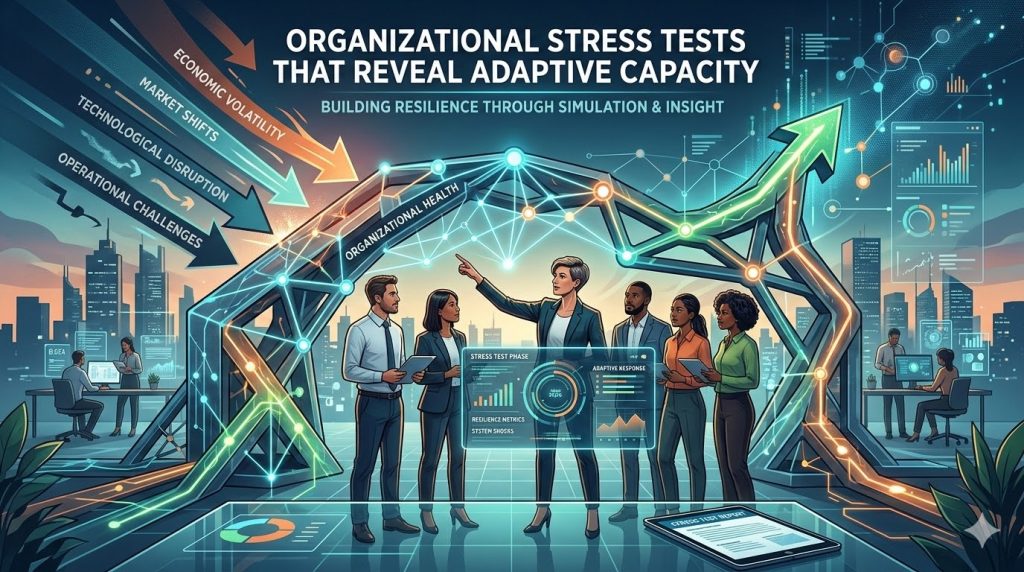
GUEST POST from Art Inteligencia
Beyond Efficiency to Adaptability
For too long, the corporate world has worshipped at the altar of efficiency. We’ve spent decades leaning out processes, cutting “redundancy,” and optimizing for a world that stays static. But here’s the reality: innovation isn’t about the hours you put in; it’s about the insight you bring out. If your organization is so tightly wound that it has no room for those insights to breathe, you aren’t efficient — you’re brittle.
The Efficiency Trap
Many leaders mistake a streamlined operation for a resilient one. In truth, an over-optimized system often lacks the “slack” necessary to respond to sudden market shifts. When the unexpected happens, these rigid structures don’t bend — they break. True leadership requires moving beyond mere optimization to cultivate adaptive capacity.
Defining Adaptive Capacity
Think of adaptive capacity as the hidden elasticity within your culture, your processes, and your people. It is the structural integrity of the vessel. While your competitors are busy counting the hours spent in meetings, an adaptive organization is focused on the speed and quality of the insights they can navigate to the finish line. It is the difference between a ship that looks good in the harbor and one that can actually survive a gale.
The Thesis: Testing the Vessel
Resilience isn’t a passive trait you hope you have when disaster strikes; it’s a muscle that must be intentionally built and tested. By applying controlled “stress tests” to your organization, you reveal the friction points that stifle change. We don’t test to find failure; we test to ensure that resilience is the vessel strong enough to carry your most transformative ideas all the way to completion.
Test 1: The “Information Vacuum” Stress Test
In a traditional hierarchy, information flows down and permission flows up. But in a fast-moving market, this “wait-and-see” culture is a death sentence for innovation. The Information Vacuum stress test is designed to measure your organization’s autonomous pulse: what happens when the “boss” isn’t there to give the answers?
The Scenario: Removing the Top-Down Directive
Imagine a critical project or a sudden operational hurdle occurs, but the executive leadership team is intentionally silent. No memos, no “all-hands” guidance, and no direct orders for 48 hours. Does the organization freeze, or do the teams closest to the problem step up to solve it?
What This Test Reveals
- Empowerment of Middle Management: Are your managers leaders, or are they merely “order-takers”? This test exposes whether they have the confidence to make calls based on the insights they bring out from the front lines.
- Clarity of the “North Star”: Resilience is the vessel, but the “North Star” is the compass. If teams don’t know the ultimate goal, they cannot navigate the vacuum. A successful test shows teams aligning their actions with the company’s core purpose without being told to do so.
The Metric: Time to Autonomous Action
The key performance indicator here isn’t the hours you put in trying to reach a supervisor; it is the Time to Autonomous Action. We measure how long it takes for a team to identify the gap, form a cross-functional response, and execute a decision. If your vessel is leaking authority, the time to action will be infinite. If it is resilient, the “Information Vacuum” becomes a space where your best talent finally has the room to breathe and lead.
Test 2: The “Rapid Pivot” Simulation
In a world of constant disruption, your organization’s greatest risk isn’t a lack of effort; it’s a lack of agility. If innovation is about the insight you bring out, then your business model must be flexible enough to act on those insights instantly. The Rapid Pivot simulation tests whether your resources are liquid or frozen in place.
The Scenario: Removing a Core Revenue Stream
This is a high-stakes tabletop exercise. We simulate a reality where a primary product line, a key customer segment, or a major revenue stream is suddenly rendered obsolete by a competitor’s breakthrough or a regulatory shift. The challenge: The organization must draft a viable “Pivot Plan” within 48 hours to maintain its resilience and market position.
What This Test Reveals
- Resource Fluidity: Are your budgets and talent pools locked in departmental “silos,” or can they be reallocated to a new opportunity by the end of the day? A resilient vessel doesn’t sink when one compartment floods; it seals the bulkhead and redirects power.
- Cognitive Flexibility: This test exposes the “Grief Cycle.” Does the leadership team spend their energy mourning the lost product, or do they immediately focus on the next insight? If the culture is too attached to “how we’ve always done it,” the vessel will never reach the finish line.
The Metric: The Pivot Velocity Score
We aren’t measuring the hours you put in to save a dying product; we are measuring the Velocity of Reallocation. How quickly can 20% of your top talent be reassigned to a new “insight-driven” project? If your organizational structure is too rigid to move, your adaptive capacity is zero. A high Pivot Velocity Score indicates an organization that views change not as a threat, but as the ultimate vessel for growth.
Test 3: The “Friction Audit” of the Idea Pipeline
Too many organizations think they have an “innovation problem” when they actually have a “plumbing problem.” If innovation is about the insight you bring out, we have to look at the pipes those insights must travel through. The Friction Audit isn’t about how many ideas you have; it’s about how many of them survive the journey to the finish line.
The Scenario: Tracking the “Wildcard” Idea
We select a high-potential, non-traditional “wildcard” idea from the front lines — the kind of insight that challenges the status quo. We then shadow that idea as it moves up the chain of command. Does it gain momentum, or is it slowly strangled by “business as usual”?
What This Test Reveals
- The Resilience of the Idea: Does your culture act as a vessel that carries the idea forward, or as a filter that strips away its transformative potential? If an insight has to be “diluted” to get approval, your adaptive capacity is compromised.
- Psychological Safety: This test measures whether employees feel safe bringing insights out. If the friction is too high, people stop trying. They’ll put their hours in, but they’ll keep their best ideas to themselves to avoid the bureaucratic gauntlet.
The Metric: The Idea Velocity & Vitality Index
We measure the Velocity of Approval (how many layers of management must say “yes” before a pilot can begin) and the Vitality Index (how much of the original “disruptive” insight remains at the end of the process). If your process is designed to eliminate risk rather than manage it, your vessel is too heavy to sail. A resilient pipeline is one where friction is low and the “finish line” is always in sight.
Section V: Analyzing the Results — Identifying the Fragile vs. the Antifragile
Data without action is just noise. Once you have run these stress tests, the goal isn’t to file a report; it’s to rebuild the vessel of resilience. If innovation is about the insight you bring out, then the analysis phase is where we find out why those insights are getting stuck in the hull.
Identifying the Structural Bottlenecks
The stress tests will inevitably expose “choke points” — areas where hierarchy, outdated KPIs, or a “we’ve always done it this way” mentality slows down adaptation. These are the leaks in your vessel. We look for patterns: Is the delay happening at the middle-management layer? Is it a lack of shared vision from the top? Or is the “hours in” culture so pervasive that people are too exhausted to be agile?
Spotting the “Connectors”
During a crisis or a simulation, certain individuals naturally step up to bridge silos. These are your Resilience Champions. They don’t just put the hours in; they are the ones who intuitively know how to carry an insight to the finish line by navigating around bureaucracy. A key part of your analysis is identifying these people and empowering them to lead the cultural shift toward higher adaptive capacity.
Building the Feedback Loop
- From Fragile to Robust: An organization that breaks under stress. We must identify these points and add the “slack” or autonomy needed to bend instead.
- From Robust to Antifragile: The ultimate goal. An antifragile organization doesn’t just survive the stress test; it gets better because of it. We use the data to build a Human-Centered Change Architecture that treats every disruption as fuel for the next innovation.
The Ultimate Insight
The result of these tests is a roadmap for transformation. We aren’t just looking for efficiency anymore; we are looking for the Adaptive Capacity that ensures your organization remains relevant long after the current market storm has passed. When you fix the vessel, you ensure the journey to the finish line is not just possible, but inevitable.
Conclusion: Building the Vessel of Resilience
At the end of the day, an organization’s adaptive capacity is its ultimate competitive advantage. We live in an era where the “safe” path is often the most dangerous one. If you aren’t constantly testing your structural integrity, you are simply waiting for a market disruption to do it for you — and by then, it might be too late to plug the leaks.
Summary: Insights Over Hours
As we’ve explored through these stress tests, innovation isn’t about the hours you put in; it’s about the insight you bring out. You can have the most brilliant minds in the world, but if your organizational “vessel” is too rigid, too siloed, or too fearful to move, those insights will never reach the finish line. Resilience is the vehicle that transforms a great idea into a market-shifting reality.
Final Thought: Don’t Wait for the Storm
The goal of these stress tests isn’t to create a culture of anxiety, but a culture of preparedness and empowerment. When you intentionally lean into these simulations, you aren’t just identifying weaknesses; you are building the “muscle memory” of change. You are proving to your teams that they have the permission — and the responsibility — to lead.
“The finish line isn’t a static point; it’s a moving target. Only the most resilient vessels have the agility to chase it down.”
Start small. Run one test. Listen to what the friction tells you. Then, iterate. That is how you build an organization that doesn’t just survive the future, but defines it.
Frequently Asked Questions
1. Why focus on “Adaptive Capacity” instead of just “Efficiency”?
Efficiency is about doing the same thing better; adaptive capacity is about having the structural integrity to do something different when the market shifts. Innovation isn’t about the hours you put in; it’s about the insight you bring out, and you need a flexible vessel to carry those insights to the finish line.
2. How often should an organization run these stress tests?
Resilience is a muscle. I recommend running a “light” version of a stress test — like an Information Vacuum simulation — at least once a year. This ensures your “vessel” stays watertight and your teams remain empowered to lead without waiting for a directive.
3. What is the biggest hurdle to building a resilient organization?
The biggest hurdle is a culture that prioritizes “hours in” over “insights out.” When people are penalized for the friction of a process they didn’t create, they stop innovating. Building resilience requires a human-centered approach that reduces friction and rewards agility.
Image credit: Google Gemini
 Sign up here to get Human-Centered Change & Innovation Weekly delivered to your inbox every week.