
Tag Archives: Ford Motor Company

Predictive Analytics in Innovation Performance Measurement

Predictive Analytics in Innovation Performance Measurement

GUEST POST from Art Inteligencia

In an era where innovation is the competitive edge, organizations are increasingly looking towards predictive analytics to measure and enhance innovation performance. By leveraging patterns in data, predictive analytics allows organizations to anticipate future outcomes, optimize processes, and ensure agility in their innovation efforts. In this article, we delve into how predictive analytics is revolutionizing innovation performance measurement with real-world case studies.

Understanding Predictive Analytics in Innovation

Predictive analytics involves utilizing statistical algorithms and machine learning techniques to identify the likelihood of future outcomes based on historical data. In the context of innovation, it focuses on predicting trends, identifying potential pitfalls, and measuring the probable success of new ideas. This data-driven approach provides actionable insights, enabling informed decision-making and risk mitigation.

Case Study 1: Philips and Healthcare Innovation

Philips, a global leader in health technology, leverages predictive analytics to drive innovation in healthcare solutions. By employing machine learning algorithms and big data analytics, Philips evaluates vast datasets including patient records, device feedback, and diagnostic information.

For example, Philips developed predictive models to innovate chronic disease management. By analyzing historical health data, they identified patterns and key indicators of disease progression. This allowed Philips to create personalized treatment plans and predict potential health risks before they manifested, enhancing patient outcomes and streamlining healthcare services.

The result was a significant improvement in patient care and operational efficiency, reducing hospital readmissions and lowering costs associated with chronic illness management. Philips’ use of predictive analytics in innovation exemplifies how leveraging data can transform healthcare delivery and product development.

Case Study 2: Ford Motor Company and Product Development

In the automotive industry, Ford Motor Company stands out as an innovator using predictive analytics to fast-track product development. By analyzing consumer preferences, market trends, and manufacturing data, Ford predicts the success of new vehicle models and features.

Ford employed advanced analytics to understand the electric vehicle (EV) market and anticipate consumer demand. By integrating predictive insights into their innovation process, they were able to prioritize features that resonated with consumers, such as extended range and fast charging capabilities.

The analytics-driven innovation strategy resulted in the successful launch of new EV models that gained traction in the market, aligning with sustainability goals and consumer expectations. Ford’s experience underscores the critical role of predictive analytics in aligning product innovation with market demands, ultimately driving competitive advantage.

Key Benefits of Using Predictive Analytics in Innovation

The use of predictive analytics in innovation performance measurement delivers several benefits:

  • Anticipate Market Needs: Predictive analytics helps organizations understand evolving market trends, allowing them to develop products that meet future demands.
  • Optimize Resources: By forecasting outcomes, companies can allocate resources more effectively, ensuring that investments in innovation yield the highest returns.
  • Enhance Decision-Making: Data-driven insights enable leaders to make informed decisions, reducing uncertainty and improving strategy implementation.
  • Boost Agility: Organizations can rapidly adapt to changes and pivot their innovation strategies based on predictive insights, maintaining a competitive edge.

Challenges and Considerations

While the benefits are substantial, using predictive analytics in innovation poses challenges. Data quality and integration are paramount, as is the need for skilled data scientists to manage complex models. Moreover, organizations must foster a culture that embraces data-driven decision-making and continuous learning.

Successful integration of predictive analytics also demands robust data privacy and ethics policies to safeguard consumer trust and ensure compliance with regulations.

Conclusion

Predictive analytics is a powerful tool in the innovation arsenal, enabling organizations to anticipate changes, optimize strategies, and measure performance effectively. Through case studies like Philips and Ford, we see how data-driven innovation can transform industries, enhance customer satisfaction, and drive financial success. As we advance into a future shaped by data, embracing predictive analytics will be vital for sustaining growth and staying ahead in the competitive landscape.

By strategically integrating these tools, organizations not only improve their innovation performance but also set the stage for breakthroughs that can redefine entire sectors. Embracing predictive analytics is not just an option; it’s a necessity for those who aspire to lead in the innovation-driven world.

Extra Extra: Futurology is not fortune telling. Futurists use a scientific approach to create their deliverables, but a methodology and tools like those in FutureHacking™ can empower anyone to engage in futurology themselves.

Image credit: Pexels

Subscribe to Human-Centered Change & Innovation WeeklySign up here to get Human-Centered Change & Innovation Weekly delivered to your inbox every week.
Building Something Other Than a Faster Horse

Building Something Other Than a Faster Horse

GUEST POST from Jeff Rubingh

“If I had simply asked people what they wanted, they would have asked me for faster horses!” – Henry Ford

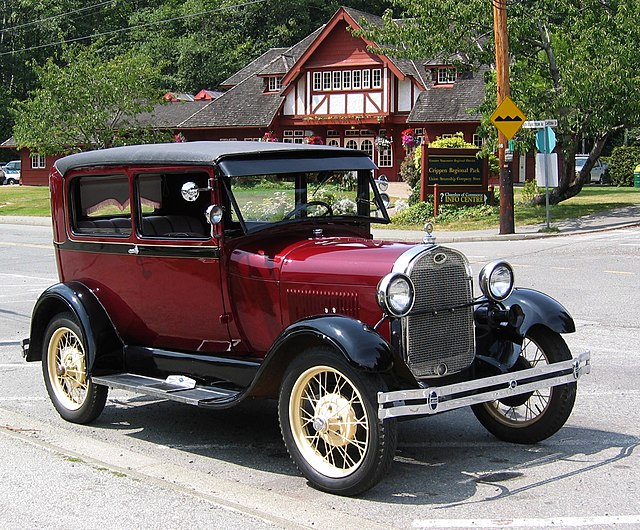
Eighty six years ago the intrepid and amazing Henry Ford and his Ford Motor Company introduced the Model A to the world. We have been amazed and enamored over the past few years at the long lines when a new Apple product has been introduced. But we have only to look back 86 years to witness a product rollout far more impressive in scale and magnitude. [1]

Henry Ford was well known for his devotion to the Model T. It was his baby. It had made him a fortune, established him as a paragon of industry and, with his commitment to a pricing model people could afford, endeared him to the people unlike any other public figure of the day. He was keenly aware of this role and the fundamental part his invention had played in shaping American culture and providing a new level of joy for the American people. An incident from 1912 illustrates the magnitude of his devotion to his product.

Ford had been away on an extended trip to Europe and during that time his leading engineers and managers cooked up a little surprise for him. As engineers are wont, they had a deep desire to “advance” the design and thought Mr. Ford, when he saw their work, would be excited to broaden the product line. So they designed a prototype, a proposed successor to the Model T. It had four doors, was longer with more stylish lines, and was painted red. When Mr. Ford returned from his trip, one company manager described what transpired as Henry inspected the new vehicle.

He kept looking at it. He’d tip his head this way and that and look at it…. I said, “Is there anything more I can …?” “No,” he said. “I’m going over and look at the new car.” He kind of smiled…. He had his hands in his pockets and he walked around that car three or four times, looking at it very closely. It was a four-door job and the top was down. Finally, he got to the left-hand side of the car that was facing me, and he takes his hands out, gets hold of the door, and bang! One jerk, and he had it right off the hinges! He ripped the door right off! God, how the man done it, I don’t know! He jumped in there, and, bang, goes the other door. Bang, goes the windshield. He jumps over the back seat and starts pounding on the top. He rips the top with the heel of his shoe. He wrecked the car as much as he could. [2]

And so, company executives knew exactly where not to stray. The Model T would define the Ford Motor Company forevermore. Well, not exactly. By the mid-1920s the Model T’s appeal to the American public was waning and everyone in the industry knew it. Everyone that is, except the titular head of said industry. Company executives began a concerted campaign to win over Mr. Ford and finally, in the late summer of 1926, after literally years of tension and debate, Henry Ford gave in. A new model could be built.

The following year was filled with endless debates; Henry staunchly advocating for traditional features, and Edsel, his son, and president of the company, lobbying for modern innovations and contemporary styling. Many of the debates, when viewed in modern terms, seem comical today. For example, the new model could hit sixty five miles per hour and during one test run, the driver lost control and the car ended in a ditch prompting Henry to proclaim, “We can’t put that car out on the public! We’ll kill them all!” [3] Nevertheless, Mr. Ford relented on many innovations proposed by his son including the more powerful engine.

Finally, on May 26, 1927, the new car was announced. In Apple-esque style, few details were given other than that the new model would have “speed, style, flexibility, and control in traffic.” [4] While the Ford Company re-tooled their factories to build the new model, Henry began a carefully crafted and masterful public relations campaign previously unmatched in American history. He withheld almost every detail of the new vehicle, occasionally releasing tiny teasing tidbits but never announcing anything substantive. He also positioned himself as the public’s benefactor, a heroic and wise man of the people, defender of their interests.

By Thanksgiving the anticipation for the new car had reached fever pitch. For five straight days after the holiday, Ford ran full page ads in every English language newspaper in the country, two thousand in all. On December 2, 1927, the day had arrived and Model-A-mania gripped the nation. This was the event that everyone had been anticipating, like a Super Bowl of epic proportions or a new iPad rollout. But nothing has or possibly will ever compare to this event. The first day numbers were staggering considering the US population of 119 million. In Detroit, 100,000 people viewed the car on the first day. In Cincinnati there were 296,745, in Chicago, 514,096 and in the Kansas City area, an amazing 651,000. [5] This, despite the fact that many people had to be turned away. C.W. Doss, the Kansas City branch manager related the staggering event.

“It’s history – what a tremendous reception the Model A had. In Kansas City they literally broke the doors down to get in before it was time to open to the public. They pushed them right through. You couldn’t control that mob. There will never be another introduction like that; never was before. That was the story all over the country. It was tremendous, fabulous. The advance orders on that car were tremendous. They just ran over you to get one.” [5]

Estimates were that 10 million Americans went to a dealer to see the new vehicle in the first thirty six hours and 25 million in the first week. In other words, over 20% of the American population, 1 out of every 5 men, women and children in every city, town, village, and borough made it a point to see the new vehicle in the first week alone. And the new car did not disappoint. New innovations were everywhere; hydraulic shock absorbers, windshield wipers, new color schemes, theft-proof locks and safety glass. Perhaps more surprisingly, the new model continued the Ford tradition of affordability, costing no more than the Model T, with prices ranging from $385 to $570.

The introduction of the Model A was a signature event in American history. In many ways it was a high point of the decade with an industry magnate building a product of high quality at a reasonable price. And it was likely the most remarkable product rollout in history.

[1] This entire post borrows greatly from Watts, Steven. The People’s Tycoon: Henry Ford and the American Century. New York: A.A. Knopf, 2005. Kindle Edition.

[2] Brown, “Reminiscences,” pp. 110– 11. Allan Nevins noted that this story was corroborated by C. H. Wills, Jr. (See Nevins, Ford: Times, Man, Company, p. 581.)

[3] Sheldrick, “Reminiscences,” pp. 30– 31; Ernest G. Liebold, “Reminiscences,” p. 846; Nevins and Hill, Ford: Expansion and Challenge, p. 450.

[4] Watts, Steven. The People’s Tycoon: Henry Ford and the American Century. New York: A.A. Knopf, 2005. 372. Kindle Edition.

[5] Spawn, Jim. “The Introduction of the New Ford Car.” The Restorer. N.p., July/August 2010 Web. http://www.mafca.com/downloads/Restorer/Introduction_of_the_New_Ford.pdf

Image Credit: Wikimedia Commons

Subscribe to Human-Centered Change & Innovation WeeklySign up here to join 17,000+ leaders getting Human-Centered Change & Innovation Weekly delivered to their inbox every week.