Build Continuous Change Capability
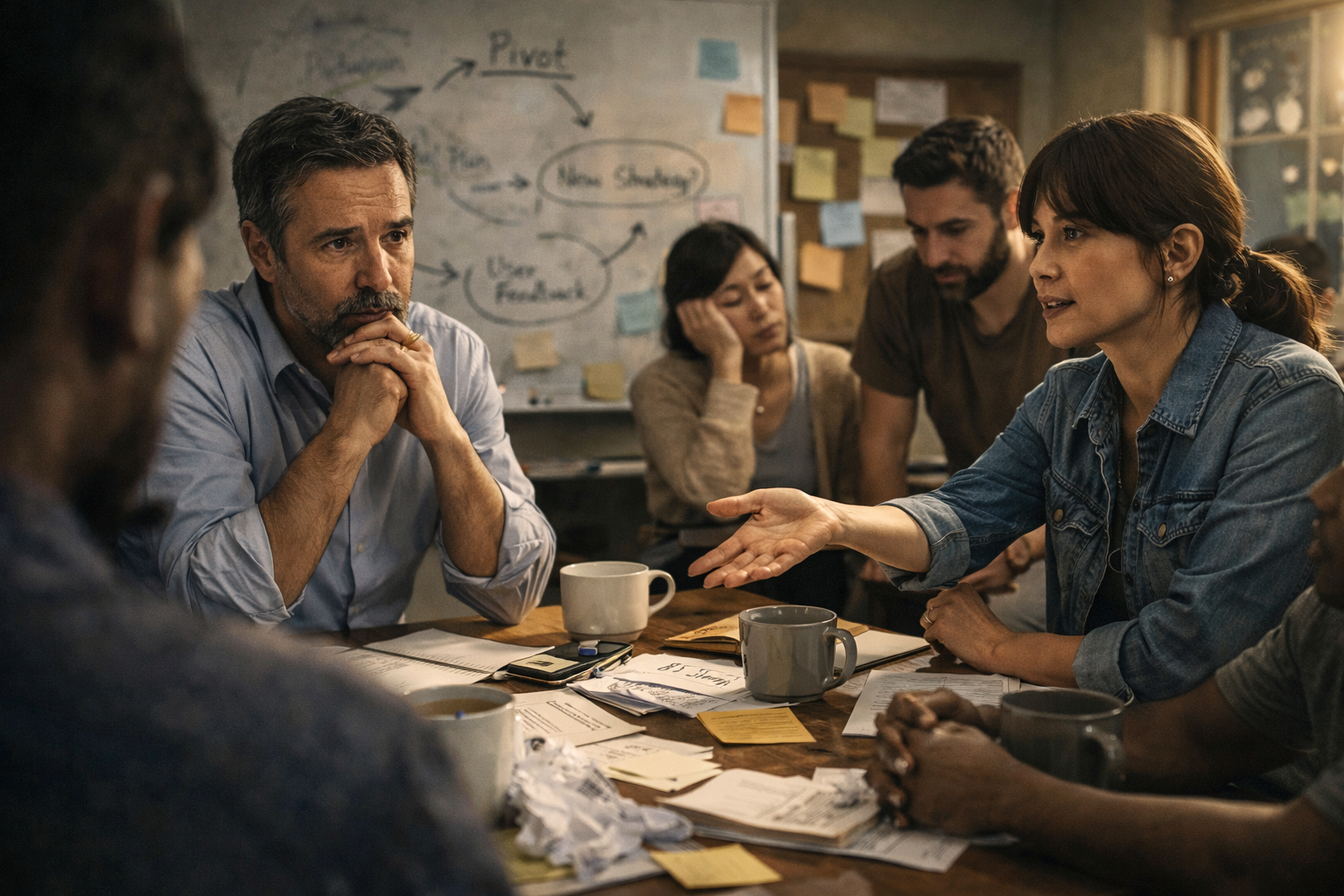
GUEST POST from Art Inteligencia
I. The Illusion of the “Destination”
For decades, enterprise leadership has operated under a comforting myth: that change is a destination. In this legacy mindset, an organization identifies a gap, launches a dedicated initiative, manages the transition through a temporary surge of effort, and then “refreezes” into a newly stabilized state of business as usual. It is a neat, linear story—and in today’s hyper-accelerated landscape, it is fundamentally broken.
Treating transformation as a series of discrete, project-based events assumes that stability is the normal state of affairs and change is merely an occasional interruption. But when technological shifts occur exponentially, market disruptions overlap, and human expectations evolve continuously, stability is no longer the default. Attempting to freeze an organization into a fixed state between projects only ensures that it will be caught off guard by the next incoming wave.
The Fallacy of Unfreeze-Change-Refreeze
The traditional “unfreeze-change-refreeze” paradigm served the industrial age reasonably well, where shifts occurred in predictable, multi-year cycles. Today, however, the momentum of market forces never yields enough quiet space to “refreeze.” When leaders attempt to lock down new processes prematurely, they create rigid structures that are obsolete by the time they are fully deployed. The real challenge is not learning how to navigate from Point A to Point B; it is building the organizational muscle to thrive in continuous motion.
Change Fatigue vs. Change Friction
When employees express exhaustion, executive leadership frequently misdiagnoses the problem as “change fatigue.” They assume people simply lack the appetite or stamina for further progress. In reality, what people are suffering from is change friction—the painful, grinding effort required to endure disconnected, top-down, episodic “initiatives” that disrupt daily workflows without offering clear value or shared ownership.
People do not naturally resist change; they resist being changed. When transformation is treated as a temporary project imposed from above, it forces employees to repeatedly pause their core work, scramble to adopt new systems, and suffer through administrative friction—only to be told six months later that another project is replacing the last one. This endless cycle of stop-and-start intervention breeds cynicism and erodes trust.
The Organizational Debt of Stop-and-Start Initiatives
Every time an organization executes an episodic change initiative and then steps back to return to “normal,” it leaves behind a wake of half-implemented tools, abandoned processes, and fractured alignment. This cumulative burden is organizational debt. Over time, teams become perpetually reactive, spending more energy surviving the latest transformation push than delivering meaningful value to customers.
To break this destructive pattern, we must abandon the idea that change has a final destination. We must stop managing change as an emergency project and start designing our organizations with continuous adaptability built into their core DNA.
II. The Core Shift: From Episodes to Continuous Capability
To break free from the cycle of disruption and burnout, organizations must redefine what change actually is. Transformation can no longer be viewed as an extraordinary event triggered by external panic; it must become a baseline operational discipline. The path forward requires shifting from reactive, episodic interventions toward building continuous, embedded change capability.
Change as an Operating System
Traditional change management focuses primarily on risk mitigation, compliance, and driving adoption for a specific rollout. While necessary for project execution, this approach treats change as an add-on layer—a set of activities applied on top of daily operations. In contrast, viewing change as an operating system means weaving adaptability directly into organizational governance, workflow design, and cultural norms.
When continuous adaptability is built into the organizational engine, teams do not need to pause operations to adjust course. Instead, pivoting becomes as routine and frictionless as updating software in the background. The focus moves away from simply “managing” resistance toward actively fostering enterprise agility and resilience.
Human-Centered Design at the Core
At the center of any continuous capability are the people who make it function. Technology, strategy, and processes are merely tools; true adaptation happens through human behavior, mindsets, and relationships. Therefore, continuous organizational evolution must be anchored in human-centered design principles.
Rather than imposing rigid top-down directives, a human-centered approach focuses on understanding employee and customer experiences deeply. By designing systems around human needs, motivations, and operational realities, organizations eliminate unnecessary friction and create solutions that people naturally want to adopt and improve.
The New Cadence: Micro-Adaptations and Iterative Learning
Moving away from episodic change requires changing the cadence of transformation. Multi-year overhaul projects are often obsolete before they reach completion. The alternative is a drumbeat of rapid hypothesis testing, micro-adaptations, and ongoing organizational learning.
Instead of betting everything on massive, infrequent rollouts, high-performing organizations continuously run small-scale experiments, measure real-world impacts on experience and outcome, and scale what works. This iterative loop reduces risk, shortens feedback cycles, and empowers teams across the enterprise to proactively identify opportunities and solve problems before they escalate into crises.
III. The Pillars of Continuous Adaptability
Transitioning from sporadic, project-driven interventions to an ongoing operational capability requires more than a shift in mindset—it demands structural and procedural infrastructure. To make adaptability a natural daily habit rather than an exhausting hurdle, organizations must anchor their efforts in three interconnected pillars: shared visual frameworks, integrated experience design, and psychological safety.
Integrated Visual Frameworks
One of the largest sources of friction in traditional change initiatives is the gap between strategy formulation and front-line execution. Static slide decks and lengthy documentation quickly become obsolete, leaving teams confused about goals, ownership, and alignment. Continuous capability relies instead on dynamic, visual tools—such as structured change canvases—that make strategy visible and accessible to everyone.
Visual frameworks provide a common language across functions and hierarchy. By democratizing the planning process, they enable teams to co-create solutions, map dependencies transparently, and make continuous real-time adjustments as conditions evolve. When strategy is visible, collective ownership replaces top-down compliance.
Experiential Alignment: Bridging EX and CX
Change initiatives frequently fail because they treat internal employee operations and external customer outcomes as separate disciplines. In reality, the employee experience (EX) directly dictates the quality and authenticity of the customer experience (CX). An organization cannot deliver seamless, innovative value externally if its internal workforce is hampered by chaotic, fragmented internal tools and processes.
A continuous capability aligns EX and CX into a single, cohesive design loop. Every internal adaptation is evaluated not just by efficiency gains, but by its ultimate impact on human experience across all touchpoints. Aligning internal capability with customer expectations ensures that change efforts continuously deliver genuine value rather than internal busywork.
Psychological Safety as Essential Infrastructure
A culture of continuous adaptation cannot exist in an environment ruled by fear. If employees feel that trying something new carries career risk, they will naturally default to the safety of status quo routines—even when those routines are visibly failing.
Psychological safety is not a soft cultural luxury; it is hard operational infrastructure. Leaders must actively cultivate an environment where controlled experimentation is encouraged, small-scale failures are treated as valuable organizational intelligence, and surfacing operational friction is rewarded. When teams feel safe to test, learn, and iterate without fear of retribution, adaptability becomes an innate organizational strength.
IV. Leadership in the Post-Episodic Era
Building an organization capable of continuous adaptation requires a fundamental evolution in executive leadership. The traditional model of the heroic leader who steps up to command a major restructuring or launch a massive transformation program is no longer suited for an environment of constant flux. In the post-episodic era, effective leadership is defined not by how well you command projects, but by how effectively you design and nurture the environment in which adaptation occurs naturally.
From Project Sponsor to Environment Facilitator
For generations, leaders have measured their impact by the size and scope of the programs they sponsor. They secure funding, deliver kickoff speeches, assign project managers, and push for rigid milestone delivery. However, when change is continuous, this project-centric approach creates bottlenecks and relies on top-down directives that lack front-line reality.
Modern leaders must shift from project sponsors to facilitators of continuous learning environments. Instead of telling teams what to change, facilitators remove organizational friction, clear bureaucratic obstacles, and provide the tools and visual frameworks necessary for teams to self-organize and adapt. Their primary goal is to empower front-line employees—those closest to the customer and the work—to recognize shifts and adjust in real time.
Futurology as a Daily Operational Discipline
In an episodic world, strategic foresight is often treated as an occasional exercise—a yearly offsite or a strategic planning retreat. By the time those multi-year plans are finalized, the market has already moved. Continuous adaptability requires integrating futurology directly into daily operations.
Leaders must cultivate a culture of constant signal scanning. By continuously observing weak signals, emerging customer behaviors, technological breakthroughs, and competitive shifts, leaders help the organization build foresight as an operational muscle. When strategic foresight is active and ongoing, adaptation ceases to be a frantic emergency response to disruption; it becomes a deliberate, proactive rhythm of small, strategic maneuvers.
Redefining Metrics: From Milestones to Agility Velocity
You cannot measure continuous capability using legacy project metrics. Tracking whether an initiative was delivered “on time and on budget” provides zero insight into whether the organization has actually become more resilient or capable of future adaptation.
In the post-episodic era, leaders must measure performance using dynamic indicators of organizational health and agility velocity. Key focus areas include:
- Time-to-Insight and Time-to-Adaptation: How quickly can the organization detect a shift in customer needs or operational friction, test a hypothesis, and scale a solution?
- Experience Level Measures (XLMs): How positively do changes impact the human experience of both employees and customers, rather than just hitting rigid process compliance SLA targets?
- Organizational Friction Index: Are internal systems becoming simpler and more integrated over time, or are changes accumulating internal debt and frustration?
By shifting focus toward agility, experiential quality, and continuous alignment, leadership ensures that adaptation becomes a sustainable source of competitive advantage rather than an endless drain on organizational energy.
V. Conclusion: Embracing the Dynamic Flow
The concept of a “post-transformation state” is a comfortable illusion whose time has passed. Organizations can no longer afford to view change as an extraordinary, high-friction event that must be managed, endured, and put behind them. The era of episodic, stop-and-start initiatives has come to its natural end, giving way to an environment where constant adaptation is simply the baseline of existence.
The Ultimate Competitive Advantage
In a hyper-accelerated world, competitive advantage does not belong to the organizations that execute fixed five-year plans with rigid discipline. It belongs to those that can sense, adapt, and learn faster than their environment evolves. Building an enduring, continuous capacity to adapt effortlessly transforms change from an exhausting operational tax into an incredible engine for innovation and growth.
When you replace episodic disruption with continuous capability, change ceases to be a source of anxiety. It becomes an everyday discipline—a natural, fluid response to human needs, market dynamics, and technological possibilities.
From Planning for the Next Change to Thriving in Motion
The imperative for executive leadership is clear: stop preparing your organization for the next big change initiative. Stop treating transformation as a temporary project with an artificial finish line. Instead, focus your energy on creating an agile, human-centered operating system that makes continuous evolution part of your everyday culture.
By embedding human-centered experience design, shared visual frameworks, psychological safety, and active foresight into your core infrastructure, you build an enterprise that does not merely survive disruption—it naturally thrives in continuous motion.
Frequently Asked Questions
What is episodic change, and why is it no longer effective?
Episodic change is the traditional approach to organizational transformation that treats change as a discrete, temporary project with a clear start, middle, and end (often using the “unfreeze-change-refreeze” model). It is no longer effective because constant technological shifts, market volatility, and changing customer expectations mean stability is no longer the default state. Treating transformation as stop-and-start initiatives causes change friction, organizational debt, and employee burnout.
What is the difference between change fatigue and change friction?
Change fatigue is often misdiagnosed as people simply being tired of progress or resistant to new ideas. In reality, employees suffer from change friction—the painful, exhausting effort required to navigate disconnected, top-down, episodic initiatives that disrupt daily workflows without offering clear value, shared ownership, or supportive infrastructure.
How do organizations transition from episodic change to continuous capability?
Organizations shift to continuous capability by integrating change into their daily operating system. This is achieved by anchoring transformation in human-centered design, adopting dynamic visual planning frameworks (such as change canvases), aligning employee experience (EX) with customer experience (CX), fostering psychological safety for rapid experimentation, and training leadership to act as environment facilitators rather than project sponsors.
Image credit: ChatGPT
 Sign up here to get Human-Centered Change & Innovation Weekly delivered to your inbox every week.