Author Archives: Arlen Meyers

About Arlen Meyers

Arlen Meyers, MD, MBA is an emeritus professor at the University of Colorado School of Medicine, an instructor at the University of Colorado-Denver Business School and cofounding President and CEO of the Society of Physician Entrepreneurs at www.sopenet.org. Linkedin: https://www.linkedin.com/in/ameyers/

What Makes Innovation Districts Successful?

GUEST POST from Arlen Meyers

Open innovation, a rarity in sick care, depends on the free flow of information from inside to outside and vice versa. For that to happen, it takes a permeable membrane to drive osmotic flow of information and possible solutions across the separator.

Like a polaroid lens that allows you to see things only when the optical conditions are right, likewise, the barriers to open innovation impact depend on collaborations between several participants in the sick care innovation ecosystem to enable the free flow of information across the osmotic gradient. They include:

  1. Entrepreneurs and industry
  2. The public sector
  3. The academic sector
  4. Community participants and non-profits dedicated to improving socioeconomic determinants of disparate health outcomes
  5. Payers
  6. Service providers
  7. Domain experts, including regulatory affairs, end users, intellectual property, reimbursement and experts in clinical trial design and execution,

However, just putting dots on an ecosystem map does not guarantee the free flow of information. Sometimes, cluster koombaya turns into WIIFM.

One of the key determinants of an innovative organization or cluster is information rheology. There are three basic elements to the equation.

The first has to do with the number of nodes in the network, both internally and externally. Network theory tells us that the more nodes, the more value. Having one fax machine in the world added nothing. It took a lot to unleash the value , as the development of social media has exemplified.

The second has to do with how the nodes are connected. Some are robust and some are not.

Finally, and most importantly, the two previous parts are not nearly as important as the velocity, acceleration and lack of resistance to the flow of information from one node to the next. We usually refer to this as a cluster or innovation district being “user friendly” and is typified by the free and rapid flow of information from one place to the next. Malcolm Gladwell described facilitators in the process as mavens, experts and connectors. Clusters cultures either drive or hinder interplay.

Successful innovation districts have certain characteristics. In addition, cluster and innovation district success should be measured by clearly defined key performance indicators.

There are simply too many moving parts and complicated systems to expect impactful outcomes from open innovation when all the players are not at the table. Unfortunately, entrepreneurs are nimble, impatient and swift at adjusting and have little patience with the other players who are not. Sick care can’t be fixed from inside, but it takes a permeable membrane that separates those with outside solutions to be effective.

Subscribe to Human-Centered Change & Innovation WeeklySign up here to join 17,000+ leaders getting Human-Centered Change & Innovation Weekly delivered to their inbox every week.

How to Be a Happy Innovator

GUEST POST from Arlen Meyers

Patricia Hempl has written The Art of the Wasted Day. In it, she posits that the founding fathers didn’t do us a favor when they charged us with the pursuit of happiness. Psychologists, authors and philosophers, you see, have been telling us for 2000 years that the first and most important key to finding happiness may be the most difficult for many people (especially those reading this article): To find happiness you must not seek it! In other words, the more you try to find happiness, the more it will elude you. Nathaniel Hawthorne (1804-1864) said it best, “Happiness is a butterfly, which when pursued, is always just beyond your grasp, but which, if you will sit down quietly, may alight upon you.”

Entrepreneurship is the pursuit of opportunity under conditions of uncertainty with the goal of creating user defined value through the deployment of innovation. Entrepreneurs do it for many reasons. However, if you think the pursuit of opportunity is a way to find happiness, you will be disappointed if you are doing it the wrong way and for the wrong reasons.Practicing some intentional behaviors may help happiness find you:

  1.  Sense of Purpose. Commonly people believe that a life of leisure provides happiness. They believe that if they had plenty of money, didn’t need to work and could play all day, they would be happy. And yet studies of truly happy people show that they often have a high commitment to goals and a sense of purpose driving their lives.
  2. Affiliation and Service to Others. Our relationships to others is a strong factor in overall level of happiness. As Epicurus stated over 2000 years ago “Of all the means to insure happiness throughout the whole life, by far the most important is the acquisition of friends.” However, the way that we affiliate may differ according to personality style. Outgoing individuals may be more interactive with many people, whereas introverted folks may be content with one or two relationships. Some people may find sense of purpose in their service to others whereas others are content with socializing.
  3. Philosophical Perspective. How we frame the world and our experiences within it influence our degree of happiness. Those who tend to be more optimistic about creating positive outcomes are more likely to engage in active problem-solving and to be more content. However, this does not mean being unrealistic in assessing outcomes which can be detrimental (as discussed below in the section on emotional tolerance). Innovation starts with the right mindset.
  4. Resilience: Most problems are worsened by the inability to tolerate emotions.
  5.  Self-Contentment. Research shows that happier people tend to have greater self-confidence and belief in their abilities. People become entrepreneurs because they think they can do things better than others and they don’t want to work for someone else. Success does not lead to happiness. Happiness leads to success.
  6. Choice. Happier people believe not only generally in their ability to control their experience in life but also specifically in their ability to choose to be happy. “Happiness is a choice that requires effort at times (Aeschylus, 525-456BC).” The single biggest reason for job stress and burnout is the lack of control. You choose whether or not to regain that control.
  7.  Health Behaviors. Researchers find as important as personality variables are to happiness, health behaviors are of even greater importance.
  8. Making happiness a habitHere are some entrepreneurial habits that will help you get from said to done.
  9. Avoiding social contagion: Stay away from toxic people. Follow the no asshole rule.
  10. Practice creative boredom

There are many perfectly good ways to “waste” your life by giving up the pursuit of happiness. Fly fishing is one. Entrepreneurship is another if you do it for the right reasons without expectations.

Subscribe to Human-Centered Change & Innovation WeeklySign up here to join 17,000+ leaders getting Human-Centered Change & Innovation Weekly delivered to their inbox every week.

How Should We Educate Children to Win the Fourth Industrial Revolution?

GUEST POST from Arlen Meyers

If for nothing else than the future of your children, take 12 minutes to watch this:

If you agree, then thriving in the fourth industrial revolution will require nothing short of restructuring public education at all levels, not just K-12. Even doctors will need to change how they educate their young. How many things can you do with a paperclip?

Many not-for-profits are directing their efforts to provide equitable access to public education. However, putting more students in a broken, dysfunctional system won’t yield the outcomes and impact we want. Instead, the very structure and process of education will need to change if we are to provide students with the knowledge, skills, abilities and competencies they need for jobs that have yet to be created.

What’s more, unless we address the gender social and cultural stereotypes, the 4IR could make gender inequity worse, not better.

One goal should be to create entrepreneurial schools and universities, and by that I don’t mean teaching children how to start businesses. Instead, creating the entrepreneurial mindset is about the pursuit of opportunity with scarce resources with the goal of creating user defined value through the deployment of innovation. Creating a successful business is but one of many ways to do that.

Here are 10 different ways to encourage youth entrepreneurship. The same techniques might apply to graduate students as well.

Other learning objective and curriculum themes are emerging:

  1. Encouraging private, public and academic collaboration to define market-based competencies
  2. Teaching horizontally, not vertically, in limiting smokestack domains
  3. Developing soft skills that are in high demand
  4. Experience cultural competence
  5. Alternative pathways for teacher training and development
  6. Job searching techniques that are state-of-the-art
  7. Mandatory experiential learning opportunities
  8. Developing and testing alternative intelligence measures
  9. Replacing memorization with creative problem-solving, problem seeking and divergent thinking.
  10. Hiring for creativity and finding and supporting educational reform champions
  11. Like sick care, recognizing and addressing the socioeconomic determinants of academic failure, like housing, illness, disability and nutrition.
  12. Rehabilitating the brand image of teachers

Here is Dan Pink explaining how motivation will have to replace extrinsic motivation – autonomy, mastery, purpose:

Here is how automation may affect economies around the world.

Our economy and standard of living hinges on meeting these wicked challenges. But, like medicine, government and other risk-averse and sclerotic industries, the resistance to change will be substantial. Only bottom-up pressure led by creative, courageous innovators who practice what they teach will remove the obstacles in our path. Many of those obstacles are in the classroom next door or the corner office.

Subscribe to Human-Centered Change & Innovation WeeklySign up here to join 17,000+ leaders getting Human-Centered Change & Innovation Weekly delivered to their inbox every week.

How Doctors and Patients Can Win the Fourth Industrial Revolution

GUEST POST from Arlen Meyers

The Fourth Industrial Revolution is a mental model created by the leaders of the Joint Economic Forum and describes how physical, digital and biologic technologies have collided and the resulting challenges and opportunities that presents.

Here is how AI is changing sick care. Here is how 3-D printing is changing sick care. Here are the opportunities using VR/AR in sick care.

Google and Apple will give you the weapons to win.

When software, hardware, materials,biologic systems, cloud, AI/ML and other slicktech collides, it creates an interesting situation with certain highlights. Here are some challenges.

When the agrarian economy evolved into the industrial one, there were three phases that enabled humans to leverage their labor and productivity- those powered by water, electricity and computers/IT technologies. We are now living in the fourth revolution.

Physician entrepreneurs, along with everyone else in the world, will have change how they adapt if they are to surthrive.

Klaus Schwab has defined four principles which should guide our policy and practice as we progress further into this revolution.

Firstly, we must focus on systems rather than technologies, because the important considerations will be on the wide-reaching changes to business, society and politics rather than technologies for their own sake. The launch of 5G wireless is an example.

Example: Sick care cannot be fixed from inside and will depend on the coherence of diverse ecosystems. While STEM has been the buzzword, BMETAL-the convergence of Business, Medicine, Engineering, Technology, Arts and the Law- will be new paradigm for innovation education and training.

It will also require that we rethink how we regulate software as a medical device and clinical decision support systems.

Secondly, we must empower our societies to master technologies and act to counter a fatalistic and deterministic view of progress. Otherwise, there is no room for optimism and positive transformation, and society’s agency is nullified.

Example: We must change how we educate and train the future workforce. In medicine, that will require a re-engineering of workflow, competencies, structure and processes of delivering care as we evolve from a sick care system to a health care system. In addition, we need to address the socioeconomic divides that are contributing to the “deaths of despair”, particularly in white males without a college degree. That will mean rethinking non-college career tracks and retraining programs that are not working.

Here are five of the most in-demand sick care jobs:

1. Data
2. Experience
3. Innovation
4. Blockchain
5. Toucher

Thirdly, we need to prioritize futures by design rather than default. Collaboration between all stakeholders must play a central role in how we integrate these transformative technologies. Otherwise, our future will be delivered by default. Winning the fourth industrial revolution is a wicked problem.

Example: Design thinking needs to place the patient and doctors first. We need to rethink how we educate and train students from P-20.

And lastly, we must focus on key values as a feature of new technologies, rather than as a bug. Technologies used in a way that increase disparity, poverty, discrimination and environmental damage work against the future we seek. For the investment in these technologies to be justifiable, they must bring us a better world, not one of increased insecurity, dislocation and exclusion.

Example: The Fourth Industrial Revolution, like the 3 that preceded it, has already produced inequalities in value and wealth distribution that will exacerbate an already contentious global society.

We also need to be wary of the dark side of AI and answer How can we forecast, prevent, and (when necessary) mitigate the harmful effects of malicious uses of AI?

1. Policymakers should collaborate with researchers to prevent and mitigate malicious uses of AI.

2. Researchers and engineers should consider misuse and reach out to necessary parties when harmful applications are foreseeable.

3. Best practices should be developed for addressing dual-use concerns.

4. Developers should expand the range of stakeholders and experts in discussing these concerns.

Ultimately, winning the fourth sickcare industrial revolution will mean 1) reengineering the processes of care, 2) delivering user defined value, and 3) doctors and patients saying “no” to unnecessary and wasteful spending as the price for access and quality. Here are some other tactics:

One key to winning the fourth industrial revolution is to speed the pace of digitization and robotics in sick care, not slow it, and do to sick care what it has done to financial services and retail.

Change is happening faster and it outpacing the ability of many to cope with it. Unless we take control and prepare people, including physician entrepreneurs and their patients for the future, the cracks in our society will widen.

Subscribe to Human-Centered Change & Innovation WeeklySign up here to join 17,000+ leaders getting Human-Centered Change & Innovation Weekly delivered to their inbox every week.

How to Overcome the Barriers to Academic & Industry Collaboration

GUEST POST from Arlen Meyers

Almost 20 years ago, a report from the National Academy of Sciences and the Institute of Medicine described the results of a conference addressing and the barriers to academic-industry collaboration and solutions to overcome them. While there has been slow progress addressing these issues, for the most part, the barriers persist and industry frustration with academic medical centers continues.

Trends in University-Industry Collaboration

  • Participants noted that university-industry research collaboration is becoming more frequent and extensive, with growing complexity in individual partnerships. Over the last two decades, industry-supported research has steadily grown nationally in amount and as a percentage of all university research.
  • Update: Industry supported research has increased with several research partnerships created between BIG PHARA and AMC drug discovery and development entities. Since the publication of the report, digital health has emerged as a new opportunity for industry-academic collaboration requiring new models that, in many instances, are unfamiliar to AMCs used to packaging and licensing drugs, diagnostics and devices. Some are outsourcing the function to digital health accelerators or incubators.
  • A number of collaborative mechanisms were discussed, including (1) university research sponsored by companies; (2) faculty consulting; (3) licensing of university-owned intellectual property to existing companies; (4) university support for start-up companies in the form of loans, grants, and equity ownership; (5) “mega agreements” between individual companies and universities that cover a range of interactions; (6) research centers and other government-supported efforts to encourage university-industry collaboration; and (7) industry consortia to support university research.
  • Update: Innovation centers have replaced technology transfer offices. Given the academic culture, some question whether they are capable of generating enough customer defined value to justify their expense and low research quotient i.e. the value produced per unit of input.
  • There is significant diversity in the approaches taken in different fields. Participants remarked on differences between industry-university collaboration in health care and the life sciences vis-a-vis[vis-à-vis] physical sciences and engineering. Most of the discoveries that have produced significant licensing revenue for universities have been in the life sciences.
  • Update: The vast majority of significant medical advances and the revenue that flows to those places comes from a hand full of leading AMCs
  • Participants noted that a growing array of rules, procedures, and institutions, particularly on the academic side, govern collaboration. Protecting and managing university-generated intellectual property has become a significant task, and some institutions are delegating this work to non-profit and for-profit subsidiaries.
  • Update: If anything, given the growth of regulation and compliance, the red tape is worse than before and significantly impedes academic faculty participation

Barriers to Collaboration and Tools to Overcome Them

  • Culture, management, and goal alignment. Despite the long experience that many companies and universities have in pursuing collaboration, workshop participants still considered the development of trust an essential but sometimes neglected precondition for success. The discussions covered tools for structuring and managing partnerships and approaches to reconciling different time horizons.
  • Update: Trust both internally and externally continues to be a major barrier
  • Institutional incentives. University and private industry incentive structures may not sufficiently recognize or reward the key contributions that ensure successful collaboration. Workshop participants discussed ways that incentive structures could be changed with funding mechanisms and evaluation systems that are better targeted.
  • Update: Several AMCs still refuse to grant promotion and tenure credit for the scholarship of entrepreneurship or have anti-entrepreneurial policies , procedures and taxes that make academic-industry collaboration too painful for most faculty
  • Proprietary rights. Issues of proprietary rights and their disposition were a special focus of the workshop. Proprietary rights issues are often linked to other areas such as project management and incentives. There was a broad range of perspectives on the issue of how aggressive universities should be in patenting and licensing their inventions. The participants also covered such issues as the patenting of research tools, the structure of university technology transfer operations, and agreements on confidentiality, and delay of publication.
  • Update: The patent landscape has changed and , in the case of digital health, might be irrelevant
  • Lack of a faculty entrepreneurial mindset In my view, because of the way faculty are chosen, developed and rewarded, about 1% have an entrepreneurial mindset
  • Lack of faculty entrepreneurial skills, knowledge, abilities or competencies Few faculty are interested in bioentrepreneurship education and training and, sometimes, discourage graduate trainees from participating. Iinstead, they see that activity as a distraction from the core research scientific mission and waste of grant time and resources
  • Lack of a sense of urgency and focus Industry focuses on what’s important. Academics focus on what’s interesting and they go wherever that leads
  • Problem solvers v problem seekers Industry focuses on tightly defined customer problems. Academics focus on basic research solutions looking for a problem
  • Different ways of keeping score Academics are judged by publications, grants and how many trainees they have. Industry measures profits.
  • Disagreement on process, people and culture innovation leadership and management KPIs

Possible Future Tasks

  • Participants made a number of suggestions on possible future tasks. Many participants believe the policy framework for university-industry interactions established by the Bayh-Dole Act, formally known as the Patent and Trademark Laws Amendments of 1980, is working well, while a few participants believe a fundamental reconsideration of that law is in order. Technically, the Bayh-Dole provisions influence university-industry collaboration only when a university invention is developed using federal funds.
  • Individual participants suggested that key industry and university bodies consider development of (1) accepted standards for training and credentialing of university and industry technology transfer professionals; (2) a statement on acceptable indirect cost practices in university-industry research, which may need to address the government’s role; and (3) a declaration of principles concerning responsible conduct in industry-university research collaboration.
  • Several participants stated that further study and exchange of ideas on the way universities successfully structure technology transfer operations would be useful. Similarly, a detailed examination of industry effective practices in research collaboration with universities would be helpful. These exercises could also explore whether there are areas in which pursuit of proprietary rights is counterproductive for all concerned.
  • Including bioentrepreneurship education and training as part of biomedical graduate programs
  • Promotion and tenure credit for the scholarship of entrepreneurship
  • Seed stage funding mechanisms to “buy out” clinical faculty time to pursue entrepreneurship
  • Eliminating internal rules, regulation and policies that are anti-entrepreneurial
  • Recruiting, developing and promoting faculty for innovation

Fundamentally, universities are from Venus and industry is from Mars. If the two planets are ever to be in synchronous orbit, it will take changing some rules of physics or doing a much better job of reconciling the differences in cultures, leadership, strategies and incentives.

Subscribe to Human-Centered Change & Innovation WeeklySign up here to join 17,000+ leaders getting Human-Centered Change & Innovation Weekly delivered to their inbox every week.

Innovating Takes Courage

GUEST POST from Arlen Meyers

Being an innovator takes courage. You are a guerrilla fighter waging war against the status quo, vested interests and corporate bureaucracy that have sophisticated defenses against intruders that seek to threaten their cash flow, culture and business models. You are fighting for the hearts and minds of patient customers ,payers, providers and non-users alike and will need to overcome your fears, willing to sacrifice and do the hard work. But, would you push someone who is afraid of flying into an airplane?

Here are some tips on how to overcome your fear of failure. You can also try these tips to overcome your other fears. What will you do today that scares you?

Attachment theory might help explain your fears and help you find a safe place to confront them.

Entrepreneurship, the pursuit of opportunity with uncontrolled, scarce resources has its goal the creation of user defined value through the deployment of innovation. Entrepreneurs confront the unknown with not just a mindset, and entrepreneurial habits but with courage based in their hearts. The very act of entrepreneurship involves embracing uncertainty. often living in darkness. After all , the English word for courage is connected to the heart, coming from the Latin word cor, which means heart.

Author and psycotherapist Estelle Frankel offers some perspective on confronting and accepting the unknown in her book, The Wisdom of Not Knowing. There are many similarities between the spiritual lexicon and the entrepreneurial one, for example, walking through the valley of death, going to the dark side, embracing the journey instead of the destination and having faith in how failure in one thing will open the doors to success in another.

Frankel further notes that the basis of creativity is often suspending your concepts of reality and entering the unknown as if in a dream or mindful state. For example, did you know that the brain scans of jazz musicians during improvisational work resemble those found during deep states of REM sleep?

Former Surgeon General Vivek Murthy noted that, “In the end, two emotions drive the decisions we make: love and fear. Everything else is a manifestation of one or the other, Murthy said. Love manifests itself as generosity, kindness and compassion. Fear shows itself in jealousy, anger and rage. “When fear drives our decisions, more often than not it tends to lead us to darker places. It tends to have negative impacts on our health and it tends to drive us apart, separate us and isolate us,” he said. “When love is driving our decisions, and informing our interactions with each other, it tends to be nourishing, it tends to be good not only for our health but it also builds that connection, that cohesion in society that we ultimately need.”. Drive out fear. Do something every day that scares you.

Here are some lessons from the cowardly lion.

Confronting the uncertainties of customers, products and markets is child’s play compared to having the courage to confront your inner demons or the ultimate uncertainty, death. And yet, do it you must if you are to have enough courage to live your life as an entrepreneur. Remember Steve Jobs at the Stanford graduation. Stay hungry and be playful.

Subscribe to Human-Centered Change & Innovation WeeklySign up here to join 17,000+ leaders getting Human-Centered Change & Innovation Weekly delivered to their inbox every week.

Business People Are Lousy Doctors

GUEST POST from Arlen Meyers

So doctors are lousy business people, huh?

Well, imagine if your doctor prescribed something based only on your chief complaint. They did not take a history. They did no physical exam and they did no lab tests or imaging if it were necessary . Yet, business people, particularly digipreneurs, do it all the time.

If you think about it, entrepreneurs are continual experimentalists and, particularly when it comes to trying your hand at biomedical and health innovation, maybe all those non-medical technologists, digipreneurs and investors can learn a few things from doctors.

Here are 10 things health wannapreneurs might learn from doctors:

  1. Learn how to build clinical judgment. Learning from mistakes is called experience. Learning from experience is called clinical judgment. It’s the same with entrepreneurship. Very few entrepreneurs have not had their share of mistakes of failed startups. The successful ones learn from those mistakes and have judgment about pursuing the next opportunity.
  2. Entrepreneurship is about research and experimenting, something doctors do well. Doctors do this every day, day in and day out, with their patients.
  3. Doctors are used to dealing with uncertainty. Doctors make decisions with incomplete information. Sometimes they have to do things based on their gut. In fact, they do so more than they would like to admit. Only about 25-35% of medical decisions are based on scientific evidence.
  4. Doctors have a bias to action. While obtaining a patient’s history, doing physical exams and tests are a routine part of care, they are all a means toward an end of solving or relieving the patient’s problem. Doctors are trained, admittedly sometimes unsuccessfully, to not do things that won’t make a difference in how they treat patients.
  5. Doctors are excellent at pattern recognition. Doctors basically do three things: They make decisions, communicate/educate, and do procedures. Decision-making, whether in dermatology, pathology or multiple other specialties, relies on pattern recognition skills.
  6. Doctors know how to question, observe, connect and associate: core entrepreneurial skills. In The Innovators DNA, Christensen et al. noted the core skills of innovators are: questioning, associating, connecting, experimenting and observing. Doctors have them all.
  7. Doctors know how to assess risk and make on the spot cost-benefit decisions. Every medical decision is based on the risks versus the benefits.
  8. Doctors, particularly those in private practice, know how to play many roles.. They have to incorporate new techniques into their practices, they have to have human resource skills,they have to create a profit in the most regulated industry in the US and they have to rapidaly adopt to a continually changing landscape.
  9. Doctors are on the front lines of market opportunity every day and pursue it.
  10. Doctors have the courage to know when something won’t work or should be ended. Doctors deal with such circumstance on a routine basis when dealing with patient’s treatment. They understand that when you’ve seen one patient, you’ve seen one patient. Everyone is different. Not every business is the same and the lessons learned from failure are not necessarily translatable to your next business.

Here are 10 reasons why non-sick care entrepreneurs fail at sick care:

  1. They fail to understand what it takes to cross the chasm generally and, specifically, digital health adoption and penetration. They think that because they were successful in other industries and that sick care is a million years behind the times, ripe for change, that they can make it happen and move on.
  2. They erroneously think that consumer product strategies can easily be transposed to sickcare products and services and they grossly underestimate the length of the sales cycle and cost of new customer acquisition.
  3. They don’t understand human subject clinical trials or how to demonstrate clinical effectiveness
  4. They are confused by FDA mandates and guidance documents regulating mobile medical apps.
  5. They consider reimbursement or revenue generation as an after thought instead of as part of their initial commercial feasibility assessment and business model canvas assumptions.
  6. They ignore the intellectual property protection issues
  7. They stumble over how to deal with doctors as part of their business to business model and think that doctors are lousy business people, know-it-alls and too smart for their own good.
  8. They don’t satisfy all the sick care stakeholders (patients, payers, providers, partners), instead focusing on just one.
  9. They are investor and technopreneur driven, instead of end user driven. They don’t understand what makes patients and doctors tick or how to navigate the last mile. 
  10. They have a hard time penetrating the White Wall of Sickcare that is resistent to change and has a not-invented-here mindset.

Innovation happens when problem seekers meet problem solvers. Rarely is that the same person doing both. Consider it like two overlapping circles. Doctors tend to be problem solvers. Entrepreneurs tend to be problem seekers. One helps the other.

Entrepreneurship is a facilitating technology that cuts across all disciplines, including the arts, the social sciences and the humanities. All entrepreneurs, regardless of their expertise or industry, have something to learn from others and all can benefit from adopting an entrepreneurial mindset. Some think of entrepreneurship as creating and running companies.Contemporary thinking and pedagogy sees it as a process of creating value. As such, the emphasis has shifted from being a problem solver to a problem seeker, regardless of the domain or discipline or unique ecosystem.

Please. Stop telling doctors they are terrible business people.

It’s the pot calling the kettle black.

Image credit: wigeogis.com

Subscribe to Human-Centered Change & Innovation WeeklySign up here to join 17,000+ leaders getting Human-Centered Change & Innovation Weekly delivered to their inbox every week.

How to Overcome Innovation and Change Fatigue

GUEST POST from Arlen Meyers

Alvin Toffler passed away in June 2016 at the age of 87. The author of Future Shock, he warned us almost 50 years ago about the effects of change and our unpreparedness to address it.

We are now suffering some the consequences he predicted by not being aware of the signs, symptoms and treatment of, what he called, the disease of change.

For those people who deliver, manage and lead sick care, change is happening quickly. Rapid change leads to change fatigue. The cumulative effect of continual and overlapping change has left staff increasingly stressed, burned out, and overwhelmed. This will negatively impact not only staff engagement and retention but also organizational success. Even with effective change management, change initiatives will ultimately fail if staff remain in this state of fatigue. It is one of the reasons why doctor burnout levels are rising to historic proportions.

For startups trying to sell their products and services or find strategic development partners, decision maker and end user change fatique can send even the best salespeople to the sidelines and put your development and revenue milestones on hold.

Understanding the epidemiology and signs and symptoms of change fatigue is the first step in the diagnosis and treatment of the syndrome, But, when it comes to overcoming “I’ve just got too much on my plate right now” objection, here are some tips to overcoming it:

  1. Make your solution as easy to use and buy as possible
  2. Do all of the work and be sure to give the client all of the credit for success. Be there when they need you and pay attention to service after the sale.
  3. It is always easier to pass on a new idea that might be successful than embrace and deploy an idea that might fail. Address the issue up front and create a sense of urgency by providing evidence, data and peer testimonials
  4. Create buzz on social media by succinctly and professionally telling your story so that clients seek you out or at least have an understanding of what you are selling and why.
  5. The old saw goes that is you want to get something done, find someone who is busy. That does not always work. Find an internal champion for your products who has the internal motivation and mindset to be an innovator or early adopter
  6. Give the internal champion all the tools and support they need to build the team to drive the idea through the organization and overcome the significant barriers to intrapreneurial success. Find those how have developed a resistance to the corporate immune system that seeks to snuff out innovation.
  7. Do a better job of sub-segmenting your target users, influencers and buyers and craft the value proposition specifically to them. For example, doctors want to know 1) how will this help my patients, 2) how will this save me time and improve workflow and practice efficiency, 3) what’s in it for me , and 4) what’s in it for my organization? Others want to know how it will save them money, lower costs or build market share
  8. Stop selling. Practice strategic account leadership, particularly if you have a business-to-business model. Your goal is create meaningful multiples of user defined value, not sell a product that might be obsolete in 2 years.
  9. Use video, professional production techniques and marketing communications platforms that are repetitive, redundant and relational to tell your story and that clearly explains your value proposition
  10. Don’t try to beat a dead horse. Understand what are the strategic objectives of your potential users/customers, what are the gaps in achieving it and whether your product fills those gaps. It if does not, then move on.

Innovation fatigue feeds change fatigue as customers become cynical, resistant and even hostile to solutions looking for problems.

Sales is about understanding objections and overcoming them. Change fatigue is becoming almost epidemic so you will need a well honed sales , marketing and communication strategy to get it to manageable and treatable levels.

Subscribe to Human-Centered Change & Innovation WeeklySign up here to join 17,000+ leaders getting Human-Centered Change & Innovation Weekly delivered to their inbox every week.

How to find the IDEAL problem

GUEST POST from Arlen Meyers

The 12 steps to biomedical innovation starts with being a problem seeker, not a problem solver. Eventually, to be successful, customer problems and solutions need to meld around a VAST business model i.e. one that is not just profitable, but that demonstrates:

1. Validity Regardless or which elements of your model you choose, they have to be valid. In other words, the dogs have to eat the food. When the dog won’t eat the food, you’ll have to change your approach and try again.

2. Automaticity At the very start of planning your venture, you should think about how you are going to work on your business, not in it. Reducing hands on time to manage operations will give you more time to lead the company and create strategies for growth and give you more personal time to enjoy the fruits of your success. Outsourcing, automating or using technologies to ramp up operations, sourcing and distribution is a key part of scaling, and something that investors want to see…which brings us to the next piece.

3. Scalability Your business model is primarily a way to create a business machine that can produce an infinite number of products. Think of it as a device that takes in customers and creates profits out the other end and can do so at quicker and quicker speeds.

4. Time and Traction Finally, your model need to create as much profit as quickly as possible with a growing customer base that is loyal to your brand.

Many doctors, scientists and engineers start with solutions looking for a problem. Some find it or, eventually, as their inventions or technology evolves, markets appear to those who have the talent to see them. The more typical model, and one that is more common among the startup community, is to find a problem and devise a solution.

But, how do you pick the IDEAL opportunity given the almost infinite possibilities? Here are some tips:

(I)dentify the problem: Seeing a problem is an important skill and core competency of savvy entrepreneurs. It typically is the result of personal experience, primary research talking or watching others or secondary research. Whichever problem you pick, look for ones that:

  1. Will make a very big difference in people’s lives if you solve it
  2. Has the potential to be very profitable or create lots of user defined value, typically at least 10x the value compared to existing offerings or the status quo.
  3. Is something that taps into your passion or satisfies your psychic need
  4. Anticipates future customer/stakeholder wants and needs
  5. Has an extremely high level of market pain and frustration, where customers know they have a problem and have unsuccessfully and repeatedly tried to solve it
  6. Has limited barriers to entry
  7. Has the right potential risk-return profile that matches yours
  8. Is not one dominated by incumbents
  9. Is easy to explain and understand
  10. Someone is willing to pay enough for your solution so that you can make it profitably

Identifying a problem starts with identifying a customer archetype that has it. Beyond guessing, identifying that person and describing their problem can only be done by talking to, working with or observing potential customers.

Doctors call it taking a pain history and documenting the chief pain complaint, the history of the present illness and their past medical history. In other words, talk to people and have them describe:

  1. Where is your pain?
  2. How bad is it?
  3. How long have you had it?
  4. On a scale of 1-10, how would you describe it?
  5. What have you done in the past to make it better?
  6. What makes it better or worse?
  7. What other problems do you have that makes the pain better or worse?
  8. How have you treated it in the past?
  9. Is the pain constant or intermittent?
  10. What would you pay to relieve the pain?

Startup geeks call this process customer discovery by “getting out of the building”. Doctors call it making house calls.

(D)efine and represent the problem

Primary or secondary research should give you some idea about :

  1. Market size
  2. Market growth
  3. The competitive landscape
  4. Where you intend to play
  5. What you see that others don’t.

Once you have done these things, then you can:

(E)xplore and experiment with possible strategies or solutions and risks involved with each by identifying customer segments and creating a value proposition canvas and a business model canvas

Here’s an into to value proposition design

When you create new value propositions and growth you need to focus on high-value customer jobs. These are not necessarily the most important jobs from your customers’ perspective. They are the most promising jobs from your perspective as a solutions provider.High-value customer jobs are characterized by the following, they are:

  • Important: When customer’s success or failure to get the job done leads to essential gains or extreme pains, respectively. Examples are managing the security risk of an ecommerce website, or designing and implementing the strategy at a company.
  • Tangible: When the pains or gains related to a job can be felt or experienced immediately or often. Examples are traffic during your daily commute, or managing a constantly overflowing email inbox.
  • Unsatisfied: When current value propositions don’t help to relieve pains or create desired gains in a satisfying way. Maybe the desired value proposition doesn’t even exist. Examples are the inexistent cure for hangovers, or calorie-free chocolate.
  • Lucrative: When many people have the job with related pains and gains or when a small number of customers are willing to pay a premium. An example of the former is listening to music on the go. An example of the latter are rare diseases for which customers or insurers are willing to pay a premium.

Here is a list of stakeholders that represent customer segments.

If you listen to or watch customers enough, you’ll be surprised at what you’ll discover. Here are some examples.

(A)ct on a selected strategy or solution

(L)ook back and evaluate

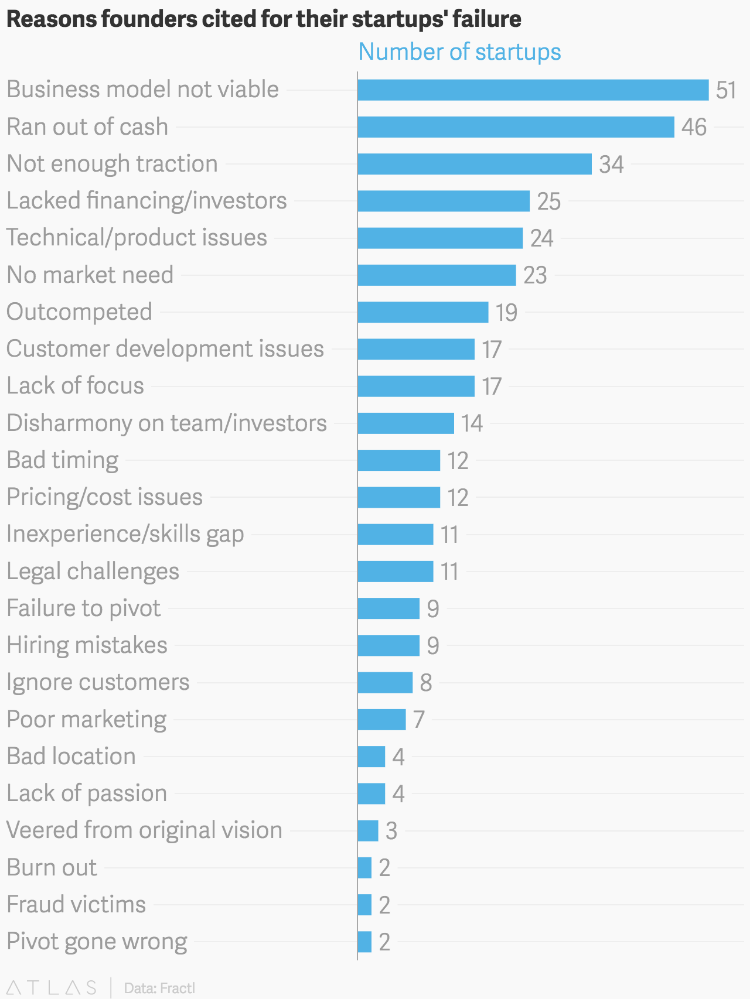
Most businesses fail because 1) they don’t offer the right value proposition-market fit or 2) they don’t have a viable business model. Your business model canvas is anchored on your value proposition. Your value proposition (doing the job the customer wants you to do, removing the pain they have to endure to do it now and offering a product that meets or exceeds customer expectations) starts with understanding your customers. Focusing on your customers or market segments starts with those who touch the problem every day.

Innovation starts with mindset. Part of that way of thinking is being a problem seeker before you try to be a problem solver. Make sure you pick the right problem to solve before you create something no one will buy.

Subscribe to Human-Centered Change & Innovation WeeklySign up here to join 17,000+ leaders getting Human-Centered Change & Innovation Weekly delivered to their inbox every week.

Sick Care is a Wicked Problem

GUEST POST from Arlen Meyers

Sick care is a wicked problem. By that, I don’t mean just scary.

A wicked problem is a social or cultural problem that is difficult or impossible to solve for as many as four reasons: incomplete or contradictory knowledge, the number of people and opinions involved, the large economic burden, and the interconnected nature of these problems with other problems.

Horst Rittel, one of the first to formalize a theory of wicked problems, cites ten characteristics of these complicated social issues:

  1. Wicked problems have no definitive formulation. The problem of poverty in Texas is grossly similar but discretely different from poverty in Nairobi, so no practical characteristics describe “poverty.”
  2. It’s hard, maybe impossible, to measure or claim success with wicked problems because they bleed into one another, unlike the boundaries of traditional design problems that can be articulated or defined.
  3. Solutions to wicked problems can be only good or bad, not true or false. There is no idealized end state to arrive at, and so approaches to wicked problems should be tractable ways to improve a situation rather than solve it.
  4. There is no template to follow when tackling a wicked problem, although history may provide a guide. Teams that approach wicked problems must literally make things up as they go along.
  5. There is always more than one explanation for a wicked problem, with the appropriateness of the explanation depending greatly on the individual perspective of the designer.
  6. Every wicked problem is a symptom of another problem. The interconnected quality of socio-economic political systems illustrates how, for example, a change in education will cause new behavior in nutrition.
  7. No mitigation strategy for a wicked problem has a definitive scientific test because humans invented wicked problems and science exists to understand natural phenomena.
  8. Offering a “solution” to a wicked problem frequently is a “one shot” design effort because a significant intervention changes the design space enough to minimize the ability for trial and error.
  9. Every wicked problem is unique.
  10. Designers attempting to address a wicked problem must be fully responsible for their actions.

Examples of sick care wicked problems include:

Subscribe to Human-Centered Change & Innovation WeeklySign up here to join 17,000+ leaders getting Human-Centered Change & Innovation Weekly delivered to their inbox every week.