The Rise of the Olfactory Logo and Multi-Sensory CX
GUEST POST from Art Inteligencia
I. Introduction: The Exhaustion of the Visual Real Estate
The digital landscape is saturated. Our screens are overflowing, our optical nerves are exhausted, and the war for consumer attention has reached a breaking point. To build sustainable value, future-looking organizations must transition from a transactional “push” marketing mindset to building immersive, human-centered “pull” ecosystems.
- The Attention Economy Crisis:
Visual and auditory over-saturation in a screen-first world. Why traditional, push-based graphic identities are yielding diminishing returns in an era where consumers actively block or tune out digital noise. - The Human-Centered Shift:
Moving beyond flat UI/UX design to explore how we connect with people on a deeper, neurological level. Transitioning from “designing for look and feel” to designing for subconscious emotional resonance. - The Thesis:
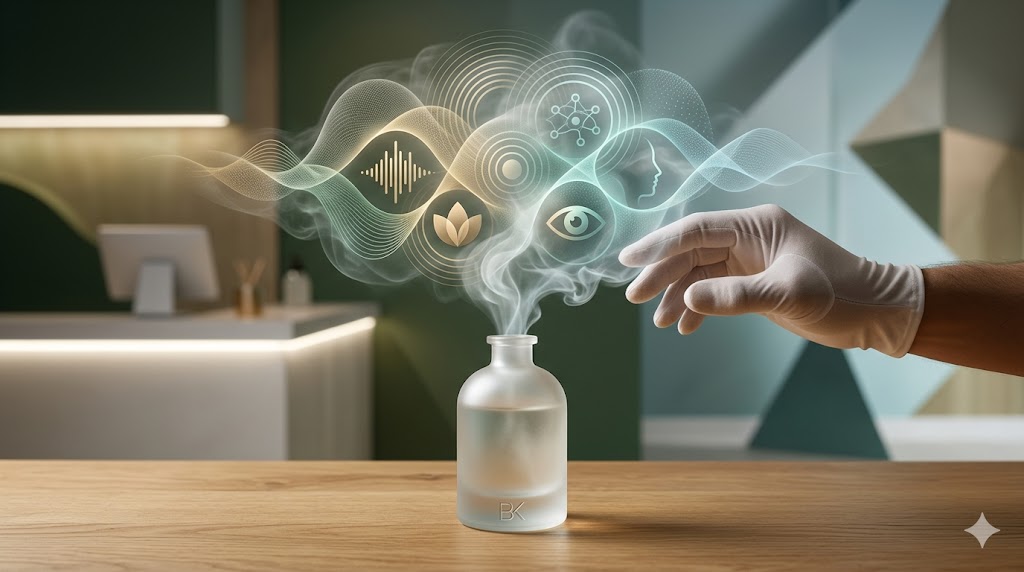
The most powerful brand asset of the next decade is completely invisible. By architecting a distinct “olfactory logo” embedded within a holistic, crossmodal sensory ecosystem, innovative brands can bypass intellectual friction to build direct emotional equity, profound memory anchors, and authentic customer loyalty.
II. The Science and Psychology of the “Invisible Logo”
We are fundamentally emotional creatures who rationalize our decisions after the fact. While visual assets must travel through the brain’s analytical filters, our sense of smell possesses a direct, frictionless pipeline to our deepest memories and emotional states. Harnessing this biology is the key to moving from passive brand recognition to permanent psychological resonance.
- The Direct Route to Emotion:
The unique neuroscience of the olfactory system. Unlike sight and sound, which are routed through the thalamus for cognitive processing, scent signals travel directly to the olfactory bulb, which connects intimately with the amygdala (the emotional core) and the hippocampus (the memory center). Scent bypasses rational pushback to create immediate, visceral associations. - The Substance of Style:
Evolving past accidental environmental scents—such as the generic aroma of industrial floor cleaners or stale HVAC air. Human-centered innovation requires a deliberately engineered scent profile designed to encapsulate the brand’s identity, mood, and core values, translating abstract brand pillars into a signature molecule. - The Value Premium:
The tangible economics of sensory enrichment. When a brand environment is multi-sensory and harmonious, the consumer’s perception shifts from evaluating a transactional product to absorbing an aesthetic experience. This holistic elevation naturally lowers price sensitivity and drives a measurable willingness to pay a premium for identical goods and services.
III. Crossmodal Synergy: Integrating Scent, Sound, and Sight
True innovation never happens in a silo. Designing an olfactory logo is not about merely spraying a pleasant fragrance into a room; it is about orchestrating a symphony where every sensory touchpoint reinforces the others. When sight, sound, and scent are strategically aligned, they amplify each other to create an unforgettable, unified customer experience.
- The Pitfall of Siloed Sensory Design:
Why isolated sensory efforts fail. If a brand introduces a soothing, earthy scent while blasting high-tempo pop music under harsh, clinical fluorescent lighting, the brain experiences cognitive dissonance. This sensory friction induces subconscious discomfort, driving customers away and fracturing brand trust. - Play the Fragrance:
The art and science of crossmodal correspondences. Innovative CX design means scientifically matching olfactory notes with their natural auditory and visual counter-parts—such as pairing crisp, citrus notes with high-pitched, staccato acoustic soundscapes and bright, minimalist packaging to maximize emotional harmony and purchase intent. - The Multi-Sensory Coherence Matrix:
A structured framework for aligning the five senses. By ensuring that corporate identity, spatial design, and digital-physical touchpoints speak a unified symbolic language, organizations can transition from fragmented interactions to a cohesive, deeply resonant sensory ecosystem.
IV. The Human-Centered Innovation Blueprint (Step-by-Step Implementation)
Bringing an invisible brand asset to life requires a disciplined, human-centered change methodology. We cannot rely on top-down executive assumptions or hasty workshops; instead, we must treat sensory design as an iterative, collaborative journey that deeply explores the human emotional landscape and seamlessly weaves multi-sensory touchpoints into the existing customer journey.
- Co-Design with the Human Element:
Moving past insulated boardroom decisions. This step involves engaging front-line employees, cross-functional stakeholders, and core customers in co-creation sessions. By leveraging participatory research, teams map out the true emotional DNA of the brand, translating cultural values and organizational purpose into tangible sensory metaphors before a single scent molecule is synthesized. - The 4-to-8 Week Ideation Horizon:
Avoiding the trap of the superficial “2-day workshop.” Designing a signature olfactory asset is a non-linear innovation process that requires time for neurological adaptation, reflection, and iterative prototyping. Teams move deliberately from expansive sensory exploration and mood-boarding to rigorous blind testing, refinement, and environmental simulation. - Mapping the Scent Journey Across CX Touchpoints:
A tactical architecture for deploying the olfactory logo where the digital and physical worlds converge:- Digital-to-Physical Blending: Bypassing the limitations of the screen. Brands utilize physical scent-activation kits, interactive unboxing designs, or micro-influencer storytelling partnerships to bridge the gap for e-commerce shoppers, reducing the friction of online exploration and creating a tangible, multi-sensory connection at home.
- Spatial Environmental Architecture: Engineering the physical ecosystem. This involves introducing subtle, ambient signature scents through precisely calibrated HVAC integration or smart diffusion technologies in brick-and-mortar retail locations, flagship spaces, or corporate offices to anchor customer relationships and build a comforting, recognizable sense of place.
V. Strategic Hurdles, Ethics, and the Future Landscape
Pushing the boundaries of innovation means anticipating the human and societal friction points that follow. Designing for the invisible real estate requires strict ethical guardrails, a deep respect for human biology, and an eye toward how emerging technologies will decentralize and democratize sensory experiences in the years to come.
- Navigating Inclusivity and Accessibility:
The absolute necessity of a “do no harm” approach to sensory design. Experience architects must proactively design for scent hypersensitivities, allergies, asthma, and chemical contact conditions. Furthermore, scent interpretation is deeply cultural and subjective; a note that signifies comfort in one region might signify mourning in another. True human-centered design mandates strict environmental dilution thresholds, hypoallergenic scent synthesis, and non-intrusive, opt-in physical spaces. - The Futurist Outlook:
Looking ahead at the convergence of spatial computing, smart environments, and advanced scent technology. We are moving toward a reality where digital scent-synthesis chips and micro-diffusers will be integrated directly into wearables, virtual reality hardware, and smart home ecosystems. This evolution will allow the olfactory logo to transition from localized, static physical environments to highly personalized, dynamic, and context-aware digital-physical spaces. - Measuring Multi-Sensory ROI:
Moving past short-sighted, purely transactional metrics. Because olfactory branding operates on long-term memory and subconscious loyalty, evaluating its success requires sophisticated Experience Level Measures (XLMs). Organizations must track behavioral indicators like increased dwell time, elevated employee morale and productivity, long-term brand recall accuracy, and a reduction in customer churn or experience revenue leakage.
VI. Conclusion: Stoking the Multi-Sensory Innovation Bonfire
The visual world has reached peak saturation, and the organizations that survive the next decade will be those that learn to engage the whole human, not just the eyes on the screen. By breaking through the cognitive noise and designing for the invisible real estate of smell, innovative leaders have a rare opportunity to build deep, unshakeable roots within the consumer subconscious.
- The Mandate for CX Leaders:
A call to action for experience designers, innovators, and strategists to step out of the 2D frame. We must stop treating corporate identity as a flat graphic standards manual and start viewing it as a living, breathing sensory ecosystem. True change requires dismantling the silos between marketing, digital design, and physical architecture to collaborate on holistic human experiences. - Final Thought:
The future does not belong to the loudest brands shouting for attention in an already crowded visual landscape. The future belongs to the visionary brands that choose to tread softly—the ones that don’t just ask to be seen, but invite people to truly feel, hear, and breathe their story.
Frequently Asked Questions
What exactly is an “olfactory logo” and how does it differ from traditional branding?
An olfactory logo is a deliberately engineered signature scent profile that serves as a core identity asset for a brand, much like a visual logo or an audio jingle. Unlike traditional branding that relies on visual real estate (which is currently oversaturated), an olfactory logo uses an invisible, human-centered medium to connect directly with the brain’s emotional and memory centers, establishing frictionless customer loyalty.
How can digital-first or e-commerce brands leverage olfactory branding?
E-commerce and digital brands can bridge the screen gap by incorporating physical scent-activation kits into their direct-to-consumer packaging, utilizing sensory unboxing experiences, and deploying micro-influencer storytelling. Looking forward, the rise of spatial computing and digital scent-synthesis technologies will allow these invisible assets to be delivered contextually right to a user’s smart environment.
How do you ethically measure the ROI of a multi-sensory customer experience?
Instead of relying on immediate transactional metrics, multi-sensory ROI is measured through qualitative and quantitative Experience Level Measures (XLMs). This includes tracking long-term brand recall accuracy, increased dwell time in physical or hybrid spaces, improved employee satisfaction, and a measurable reduction in customer churn or experience revenue leakage.
Image credit: Gemini
 Sign up here to get Human-Centered Change & Innovation Weekly delivered to your inbox every week.