
Tag Archives: reality rule

Treat Customers Right Without Expecting the Same in Return

The Reality Rule

Treat Customers Right Without Expecting the Same in Return

GUEST POST from Shep Hyken

I recently wrote about the Reality Rule in my Forbes column. Apparently, I hit on a topic that resonated with the Forbes readers, which prompted me to write a version for our subscribers to The Shepard Letter.

The Golden Rule, which most of us learned at a very young age, is to “Do unto others as you would have done unto you.” This is a great business principle when it comes to your customers. Slightly modified, it is “Treat your customers the way you want to be treated.”

My friend Dr. Tony Alessandra adapted the Golden Rule and came up with the Platinum Rule, which is to “Do unto others as they’d like done unto them.” Alessandra’s point is that not everyone wants to be treated the way you do. In business, you must adapt to treating customers according to their needs and expectations, not yours. I’m a believer and proponent of this concept. That said, this article is going to focus on the Golden Rule, but for a different reason.

I was reading a book, Give Hospitality by Taylor Scott, a business allegory about a woman who leaves a job with a toxic culture and finds work with a company that is the exact opposite of what she’d been experiencing. In her second week of training, she sees a sign on the wall:

“Nothing in the Golden Rule says that others will treat us as we have treated them. It only says we must treat others the way we would want to be treated.” -– Rosa Parks, American civil rights activist

This is a powerful quote, especially when you understand the background. The expectation you have of others shouldn’t always be based on how you treat them, and this is especially applicable in the customer experience.

The point is that you will encounter difficult, unreasonable, and downright rude customers. But their behavior should not dictate yours. You have a choice in how you respond.

I’ve seen people on the front line get frustrated when they “bend over backward” for a customer, only to have them continue to be demanding and ungrateful. Expecting them to treat you the same way, with kindness, concern, and empathy, is the wrong expectation. You’re not treating customers well because you expect something in return. You’re doing it because it’s the right thing to do. This is a mindset you must adopt. Otherwise, you risk becoming angry and bitter toward your customers and even your job.

That’s why I’ve come up with a new rule: The Reality Rule, which is to treat customers well, even if they don’t treat you well.

Remember, some customers are having a bad day. Others are just difficult people. Regardless, take a lesson from Give Hospitality and Rosa Parks. Don’t keep score. Focus on what you can control: your attitude, your effort, and your commitment to creating an amazing customer experience that gets customers to say, “I’ll be back!”

Image credits: Gemini

Subscribe to Human-Centered Change & Innovation WeeklySign up here to join 17,000+ leaders getting Human-Centered Change & Innovation Weekly delivered to their inbox every week.
The Reality Rule for Business

The Reality Rule for Business

GUEST POST from Shep Hyken

Most of us learned the Golden Rule at a young age: “Do unto others as you would have them do unto you.” This is a perfect rule for business, and specifically customer service and customer experience (CX). It translates into treating customers the way you want to be treated. It makes sense … or does it?

My colleague Dr. Tony Alessandra came up with a version of the Golden Rule he calls the Platinum Rule: “Do unto others as they would like done unto them.” Changing two words, you to them, in this rule means not everyone wants to be treated the in same way you might like to be treated. And in a broader sense, not everyone wants to be treated the same way.

However, when it comes to certain customers, no matter how you treat them, it doesn’t matter. If you don’t recognize this, it can break both employee satisfaction and customer satisfaction. That means it can also break a business.

The Expectation Trap

Recently, I read Give Hospitality by Taylor Scott, which tells the story of an employee who left her job because of a toxic workplace culture and found the perfect job where people, both employees and customers, were treated with respect and dignity. In her second week of training, she read a quote displayed on the company’s training room wall:

“Nothing in the Golden Rule says others will treat us as we have treated them. It only says we must treat others the way we would want to be treated.” – Rosa Parks

This quote from the legendary civil rights activist highlights a basic truth about customer service: exceptional treatment of customers doesn’t guarantee the customer will respond the same way. Yet many front-line employees and managers fall into the expectation trap and become frustrated when customers remain difficult despite receiving outstanding service.

The Danger of Misplaced Expectations

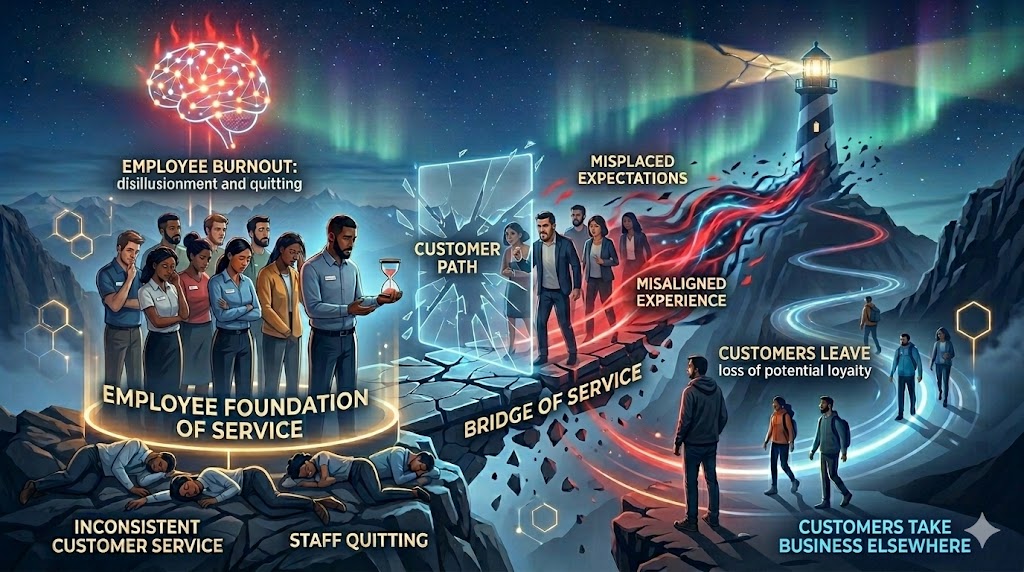
When employees expect customers to change their behavior to mirror that of employees, there is a possible danger of:

  • Employee Burnout: Front-line staff become disillusioned when their exceptional effort to take care of their customers isn’t appreciated or met with a more positive response. This is one of the top reasons it’s hard to keep good customer service reps. They say, “I can’t take it anymore,” and quit.
  • Inconsistent Customer Service: Frustrated employees may begin to take on the attitudes of their difficult customers, creating an inconsistent and bad experience for other customers.
  • Customers Leave: Difficult customers can become your most loyal customers when their problems are resolved with patience, kindness and professionalism, even if they don’t show it in their reactions. To avoid this, employees must be persistent and follow a new rule. (Read on!)

The Danger of Misplaced Expectations

The Reality Rule

Up until now, we have had the Golden Rule and the Platinum Rule. Now we have the Reality Rule:

Treat customers well, even if they don’t treat you well.

This isn’t about unacceptable abuse from a customer. Customers who cross the line with verbal abuse and threats fall under the category of Customers Who Aren’t Worth Doing Business With. Customers are allowed to be angry and agitated. They may be upset about the company or a product, and sometimes their behavior is driven by factors beyond your control.

The Reality Rule has three components:

  1. Control Your Response: While you can’t control the customer’s behavior, you have complete control over your attitude, effort and professionalism. Don’t let your angry customer’s behavior cause you to derail.
  2. Be Consistent: You know what it takes to deliver a great experience. Stay true to the core value of taking care of customers and, as just mentioned and worth mentioning again, don’t let your angry customer’s behavior cause you to go off track.
  3. Turn Foes into Friends: This is more of a goal than a rule, but it’s a goal you must start with in every tenuous interaction. My annual customer service and CX research finds that 81% of customers said they would consider returning to a company if it actively sought to make amends for a bad customer experience. When you handle a complaint properly, the customer will have higher confidence in you and your company than if the problem had never happened at all.

Final Words

When your team embraces the Reality Rule, magic happens. Difficult customers often transform into loyal advocates. Employee satisfaction increases when they understand their role and what they have control over. And your organization builds a reputation for taking care of customers, even when there are problems or complaints.

Remember, you’re not treating customers well because you expect them to change their behavior, although it’s nice when it happens — and sometimes it does. You’re doing it because it’s the right thing to do, knowing in the long run it pays dividends to properly manage problems and complaints. The Reality Rule creates the kind of experience that gets customers to say, “I’ll be back!

This article was originally published on Forbes.com.

Image credits: Google Gemini

Subscribe to Human-Centered Change & Innovation WeeklySign up here to join 17,000+ leaders getting Human-Centered Change & Innovation Weekly delivered to their inbox every week.