GUEST POST from Robert B. Tucker
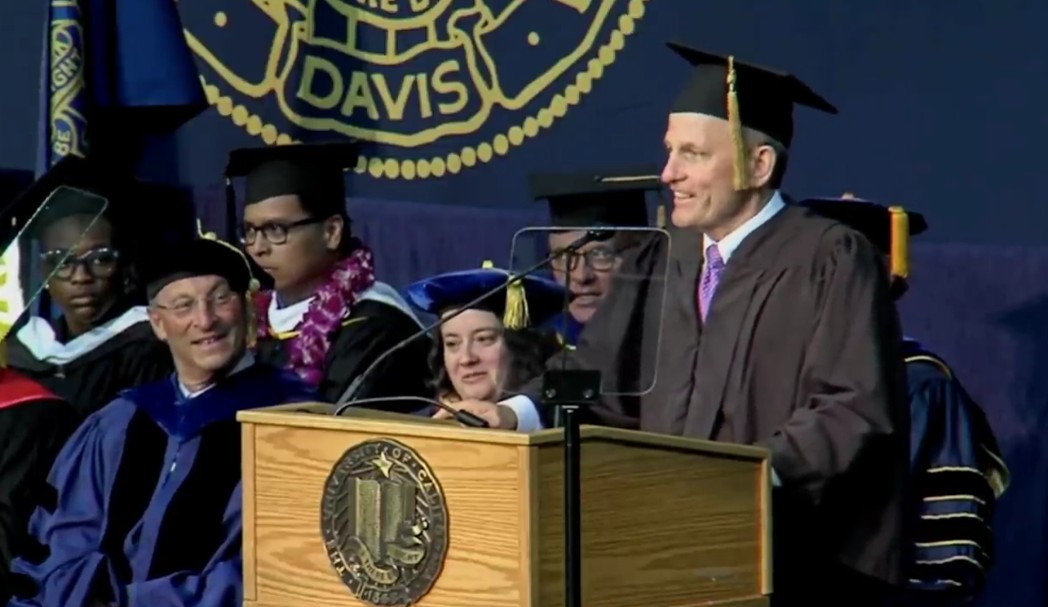
A few years ago, I had the honor of delivering a commencement address at the University of California, Davis, my alma mater. Standing before thousands of graduates from nearly 100 academic programs and dozens of countries, I reflected on the extraordinary changes that had reshaped the world since my own graduation in 1978.
At the time, I believed the pace of change was accelerating. Now, I realize we were only at the beginning of a whole new age.
Today’s graduates face a world profoundly different from the one my generation entered. Artificial intelligence is reshaping entire industries in real time. Social media competes relentlessly for attention. Student debt burdens millions. Misinformation spreads faster than truth. Many young people feel anxious about jobs, housing, climate change, politics, and whether they will ever experience the stability previous generations often took for granted.
And yet, despite all this turbulence, I remain deeply optimistic about the future. As a futurist, I am also an historian. History tells us that every generation is handed its defining challenges. And every generation can rise above them with grit and intention.
The students graduating today possess tools, connectivity, access to knowledge, and opportunities that previous generations could scarcely imagine. But thriving in this era will require a new mindset. It will require the ability to navigate uncertainty without losing your humanity.
In my commencement address, I spoke about what I called the “Three C’s” of success: Change, Creativity, and Courage. I believe those three capacities matter now more than ever.
Embrace Change Without Losing Yourself
In 1440, Johannes Gutenberg invented the printing press. That invention disrupted the existing order and unleashed waves of transformation: the Scientific Revolution, the Enlightenment, the Industrial Revolution, and ultimately modern democracy itself.
Today, we are living through another revolution. But this one is happening exponentially faster.
Artificial intelligence, automation, biotechnology, robotics, and digital networks are transforming nearly every institution in society. Entire professions are being reinvented. Skills are becoming obsolete faster than ever before.
The challenge facing graduates today is not simply adapting to occasional disruption. It is learning to remain grounded while standing inside permanent acceleration.
Years ago, while backpacking in Wyoming’s Grand Teton Mountains, I wandered away from my campsite to watch a sunset. When I tried to return, an angry moose blocked my path. By the time the animal finally wandered off, darkness had fallen and I could no longer find my tent. I spent one of the coldest nights of my life huddled beneath a pine tree with only a forest service map as a blanket. At dawn, I looked around and discovered my tent was less than thirty feet away.
What I learned in the mountains that night was simple: conditions change rapidly when you’re not paying attention. That lesson applies powerfully today.
Many people resist change, deny it, or hope it will somehow go away. But the individuals and organizations that will flourish are those willing to keep their antennae up, pounce on opportunity, and be flexible.
That does not mean embracing every trend blindly. Some technologies and social movements deserve scrutiny, especially when they threaten human dignity, truth, freedom, or the common good. But the greatest danger is not change itself.
The greatest danger is drifting into passivity. Settling for comfort. Losing curiosity. Stopping your own growth. Congratulations on completing your education. But the future belongs to lifelong learners.
Cultivating Your Creativity Becomes Even More Valuable
A few years ago, IBM conducted a global study asking CEOs which leadership quality mattered most in an increasingly volatile and uncertain world. Their answer was creativity.
Not efficiency. Not technical expertise. Creativity.
That insight matters even more now.
Artificial intelligence can already summarize reports, generate marketing copy, write software code, and perform countless routine tasks faster than humans. But originality, imagination, emotional intelligence, judgment, and wisdom remain profoundly human capacities. The more the world automates average thinking, the more valuable original thinking becomes.
In 2006, I worked with a group of high-potential executives from Nokia, then the global leader in cell phones. During one session, I asked a simple question: “If I work for your company and I have an idea, what do you want me to do with it?”
One executive answered honestly. “I’d tell you to forget about it,” he said. “There’s so much bureaucracy you’ll never get anywhere with the idea.”
A year later, Apple introduced the iPhone and Nokia began its spectacular fall from grace.
In retrospect, Nokia believed it was in the cellphone business. Apple believed it was in the creativity business.
Going forward, we are all in the creativity business.
No matter what profession you enter, your future value will increasingly depend on your ability to connect ideas, solve problems, improvise, communicate, and create meaning in situations where no guidebook exists.
You are going to face moments where GPS is unavailable. Moments where there are few precedents. Moments where you must trust your instincts and make it up on the spot.
If you cultivate your creativity, you will not merely survive this era. You will be in demand.
Courage May Matter Most Of All
And that brings me to the third “C,” courage.
It takes courage to explore the frontiers of your field. It takes courage to face uncertainty without surrendering to fear. It takes courage to think independently when social pressure pushes toward conformity.
But in today’s world, courage increasingly means protecting your own mind.
With so many voices yammering at us from the moment we wake up until we close our eyes at night, it takes courage to decide what kind of life you truly want instead of letting algorithms, outrage cycles, or social media platforms decide for you.
It takes courage to focus deeply in an age of distraction.
It takes courage to disconnect long enough to think.
It takes courage to build something meaningful slowly while the world rewards instant reaction.
And above all, it takes courage to create the life you really want to live.
My generation came of age during Vietnam, Watergate, inflation, and enormous social unrest. Many people believed America’s best days were behind it. Yet innovation continued. Progress continued. New leaders emerged.
Now it is your generation’s turn at bat.
Do not let this age of acceleration reduce you to reacting, scrolling, comparing, consuming, and drifting. You were born to build, to create, to contribute, to love, and to lead.
Think big when others are thinking small. Push back against cynicism. Build a life, not just a resume.
The future is not something that simply happens to you. It is something you help create.
This article originally appeared in Forbes
Image credit: Pexels
 Sign up here to get Human-Centered Change & Innovation Weekly delivered to your inbox every week.