Innovating a Sustainable Future
LAST UPDATED: December 20, 2025 at 9:01 AM
GUEST POST from Art Inteligencia
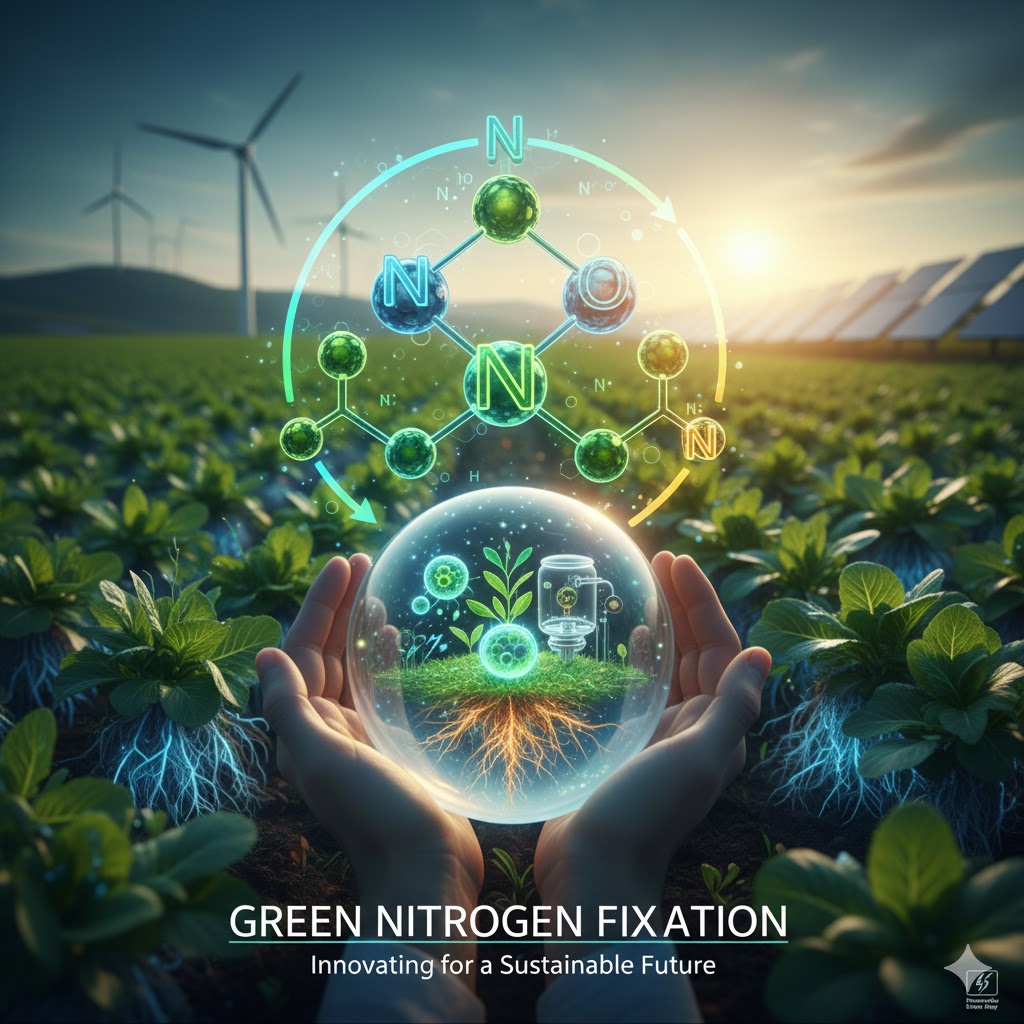
Agriculture feeds the world, but its reliance on synthetic nitrogen fertilizers has come at a steep environmental cost. As we confront climate change, waterway degradation, and soil depletion, the innovation challenge of this generation is clear: how to produce nitrogen sustainably. Green nitrogen fixation is not just a technological milestone — it is a systems-level transformation that integrates chemistry, biology, energy, and human-centered design.
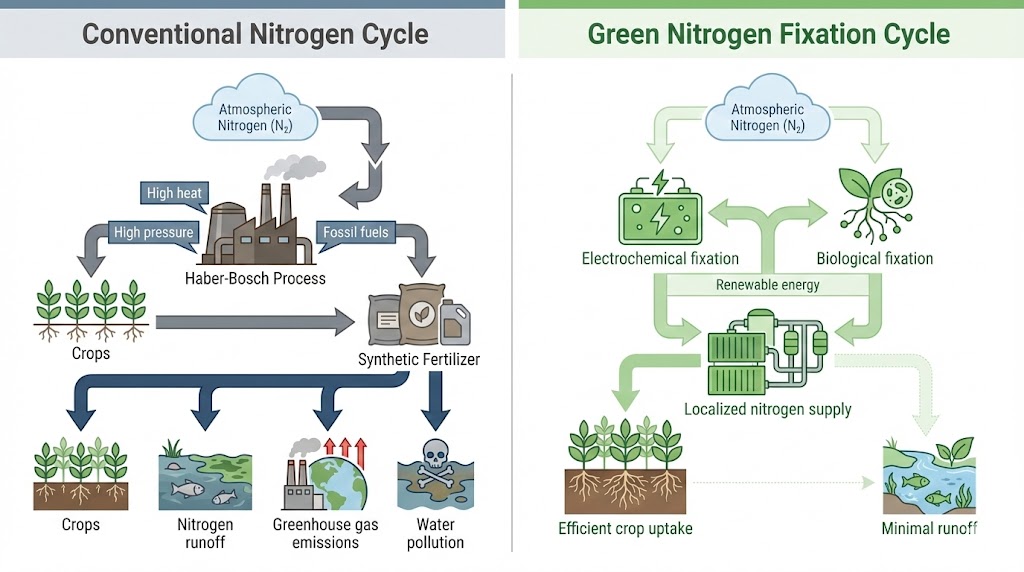
The legacy approach — Haber-Bosch — enabled the Green Revolution, yet it locks agricultural productivity into fossil fuel dependency. Today’s innovators are asking a harder question: can we fix nitrogen with minimal emissions, localize production, and make the process accessible and equitable? The answer shapes the future of food, climate, and economy.
The Innovation Imperative
To feed nearly 10 billion people by 2050 without exceeding climate targets, we must decouple nitrogen fertilizer production from carbon-intensive energy systems. Green nitrogen fixation aims to achieve this by harnessing renewable electricity or biological mechanisms that operate at ambient conditions. This means re-imagining production from the ground up.
The implications are vast: lower carbon footprints, reduced nutrient runoff, resilient rural economies, and new pathways for localized fertilizer systems that empower rather than burden farmers.
Case Study One: Electrochemical Nitrogen Reduction Breakthroughs
Electrochemical nitrogen reduction uses renewable electricity to convert atmospheric nitrogen into ammonia or other reactive forms. Unlike Haber-Bosch, which requires high heat and pressures, electrochemical approaches can operate at room temperature using novel catalyst materials.
One research consortium recently demonstrated that a proprietary catalyst structure significantly increased ammonia yield while maintaining stability over long cycles. Although not yet industrially scalable, this work points to a future where modular electrochemical reactors could be deployed near farms, powered by distributed solar and wind.
What makes this case compelling is not just the chemistry, but the design choice to focus on distributed systems — bringing fertilizer production closer to end users and far from centralized, fossil-fueled plants.
Case Study Two: Engineering Nitrogen Fixation into Staple Crops
Until recently, biological nitrogen fixation was limited to symbiotic relationships between legumes and root bacteria. But gene editing and synthetic biology are enabling scientists to embed nitrogenase pathways into non-legume crops like wheat and maize.
Early field trials with engineered rice have shown significant nitrogenase activity, reducing the need for external fertilizer inputs. While challenges remain — such as metabolic integration, field variability, and regulatory pathways — this represents one of the most disruptive possibilities in agricultural innovation.
This approach turns plants themselves into self-fertilizing systems, reducing emissions, costs, and dependence on industrial supply chains.
Leading Companies and Startups to Watch
Several organizations are pushing the frontier of green nitrogen fixation. Clean-tech firms are developing electrochemical ammonia reactors powered by renewables, while biotech startups are engineering novel nitrogenase systems for crops. Strategic partnerships between agritech platforms, renewable energy providers, and academic labs are forming to scale pilot technologies. Some ventures focus on localized solutions for smallholder farmers, others target utility-scale production with integrated carbon accounting. This ecosystem of innovation reflects the diversity of needs — global and local — and underscores the urgency and possibility of sustainable nitrogen solutions.
In the rapidly evolving landscape of green nitrogen fixation, several pioneering companies are dismantling the carbon-intensive legacy of the Haber-Bosch process.
Pivot Bio leads the biological charge, having successfully deployed engineered microbes across millions of acres to deliver nitrogen directly to crop roots, effectively turning the plants themselves into “mini-fertilizer plants.”
On the electrochemical front, Swedish startup NitroCapt is gaining massive traction with its “SUNIFIX” technology—winner of the 2025 Food Planet Prize—which mimics the natural fixation of nitrogen by lightning using only air, water, and renewable energy.
Nitricity is another key disruptor, recently pivoting toward a breakthrough process that combines renewable energy with organic waste, such as almond shells, to create localized “Ash Tea” fertilizers.
Meanwhile, industry giants like Yara International and CF Industries are scaling up “Green Ammonia” projects through massive electrolyzer integrations, signaling a shift where the world’s largest chemical providers are finally betting on a fossil-free future for global food security.
Barriers to Adoption and Scale
For all the promise, green nitrogen fixation faces real barriers. Electrochemical methods must meet industrial throughput, cost, and durability benchmarks. Biological systems need rigorous field validation across diverse climates and soil types. Regulatory frameworks for engineered crops vary by country, affecting adoption timelines.
Moreover, incumbent incentives in agriculture — often skewed toward cheap synthetic fertilizer — can slow willingness to transition. Overcoming these barriers requires policy alignment, investment in workforce training, and multi-stakeholder collaboration.
Human-Centered Implementation Design
Technical innovation alone is not sufficient. Solutions must be accessible to farmers of all scales, compatible with existing practices when possible, and supported by financing that lowers upfront barriers. This means designing technologies with users in mind, investing in training networks, and co-creating pathways with farming communities.
A truly human-centered green nitrogen future is one where benefits are shared — environmentally, economically, and socially.
Conclusion
Green nitrogen fixation is more than an innovation challenge; it is a socio-technical transformation that intersects climate, food security, and economic resilience. While progress is nascent, breakthroughs in electrochemical processes and biological engineering are paving the way. If we align policy, investment, and design thinking with scientific ingenuity, we can achieve a nitrogen economy that nourishes people and the planet simultaneously.
Frequently Asked Questions
What makes nitrogen fixation “green”?
It refers to producing usable nitrogen compounds with minimal greenhouse gas emissions using renewable energy or biological methods that avoid fossil fuel dependence.
Can green nitrogen fixation replace Haber-Bosch?
It has the potential, but widespread replacement will require scalability, economic competitiveness, and supportive policy environments.
How soon might these technologies reach farmers?
Some approaches are in pilot stages now; commercial-scale deployment could occur within the next decade with sustained investment and collaboration.
Disclaimer: This article speculates on the potential future applications of cutting-edge scientific research. While based on current scientific understanding, the practical realization of these concepts may vary in timeline and feasibility and are subject to ongoing research and development.
Image credits: Google Gemini
 Sign up here to get Human-Centered Change & Innovation Weekly delivered to your inbox every week.