
GUEST POST from David Sable
For centuries, innovation has lived in tension with ethics.
Some say moral codes kill progress… Others say they force progress to grow up. And sometimes… they save lives.
The truth?
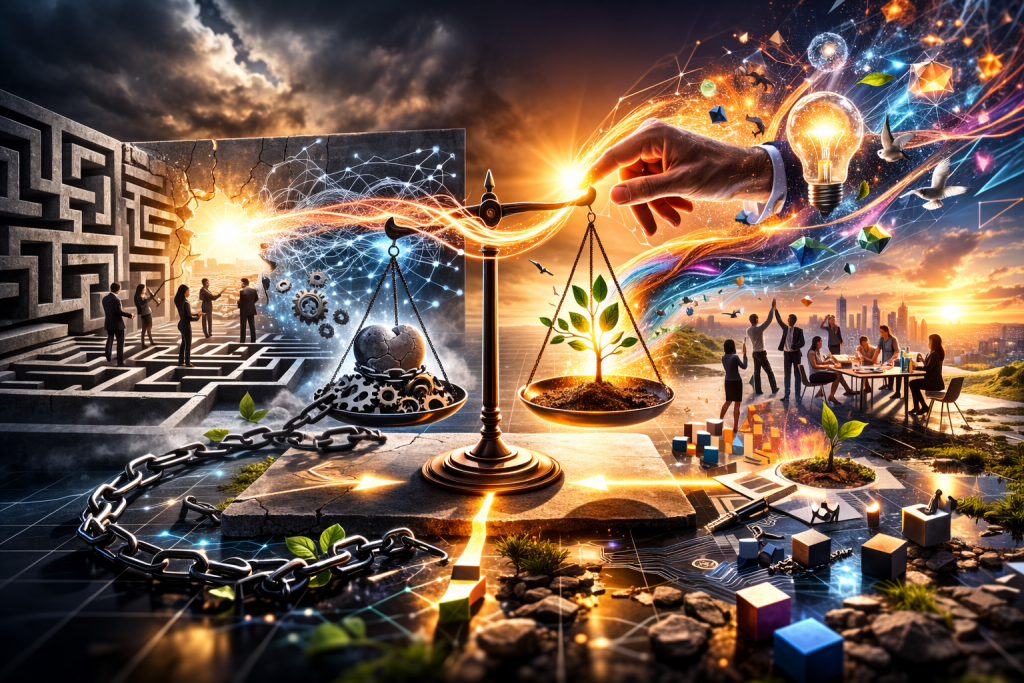
It’s not binary… It’s a system with three gears:
- Ethics can kill innovation.
- Ethics can sharpen innovation.
- Ethics can morph innovation and save lives.
Let’s explore all three.
When Ethics Slowed or Killed Innovation
Galileo (1633): He was tried by the Church for heresy for supporting heliocentrism. The science was sound… but ethics and religion weren’t ready. The progress paused for decades.
Human Gene Editing (2018): The CRISPR baby scandal in China sparked global bans. What could’ve been a gene-editing revolution was halted overnight. Ethics drew the red line.
Embryonic Stem Cell Research (2001–2009): Federal funding bans in the U.S. slowed a medical frontier, but the ethical blockade forced a pivot… leading to induced pluripotent stem cells. No embryos needed.
3D-Printed Guns: The blueprints spread fast. There were 100,000+ downloads. Then came the ban. Public safety over open-source freedom. Questionable innovation.
Facial Recognition Tech: It was halted by Amazon, IBM, and Microsoft in 2020. Why? Racial bias… surveillance concerns… and wrongful arrests. It didn’t die… but it had to evolve.
When Ethics Sharpened Innovation
Green Chemistry: Toxic byproducts used to be a cost of doing business. Ethical pressure gave rise to “benign by design” tech. Now it’s a growth market.
Accessibility Design: Sidewalk ramps weren’t built for travelers and strollers… They were built for wheelchairs…. and they ended up helping everyone. The “Curb Cut Effect” is now UX Evangelism.
Privacy Laws (GDPR, HIPAA): While it slowed data flows, it triggered encryption, on-device AI, and federated learning. The constraints sparked new architectures.
Explainable AI (XAI): Ethical backlash against black-box algorithms forced a rethink. Now, companies are judged on accuracy, transparency, and traceability.
Tesla’s Circular Supply Chain: The demand for ethical sourcing turned a compliance issue into an operational win. Now, Tesla is near 95% battery material recycling… lower emissions… and lower costs.
When Ethics Flat-Out Saved Lives
Vioxx Scandal (1999–2004): The drug rushed to market… praised as a breakthrough. But then came the deaths. There was a forced recall… and $4.85 billion in settlements. Ethics didn’t slow this innovation, but it should have.
Solar Geoengineering: Experiments like Harvard’s SCoPEx were shelved. Not because they didn’t work, but because the risks were planetary. Ethics didn’t just stall the idea; it saved us from playing God with the sky.
Predictive Policing Tools: It was touted as crime-busting AI. Turns out… they just automated racial profiling. The fix wasn’t a patch. The fix was a ban.
The truth is that some innovations never come back from ethical collapse. Others rise stronger from the fire. The real difference? Whether the ethics were ignored… or integrated.
What to Do Now
- Define your red lines early.
- If you wait until launch… It’s too late.
- Design for constraint.
- Let the friction shape the form… work it.
- Build auditable systems.
- Black boxes break trust. transparency scales.
- Know the cost of speed.
- The market remembers failures longer than delays.
- Use ethics as a strategy.
- It’s not just a legal risk… It’s a competitive power.
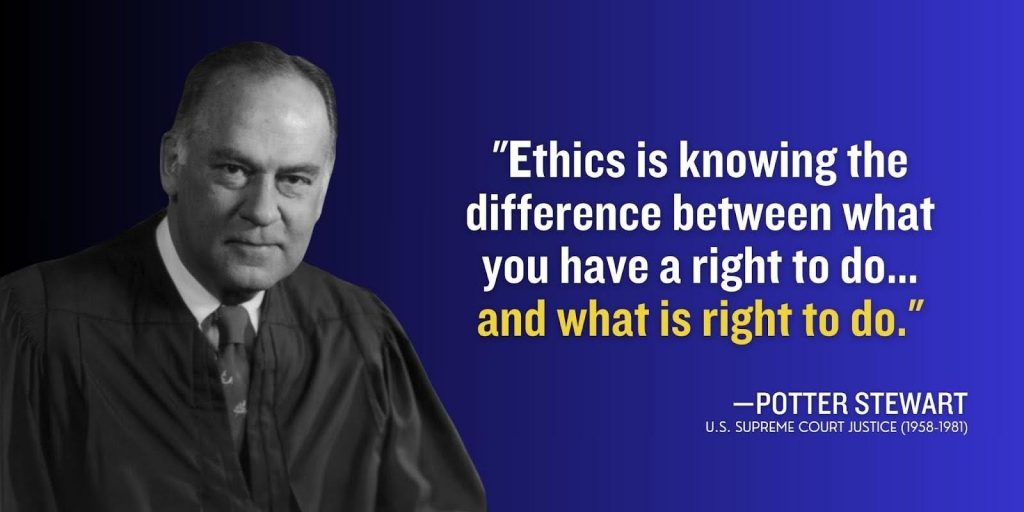
“Ethics is knowing the difference between what you have a right to do… and what is right to do.”
— Potter Stewart, U.S. Supreme Court Justice
Innovation isn’t value-neutral. It never was.
And in 2026, ethics isn’t just the constraint… It’s the catalyst.
Image credit: ChatGPT
 Sign up here to get Human-Centered Change & Innovation Weekly delivered to your inbox every week.