The Resilience Premium
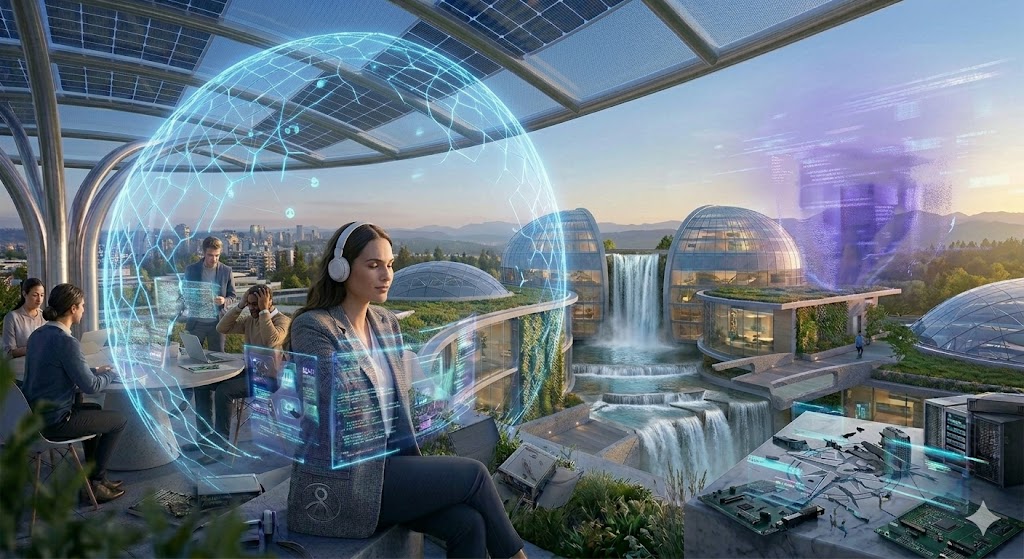
GUEST POST from Art Inteligencia
The New Corporate Frontier
We have moved far beyond the era of simple “change fatigue.” In today’s hyper-accelerated work environments, driven by the relentless pace of generative AI integration and continuous deployment, the velocity of operational change has fundamentally outpaced natural human processing speeds. Organizations are sprinting to optimize their technology stacks, yet they are blind to the fact that their most critical infrastructure — human cognitive capacity — is reaching a breaking point.
This reality imposes a hidden tax on modern enterprises. It manifests as a quiet but devastating erosion of employee focus, long-term strategic thinking, and the psychological safety required for creative problem-solving. When human attention is treated as an infinite, extractable resource, the quality of execution plummets, and true innovation grinds to a halt.
The premise is straightforward: resilience is no longer a soft wellness initiative or a human resources afterthought; it is a hard financial premium. In a hyper-accelerated marketplace, the ultimate competitive advantage belongs to the organizations that proactively architect their workflows to protect their people’s cognitive bandwidth. Designing a sustainable, human-centered ecosystem is the only way to safeguard the collective mindshare required to out-innovate and out-perform the competition.
I. The Anatomy of Cognitive Overload
The modern workplace has evolved into a high-velocity environment where human attention is fragmented across an ever-expanding digital ecosystem. While organizations celebrate the deployment of predictive dashboards and automated workflows, the actual lived experience of the employee is one of continuous, unmanaged cognitive friction. To design a more resilient ecosystem, we must first diagnose the specific mechanisms driving today’s cognitive bankruptcy.
Hyper-Context Switching
The modern professional does not merely work; they navigate a continuous crossfire of inputs. Employees are forced to constantly pivot between generative AI co-pilots, real-time collaboration platforms, and legacy enterprise systems. Every shift in focus — even a momentary glance at an incoming notification — incurs a cognitive switching cost. This constant re-calibration drains mental energy long before productive, high-value work can even begin.
The “Always-On” Mirage
An omnipresent connection to work tools has created a dangerous corporate paradox: the confusion of immediate responsiveness with actual productivity. The expectation of near-instantaneous communication forces employees into a perpetually reactive state. This defensive posture effectively destroys deep-work capabilities — the uninterrupted blocks of time required to architect complex strategy, analyze systemic risks, and uncover non-obvious market opportunities.
The Biological Limit
This structural velocity directly collides with human biology. The prefrontal cortex — the region of the brain responsible for executive functioning, impulse control, and creative synthesis — has finite processing limits. When subjected to chronic decision fatigue and a relentless influx of data, these neural pathways experience a form of systemic overload. The brain prioritizes immediate survival mechanisms over higher-order thinking, effectively shutting down the exact cognitive capacity required for breakthrough innovation.
II. Redefining Resilience: From Endurance to Architecture
As the velocity of the business landscape accelerates, our traditional understanding of workplace resilience must undergo a radical transformation. For decades, organizations have treated resilience as an individual trait — a psychological muscle that employees are expected to flex in times of stress. In a hyper-accelerated environment, this outdated framework is not only ineffective; it is actively destructive to long-term organizational health.
The Legacy Flaw: The Myth of Grit
The legacy corporate mindset relies heavily on the concept of “grit”—the expectation that individuals should simply absorb more stress, work longer hours, and personally manage the fallout of poorly optimized workflows. This approach views human capacity as a rubber band that can be stretched indefinitely. However, under chronic cognitive strain, people do not snap back; they break down. Relying on individual endurance to survive systemic chaos is a failing strategy that leads directly to widespread burnout and operational failure.
The Experience Design (XD) Shift
To capture the resilience premium, leadership must shift the burden of adaptation away from the individual employee and place it squarely on the workplace ecosystem. This requires a deliberate Experience Design (XD) approach. We must analyze the entire employee journey — from the tools they use to the meetings they attend — and intentionally design environments that conserve rather than deplete mental bandwidth. Systemic problems require systemic solutions, not wellness apps.
The Human-Centered View: Built-In Capability
A truly human-centered organization treats resilience as an architectural capability built directly into the fabric of daily operations. This means embedding cognitive safeguards into organizational workflows, software stacks, and cultural communication norms. When we design processes with human limitations and strengths in mind, we create an agile infrastructure where sustainable high performance and continuous innovation become the natural default, rather than an exhausting exception.
III. Designing the “Cognitive Sanctuary”
Protecting human cognitive capacity requires moving past theoretical frameworks and implementing deliberate, structural changes. To build a true “Cognitive Sanctuary” within a high-velocity enterprise, organizations must systematically redesign how information flows, how change is introduced, and how artificial intelligence is integrated into the daily employee experience.
Asynchronous-First Workflows
The first step in reclaiming human focus is dismantling the culture of hyper-synchronous availability. By shifting to an asynchronous-first communication model, teams protect blocks of uninterrupted time dedicated exclusively to deep strategic architecture. Rather than defaulting to live meetings or real-time chat channels that fracture focus, documentation and status updates are centralized in accessible repositories. This gives professionals the autonomy to process information and contribute thoughtfully on their own schedule, preserving their highest-value energy for complex problem-solving.
Frictionless Change Management
Continuous innovation does not have to mean continuous chaos. Organizations must practice deliberate change curation, which means abandoning the habit of launching multiple, overlapping digital transformation initiatives simultaneously. By strategically staggering technology rollouts and operational shifts, leadership allows teams the cognitive space to absorb, master, and integrate one change before the next arrives. This human-paced cadence ensures that organizational agility is sustained without fracturing employee trust or psychological safety.
AI as an Augmenter, Not an Accelerator
The true promise of artificial intelligence lies in cognitive offloading, not task multiplication. When integrating generative AI tools, the goal must be to design an employee experience where technology handles administrative, repetitive, and high-volume cognitive burdens. If AI is used simply to accelerate the sheer volume of work a human must review, manage, and respond to, it exacerbates the overload. By positioning AI as an augmenter that frees up human mindshare, organizations allow their people to focus on what they do best: empathy, contextual judgment, and radical creativity.
IV. The Innovation Paradox: No Slack, No Breakthroughs
In a hyper-accelerated market, the natural corporate instinct is to maximize efficiency by driving every system, process, and person to one hundred percent utilization. However, when it comes to human-centered innovation, this obsession with maximum optimization creates a dangerous paradox. By eliminating all empty space from the operational calendar, organizations inadvertently kill the very breakthroughs they need to survive.
The Calculus of Creative Space
Breakthrough ideas do not emerge from an over-scheduled, constantly reacting mind. True innovation requires intellectual “slack” time — intentional periods of unstructured thinking where the brain can connect disparate ideas, challenge foundational assumptions, and synthesize non-obvious insights. If an organization is running its workforce at total cognitive capacity just to keep up with daily tasks, its strategic innovation capacity drops to zero. Slack is not wasted time; it is the capital reserves of your enterprise’s future.
The Continuous Innovation Engine
To break free from this paradox, leaders must shift from managing episodic, high-stress transformation projects to building a sustainable, human-paced rhythm of continuous improvement. When innovation is treated as a relentless sprint, it leads to fatigue and resistance. By design, a continuous innovation engine balances intense operational delivery with structured recovery periods. It embeds collaborative experimentation directly into the everyday workflow, ensuring that the organization can evolve dynamically without burning through its most valuable asset: human creativity.
Conclusion: The Ultimate Competitive Advantage
As we navigate an era of unprecedented technological velocity, leaders must confront a fundamental reality: tools, algorithms, and computational power are rapidly becoming commoditized. When every organization has access to the same hyper-accelerated digital capabilities, technology itself ceases to be a sustainable differentiator. The ultimate competitive advantage will not belong to the company with the fastest machines, but to the enterprise that safeguards the quality, clarity, and depth of its human insight.
Capturing the resilience premium requires a profound shift in leadership accountability. Executives and experience designers must move beyond auditing organization-wide outputs and begin actively auditing the workplace culture for cognitive preservation. We must treat collective attention with the same strategic discipline we apply to financial capital — protecting it from erosion, investing it intentionally, and refusing to squander it on low-value operational friction.
The call to action for the modern enterprise is clear: stop treating human cognitive capacity as an infinite, extractable resource. By intentionally designing workflows that respect human biological limits, embedding strategic slack into daily operations, and curating the pace of change, we can build ecosystems that are both highly innovative and profoundly sustainable. The organizations that choose to protect and elevate their collective mindshare today are the ones that will design, own, and lead the future.
Frequently Asked Questions
What exactly is the “Resilience Premium”?
The Resilience Premium is the quantifiable financial and operational return an organization gains by proactively protecting its employees’ cognitive capacity. Instead of treating resilience as an individual wellness duty, it views it as a strategic design choice. Companies that secure this premium out-innovate competitors because their teams retain the mental clarity needed for deep focus, strategic thinking, and complex problem-solving.
How does maximum workplace optimization hurt innovation?
When organizations aim for 100% capacity utilization, they eliminate all “slack time.” Breakthrough innovation inherently requires cognitive space — unstructured periods where the brain can connect disparate ideas and challenge assumptions. Without this intellectual breathing room, employees remain trapped in a purely reactive state, stalling long-term creative growth.
How can leaders turn AI into an augmenter rather than an accelerator?
Leaders must design the employee experience so that AI handles administrative, high-volume tasks — effectively offloading cognitive burdens. If AI is instead used merely to generate more data, tasks, and communications for humans to review and manage, it accelerates overload. True augmentation frees up human mindshare for empathy, strategic framing, and contextual judgment.
FutureHacking™ Is Coming
FutureHacking™ is Braden Kelley’s strategic foresight methodology — and a paid download and training program is launching soon. Register your interest now to be the first to know when it’s available, and get early access pricing.
Image credit: Gemini
 Sign up here to get Human-Centered Change & Innovation Weekly delivered to your inbox every week.