From Insight to Concept
LAST UPDATED: February 3, 2026 at 6:33PM

GUEST POST from Art Inteligencia
“Innovation transforms the useful seeds of invention into widely adopted solutions valued above every existing alternative. But a seed cannot grow if the soil of your organizational culture is too rigid to let it take root.”
This article outlines a structured, tool-based approach to nurturing those qualitative findings, ensuring they survive the “corporate antibodies” and blossom into transformative value.
The Architecture of Nurturing
Qualitative findings are inherently fragile. Unlike quantitative data, which provides the what, qualitative research provides the why and the how. Converting these into concepts requires a deliberate shift from observation to synthesis.
1. The Insight Audit
Before building, we must filter. Not every observation is an insight. An insight is a fundamental truth about human behavior that challenges the status quo. We use an Insight Audit to categorize findings by their emotional resonance and strategic alignment. Are we solving a functional pain point or an emotional one?
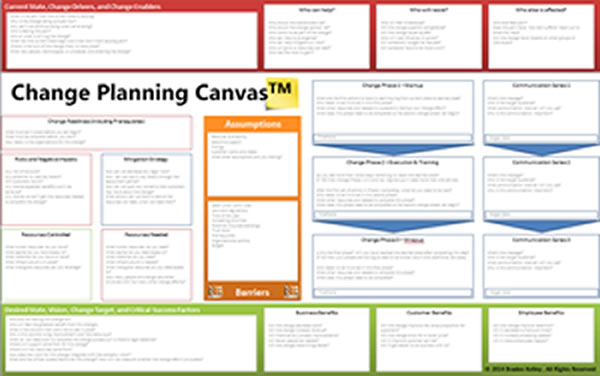
2. Visual Synthesis and the Change Planning Canvas
One of the most powerful tools in our Change Planning Toolkit is visual collaboration. We move the findings from spreadsheets onto a physical or digital canvas. This allows the team to “cluster” insights, finding the hidden patterns that text-heavy reports obscure. This is where Flow happens—where the team stops debating the data and starts visualizing the solution.
3. Concept Prototyping: The Low-Fidelity Leap
The biggest mistake in nurturing findings is waiting for “perfection.” A concept is a hypothesis. We must build low-fidelity prototypes—sketches, storyboards, or paper models—to test the validity of the insight in the real world. This reduces risk by failing early and cheaply.
Case Studies: From Observations to Outcomes
Case Study A: The Retail Giant’s “Friction-Free” Pivot
A global retailer conducted qualitative studies on “the weekly shop.” They found that customers didn’t hate the shopping; they hated the mental load of inventory management at home. The raw insight: “I don’t mind buying milk; I mind realizing I’m out of milk at 7:00 AM.”
By applying a structured synthesis, they moved from this finding to a subscription-based “Smart Pantry” concept. Instead of just another app, they designed a human-centered system that integrated with their existing logistics. Result: A 40% increase in customer lifetime value for those enrolled in the pilot.
Case Study B: The Healthcare Transformation
A regional hospital system used deep-dive interviews to understand why patients missed follow-up appointments. The assumption was “laziness” or “cost.” The qualitative finding revealed it was unspoken anxiety about navigating the complex hospital campus. The “insight” was that the hospital was a “geographical maze of stress.”
The team nurtured this by creating a Journey Map and developing a “Digital Concierge” concept. By addressing the emotional roadblock (fear of getting lost) rather than just the functional one (the appointment itself), they saw a 25% reduction in no-show rates within six months.
Reclaiming Subjective Agency in Innovation
To truly nurture findings, we must address Temporal Agency. Teams often feel “bullied by time,” rushing to find an answer before they fully understand the question. Leaders must design conditions where time stops being the enemy. This means providing cognitive slack—intentional “white space” in the schedule for the team to sit with the qualitative data until the concept reveals itself.
When we rush, we default to the “obvious” solution. When we nurture, we find the insanely great solution.
“Qualitative insights are fragile. They don’t fail because they’re wrong; they fail because organizations don’t know how to protect, translate, and act on them.”
In the rush to innovate faster, many organizations collect rich qualitative insights only to abandon them at the moment they matter most. Customer interviews, ethnographic research, diary studies, and frontline observations often yield powerful truths about unmet needs, hidden frustrations, and latent aspirations. Yet too often these insights are summarized into bullet points, diluted into generic themes, or buried in research repositories never to be revisited.
The problem is not a lack of insight. The problem is the absence of a structured pathway from insight to concept.
Qualitative findings require care. They are not raw materials to be processed mechanically, nor anecdotes to be debated away by louder voices. They are seeds. And like any seed, they only grow when the surrounding conditions are deliberately designed.
This article explores a practical, human-centered approach to nurturing qualitative findings into meaningful, testable innovation concepts.
Why Qualitative Insights So Often Die on the Vine
Organizations struggle with qualitative data for three predictable reasons.
First, qualitative insights are contextual. They lose meaning when stripped from the human stories that gave them life.
Second, they are interpretive. Unlike quantitative data, they demand judgment, synthesis, and dialogue rather than automation.
Third, they are threatening. Qualitative insights often surface uncomfortable truths about internal assumptions, incentives, or power structures.
Without a shared structure for interpretation and translation, teams default to what feels safer: familiar solutions, incremental ideas, or metrics that can be easily defended.
A Structured Pathway from Insight to Concept
Nurturing qualitative findings requires a deliberate progression through five stages. Skipping any stage increases the likelihood that insights will be misunderstood or prematurely discarded.
1. Preserve the Human Signal
The first responsibility of any innovation team is to protect the integrity of the insight. This means resisting the urge to immediately summarize, quantify, or generalize.
Before clustering themes, teams should work directly with raw artifacts: quotes, photos, journey maps, audio clips, and field notes. The goal is not consensus, but shared exposure.
When teams engage deeply with real human experiences, insights stop being abstract and start becoming unavoidable.
2. Articulate Tensions, Not Just Themes
Most insight reports list themes. Effective concept development identifies tensions.
A tension captures a contradiction between what people are trying to achieve and what the system currently enables. Tensions are powerful because they create design energy.
For example, “Customers want control but feel overwhelmed by choice” is more generative than “Customers want simplicity.”
Strong concepts emerge from tensions that feel unresolved and emotionally charged.
3. Reframe Insights into Opportunity Spaces
Insights should not dictate solutions. They should open opportunity spaces.
An opportunity space reframes a tension into a design challenge that invites multiple possible futures. This keeps teams from locking onto the first idea that feels exciting.
For example, instead of asking, “How do we reduce onboarding steps?” a reframed opportunity might be, “How might we help new users feel confident before they feel competent?”
This shift expands the creative field while maintaining fidelity to the original insight.
4. Translate Opportunities into Concept Hypotheses
Concepts should be treated as hypotheses, not conclusions.
A strong concept clearly states:
- Who it is for
- The tension it addresses
- The new behavior or value it enables
This framing invites learning. It encourages teams to ask, “What would need to be true for this to work?” rather than “How do we sell this internally?”
5. Test for Meaning Before Scale
Early testing should focus on meaning, not efficiency.
Before measuring adoption or ROI, teams should explore questions such as:
- Does this concept resonate emotionally?
- Does it reduce friction or anxiety?
- Does it align with how people see themselves?
Concepts that fail meaningfully early save organizations from expensive failures later.
Case Study C: Another Healthcare Experience Redesign
A regional healthcare provider conducted extensive patient interviews to understand why satisfaction scores were declining despite operational improvements.
Initial themes pointed to long wait times and confusing paperwork. However, deeper analysis revealed a more powerful tension: patients felt processed rather than cared for, even when clinical outcomes were positive.
By reframing this insight, the team defined an opportunity space around restoring dignity and emotional reassurance during vulnerable moments.
The resulting concept was not a new scheduling system, but a redesigned intake experience that emphasized human connection, narrative capture, and expectation setting. Pilot testing showed improved patient confidence and reduced anxiety, even before measurable efficiency gains appeared.
Case Study D: Enterprise Software Innovation
A B2B software company struggled with low engagement despite feature-rich releases.
Qualitative research revealed a tension between users’ desire to appear competent at work and their fear of exposing uncertainty while learning new tools.
Rather than adding tutorials, the team created a concept centered on “private mastery,” allowing users to explore, practice, and fail without visibility.
This concept dramatically increased feature adoption and reduced support tickets, not by teaching users faster, but by changing how learning felt.
Designing Conditions Where Insights Can Thrive
The real work of innovation is not idea generation. It is condition design.
Organizations that consistently translate insight into impact invest in:
- Shared sensemaking rituals
- Clear concept framing standards
- Psychological safety around interpretation
- Leadership patience for ambiguity
When these conditions exist, qualitative findings stop being fragile artifacts and become strategic assets.
In the end, qualitative insights do not ask to be admired. They ask to be translated.
When organizations learn how to nurture insights with structure and care, innovation stops being accidental and starts becoming inevitable.
Frequently Asked Questions
What is the difference between an insight and a concept?
An insight is a deep understanding of a human need or behavior (the “why”), while a concept is a proposed solution or business model designed to address that need (the “how”).
Why is visual collaboration important for qualitative findings?
Visual tools like the Change Planning Canvas help teams move beyond “mountains of words” to see patterns, clusters, and connections that are often invisible in traditional reports, fostering faster alignment and creative synthesis.
How do you protect a new concept from “corporate antibodies”?
By using low-fidelity prototyping and metered funding. This allows the team to prove the concept’s value through small, validated experiments before the bureaucracy has a chance to label it a “risk” to the core business.
SPECIAL BONUS: Braden Kelley’s Problem Finding Canvas can be a super useful starting point for doing design thinking or human-centered design.
“The Problem Finding Canvas should help you investigate a handful of areas to explore, choose the one most important to you, extract all of the potential challenges and opportunities and choose one to prioritize.”
Image credit: Google Gemini
 Sign up here to get Human-Centered Change & Innovation Weekly delivered to your inbox every week.