LAST UPDATED: February 24, 2026 at 2:22PM
GUEST POST from Art Inteligencia
I. Introduction: The False Dichotomy
Moving Beyond “What Is” to “What Could Be” through Holistic Innovation
The Innovation Gap
In the modern enterprise, we often see a widening chasm between the analytical and the creative.
Data-driven logic (Science), while essential for optimization, frequently leads to “safe” incrementalism — improving what exists by 1% without ever questioning if it should exist. Conversely, pure creativity (Art) can generate brilliant, disruptive visions that ultimately wither because they lack the technical rigor or infrastructure to scale.
The “Whole-Brain” Organization
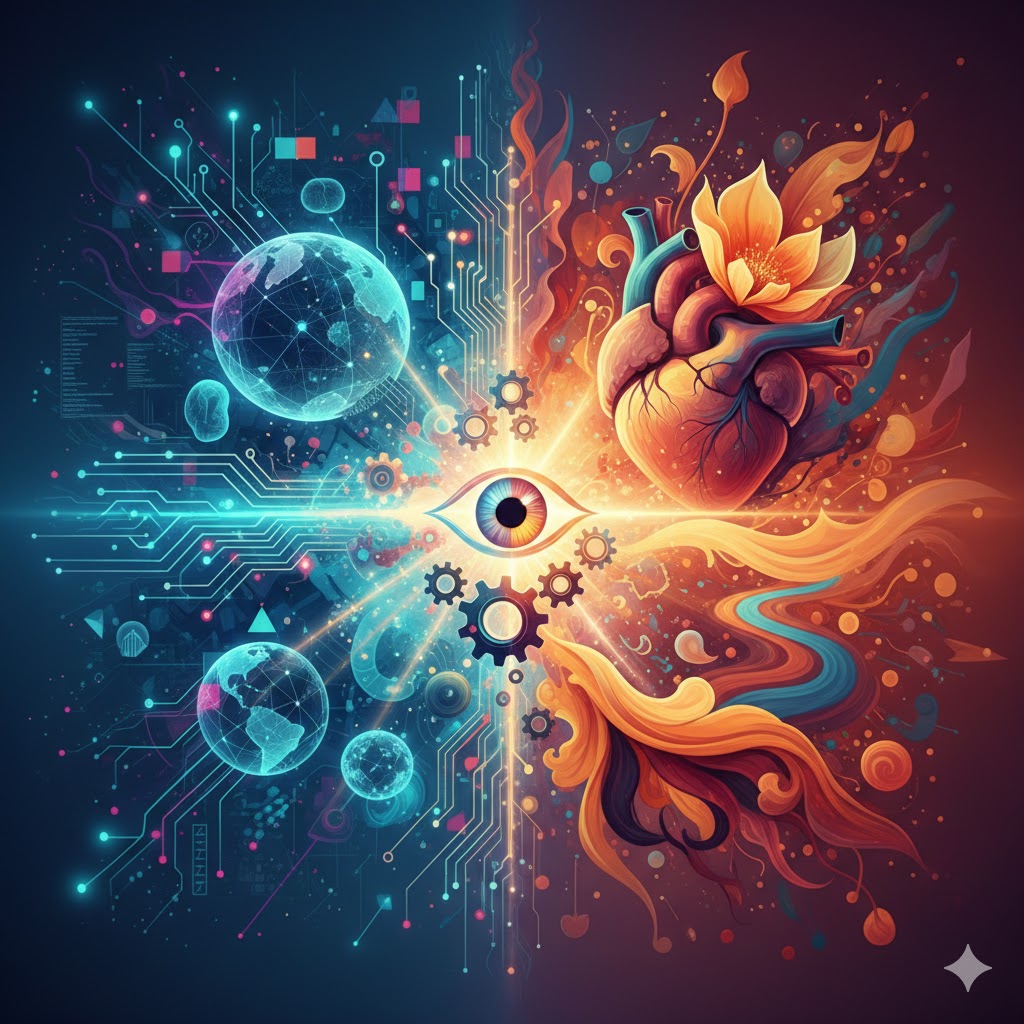
To achieve a true breakthrough, we must move past the myth of the “Left-Brain vs. Right-Brain” worker. The most resilient organizations operate as “Whole-Brain” entities. They understand that breakthrough solutions require the cold precision of a scientist to validate feasibility, paired with the deep empathy of an artist to ensure human desirability.
Thesis: The most successful 21st-century organizations are those that cease treating design thinking and data science as opposing forces and instead embrace them as two sides of the same innovation coin.
II. The Science: The Foundation of Rigor
Data as the North Star for Feasibility and Scale
Data-Driven Pattern Recognition
In a world of noise, Big Data and Artificial Intelligence act as our high-powered microscopes. Science allows us to identify hidden friction points and market inefficiencies that are invisible to the naked eye. By leveraging predictive analytics, we move away from guesswork and toward a strategic “North Star” that informs where innovation is most desperately needed.
The Scientific Method in Business
Innovation is not a lightning bolt; it is an experiment. Applying the Scientific Method — forming a hypothesis, conducting controlled tests, and analyzing results — allows organizations to “fail fast” and pivot with precision. This technical validation ensures that we aren’t just building something new, but something that is technically feasible and operationally sound.
Systems Thinking and Scalability
The “Science” side of the equation is what transforms a local prototype into a global solution. Through Systems Thinking, we analyze how a single change ripples through the entire value chain. Without this rigor, even the most creative ideas struggle to survive the transition from the laboratory to the mass market.
The Reality Check: While “Art” defines the dream, “Science” provides the scaffolding. Without rigorous data and testing, innovation is merely a hallucination.
III. The Art: The Soul of the Solution
Human Desirability and Emotional Resonance
Empathy as a Competitive Advantage
If Science tells us how something works, Art tells us why it matters. By utilizing ethnographic research and deep empathy, we uncover the visceral, unmet needs that raw data sets often overlook. This “Art” allows us to see the human being behind the consumer profile, ensuring that our solutions solve real-world frustrations rather than just technical gaps.
Aesthetics, Experience, and Brand Soul
A breakthrough is rarely just functional; it is experiential. The “Art” of innovation is what creates emotional resonance — the intangible quality that transforms a utility into a brand that people love. From the tactile feel of a product to the intuitive flow of a user interface, aesthetics signal quality and build the trust necessary for mass adoption.
Intuition and Divergent Thinking
Art requires the courage to engage in divergent thinking — the ability to imagine “what could be” without the immediate constraints of “what is.” Intuition is often just the brain processing patterns too complex for a spreadsheet; it provides the creative “leap of faith” required to pioneer entirely new categories before the data even exists to support them.
The Human Element: Science can optimize a process, but only Art can inspire a movement. Without the soul of the solution, you are merely building a better mousetrap that nobody wants to touch.
IV. The Integration: Where Breakthroughs Happen
The Alchemy of Collaborative Ecosystems
Dissolving the Silos
True innovation occurs when we stop treating the “creatives” and the “analysts” as separate species. By creating collaborative ecosystems, we allow these two forces to interrogate one another. When a data scientist’s rigorous proof meets a designer’s empathetic vision, the resulting friction doesn’t destroy the idea—it polishes it into a breakthrough.
The Role of Human-Centered Change
Integration is, at its heart, a cultural challenge. It requires a human-centered change framework to manage the psychological shifts of the workforce. Teams must learn to speak a shared language where “ROI” and “User Delight” are not mutually exclusive, but rather two metrics that validate the same success.
Case Study: The Intersection of Algorithm and Experience
Look at the world’s most disruptive companies: they don’t just have better tech; they have better context. Whether it’s a streaming service blending cinematic storytelling (Art) with hyper-personalized recommendation engines (Science), or a global supply chain using IoT to ensure medicine reaches a child in time — the breakthrough is always found in the seamless integration of the two.
The Breakthrough Formula: (Science + Rigor) x (Art + Empathy) = Scalable Innovation. When these forces are multiplied rather than added, the potential for market disruption is exponential.
V. Overcoming the Friction of Integration
Navigating the Cultural and Cognitive Barriers to Synergy
Bridging the Language Barrier
One of the primary friction points is the vocabulary gap. Analysts speak in ROI, standard deviations, and KPIs; creatives speak in user delight, storytelling, and provocation. To overcome this, leaders must act as “translators,” establishing a common lexicon where technical efficiency and human experience are viewed as equal contributors to the bottom line.
Managing the Fear of the Unknown
Science craves certainty, while Art thrives in ambiguity. Integration often stalls because the “Science” side fears the non-linear nature of the creative process. Human-centered innovation requires creating a “psychologically safe” environment where experimentation is rewarded and the messiness of the “fuzzy front end” of innovation is accepted as a necessary stage of growth.
The Leadership Pivot
The role of the leader must shift from “commander” to “curator.” It is no longer about choosing between the data and the dream; it is about holding the tension between the two. Leaders must champion the “Whole-Brain” approach by ensuring that neither discipline colonizes the other, maintaining a balanced power dynamic that allows breakthroughs to surface naturally.
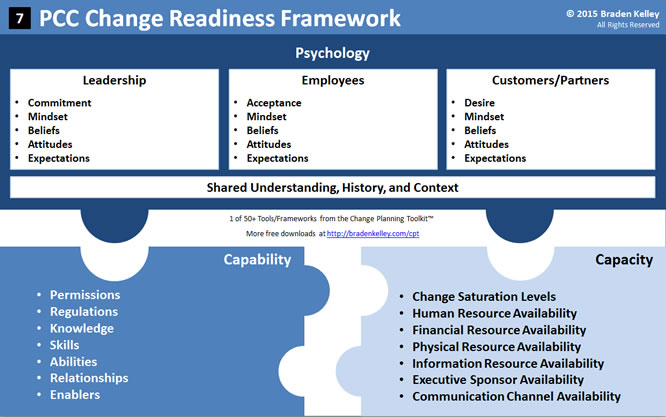
The Resistance Factor: Friction isn’t a sign that the integration is failing; it’s a sign that it’s working. The heat generated by these two worlds colliding is exactly what forges the next generation of industry-shaking solutions.
VI. Conclusion: The Future Belongs to the Polymath
Cultivating the Ultimate Competitive Edge
The New Era of Innovation
In a world where technology is increasingly democratized, “breakthrough” is no longer a destination — it is a verb. It requires a constant, rhythmic tension between Art and Science. The organizations that thrive in the coming decade will not be the ones with the most data, nor the ones with the loudest creative visions, but those that can weave the two into a single, cohesive strategy.
A Call to Action
Integration starts with a single step toward the “other” side of the house. I challenge you to invite a creative to your next deep-dive technical meeting, or bring an analyst into your next brainstorming session. Watch how the conversation shifts when you stop looking for the “right” answer and start looking for the “human” one.
Final Thought: We are all born with the capacity for both logic and wonder. Reclaiming that balance isn’t just good for business — it’s essential for solving the most complex challenges of our time. Let’s stop choosing sides and start building the future.
Frequently Asked Questions
1. Why is the integration of Art and Science necessary for innovation?
Science provides the technical feasibility and scalability required to build a solution, while Art provides the human empathy and emotional resonance needed for adoption. Without both, a product is either a scalable utility that nobody wants or a beautiful vision that cannot be built.
2. How can organizations overcome cultural resistance to this integration?
Resistance is best managed through human-centered change. This involves creating a shared language between analytical and creative teams, fostering psychological safety to allow for “messy” experimentation, and pivoting leadership roles from “commanders” to “curators” of diverse talent.
3. What is the first practical step toward a “Whole-Brain” approach?
The most effective first step is cross-pollination: inviting a creative professional into a technical deep-dive or an analyst into a divergent brainstorming session. This breaks down silos and immediately begins the process of collaborative interrogation.
Image credit: Google Gemini
 Sign up here to get Human-Centered Change & Innovation Weekly delivered to your inbox every week.